
Nearshore Development Services
If you're evaluating nearshore development services, you've already ruled out the offshore model with its 12-hour gaps and the in-house route with its 4-month hiring cycle; what you need now is a partner who delivers senior engineers in your timezone, at a cost that makes your budget work without sacrificing the seniority your roadmap requires.
CodersLab provides nearshore development services across software development, AI integration, cloud engineering, and staff augmentation, with teams operating from Colombia, Mexico, Argentina, Chile, and seven additional countries in LATAM, all within one to four hours of U.S. Eastern Time from day one.

Nearshore market: USD 85B by 2035

The global nearshore software development services market grows from USD 48.3B in 2024 to USD 85B by 2035, driven by U.S. companies replacing offshore with timezone-aligned LATAM teams.
Wise Guy Reports, 2024LATAM senior dev rates: USD 60–74/hr
Senior LATAM developers bill at USD 60–74/hr versus USD 120–250/hr for U.S. mid-market agencies, delivering comparable seniority with full timezone alignment and no offshore communication gaps.
Accelerance Global Software Outsourcing Rates Guide, 202580% of US companies exploring nearshore

80% of North American companies are actively exploring nearshore development services as their primary external engineering model, prioritizing real-time collaboration over marginal offshore cost savings.
Wise Guy Reports, citing market projections, 2024Why nearshore development services are growing faster than offshore alternatives
The global nearshore software development services market was valued at USD 48.3 billion in 2024 and is projected to reach USD 85 billion by 2035, growing at a CAGR of 5.2% according to Wise Guy Reports; that growth is not driven by cost pressure alone, but by a structural shift in how U.S. companies evaluate outsourcing partnerships after years of offshore friction.
According to the same market data, 80% of North American companies are now actively exploring nearshore development as their primary external engineering model; the combination of timezone alignment, English proficiency, and cultural compatibility with U.S. work practices is proving more valuable than the marginal cost savings that offshore models in Asia offer at the expense of real-time collaboration.
What nearshore development services actually cost
According to Accelerance's 2025 Global Software Outsourcing Rates and Trends Guide, LATAM software development rates range from USD 29–44/hr for junior developers, USD 50–60/hr for mid-level, and USD 60–74/hr for senior developers; these rates represent a significant reduction from U.S. onshore rates, where mid-market agencies bill USD 120–250/hr and individual senior contractors expect USD 80–150/hr.
The financial advantage of nearshore development services compounds over time; a team of four senior engineers at LATAM rates saves USD 300,000–500,000 annually compared to equivalent U.S. hires, without the productivity loss that offshore timezone gaps introduce through delayed feedback cycles, overnight blockers, and the management overhead required to bridge communication across 10–12 hour differences.
Nearshore development services vs. offshore: what the numbers miss
Most cost comparisons between nearshore and offshore focus on hourly rates, but the real cost of offshore development includes factors that don't appear in vendor invoices: the engineering manager time spent bridging timezone gaps, the sprint velocity lost to overnight blockers, the onboarding cycles that restart every time a developer churns in a market with 15–20% annual turnover, and the communication overhead of working across cultures with fundamentally different expectations around directness, deadlines, and escalation.
- Timezone overlap: LATAM engineers work within one to four hours of U.S. Eastern Time, enabling real-time standups, same-day code reviews, and unplanned escalations without scheduling workarounds; offshore models in Asia require overlap windows that force either the client or the team to work outside normal hours.
- Communication clarity: English proficiency in LATAM tech hubs — particularly in Colombia, Argentina, and Mexico — is consistently rated above offshore alternatives in South and Southeast Asia, reducing the communication overhead that compounds into delivery delays over long engagements.
- Cultural alignment: LATAM engineers working for U.S. clients operate within a work culture that shares expectations around agile methodology, direct feedback, and iterative delivery, reducing the management friction that offshore engagements require to function effectively.
- Developer retention: Nearshore providers with established operations in LATAM maintain lower annual turnover than offshore markets where cost inflation is driving talent mobility; lower turnover means more context retained per engineer per quarter, which directly affects delivery velocity.
Types of nearshore development services available
Nearshore development services is not a single engagement model; it's an umbrella term that covers several different ways of structuring external engineering capacity, and the right model depends on how much of the delivery process you want to own internally versus delegate to the partner.
- Staff augmentation: Individual engineers or small squads embedded directly into your existing team, working under your direction in your tools and your sprints; the right model when you have internal structure but need more execution capacity without adding permanent headcount.
- Dedicated team: A fully structured pod with a tech lead, developers, and QA that operates as an extension of your engineering organization; the right model when you're building a product or scaling a platform and need a team that takes ownership of delivery outcomes, not just tasks.
- Managed delivery: Fixed-scope engagements with defined milestones, deliverables, and timelines managed by the nearshore partner; the right model when the scope is clear, the deadline is firm, and you want predictable costs without managing the team's day-to-day operations directly.
- AI and ML development: Specialized nearshore teams with experience in machine learning pipelines, LLM integration, computer vision, and data engineering for companies whose roadmaps include AI components that require expertise beyond standard software development capacity.
How to evaluate a nearshore development services provider
The gap between nearshore providers who deliver and those who underperform is rarely visible in the sales process; every provider claims senior talent, timezone alignment, and English fluency, and most of them are telling the truth about at least two of the three. The differentiator is operational: how the first 30 days are structured, who is accountable for what when something goes wrong, and whether the provider's replacement and scaling processes are written into the contract or handled case by case.
- Screening transparency: Can you review the technical vetting process and interview engineers directly before they're assigned? Providers who restrict pre-hire interviews are sourcing from a marketplace with inconsistent quality control.
- Retention data: What is the annual developer turnover rate on the provider's delivery teams? Providers above 15% annual turnover create continuity problems that compound over long engagements.
- Replacement terms: What is the exact process and timeline for replacing an engineer who isn't performing? A provider confident in their talent has this written into the standard contract, not handled as a negotiation after the fact.
- Pilot availability: Does the provider offer a structured 30–60 day pilot before a longer commitment? Providers who don't offer pilots are optimizing for contract length, not for client confidence.
Getting started with nearshore development services through CodersLab
The process starts with a technical scoping call to align on stack, team composition, engagement model, and timeline; most nearshore development engagements through CodersLab have engineers in standups within ten to fifteen business days of contract signing, depending on the seniority level and specific stack requirements.
For teams that want to reduce risk before a longer commitment, CodersLab structures pilots of 30 to 60 days that give your team enough time to evaluate code quality, communication patterns, and delivery consistency without locking into a six-month contract before you have the evidence to justify it.
Frequently Asked Questions
Most nearshore development engagements have engineers in standups within ten to fifteen business days of contract signing. The timeline depends on team size, seniority requirements, and stack complexity. A technical scoping call at the start aligns requirements and reduces ramp-up time significantly.
According to Accelerance's 2025 data, LATAM developer rates range from USD 29–44/hr for junior, USD 50–60/hr for mid-level, and USD 60–74/hr for senior roles. Monthly engagement costs vary by team size and model; a scoping call is the fastest way to get an accurate estimate for your specific requirements.
LATAM engineers work within one to four hours of U.S. Eastern Time, with full overlap for EST and CST and partial overlap for PST. This allows real-time standups, same-day code reviews, and unplanned escalations without the scheduling workarounds that offshore models in Asia require.
The main models are staff augmentation, dedicated team, and managed delivery. Staff augmentation fits teams that need more execution capacity; dedicated teams fit companies building products from the ground up; managed delivery fits fixed-scope projects with defined timelines and budgets. CodersLab offers all three.
Yes. CodersLab runs its own multi-stage technical screening, and clients can conduct their own interviews before any engineer is assigned. This applies across all roles and engagement models, ensuring the team matches your technical requirements and working style before the engagement starts.
CodersLab replaces engineers who aren't the right technical or cultural fit without billing for the transition period. The replacement process typically takes five to ten business days depending on role and seniority. The rest of the team continues delivering without interruption during the transition.
Yes. LATAM has a growing pool of engineers with experience in machine learning pipelines, LLM integration, computer vision, and data engineering. CodersLab builds specialized nearshore AI teams for companies whose roadmaps include AI components that require expertise beyond standard software development capacity.
Nearshore development keeps engineering teams within one to four hours of the client's timezone, enabling real-time collaboration; offshore models in Asia introduce 10–12 hour gaps that require overnight handoffs, dedicated project managers to bridge communication, and produce delivery delays that erode the cost advantage over time.
Specialties & Solutions

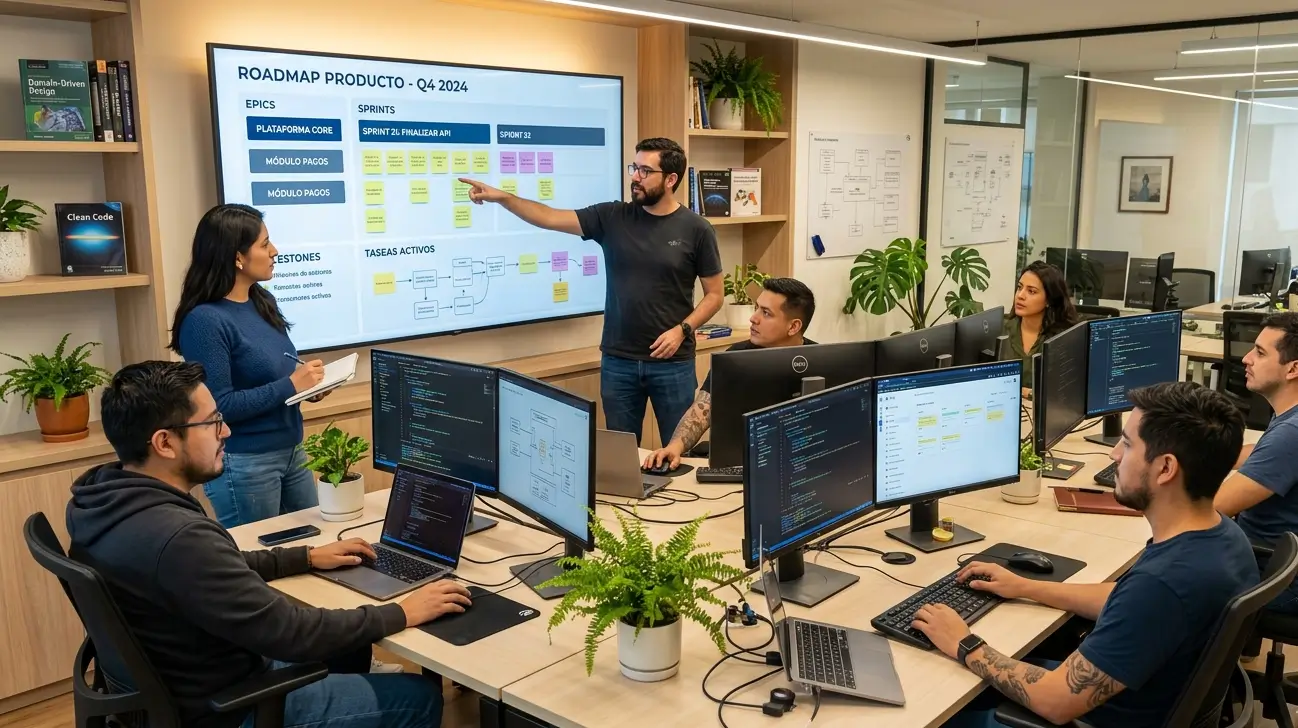


Need a tech team?
We build and scale nearshore development teams for companies from startups to Fortune 500. +1,200 projects delivered for over 500 companies across LATAM.

Our process. Simple, seamless, streamlined.

Step 1

Let's schedule a strategic call
Tell us about your project in an exploratory session. We'll discuss team structure, technical needs, timelines, budget, and the skills needed to find the best solution for you.
Step 2

We design the solution and select your teams
In just a few days, we define project details, agree on the work model, and select the ideal talent for you. We ensure each profile integrates quickly and effectively.
Step 3

We launch and optimize performance
With agreed milestones, the team starts working immediately. We track progress, provide continuous reports, and adapt to your needs to ensure the best results.