

Tech Staff Augmentation
Tech staff augmentation fills a gap that traditional hiring can't close at the speed modern engineering teams require; with the average time to fill a specialized technical role at 88 days in 2026, companies running quarterly product cycles can't afford to wait and the talent they need in cloud, AI, DevOps, and full-stack development isn't sitting idle in local markets waiting to be hired.
CodersLab provides tech staff augmentation with senior engineers from across LATAM, placed within 7 to 10 business days of contract signing, with full US timezone alignment, multi-stage technical vetting, and client-led interviews before any engineer is assigned so the engineer who joins your standup on day one is the engineer you chose, not the one who happened to be available.
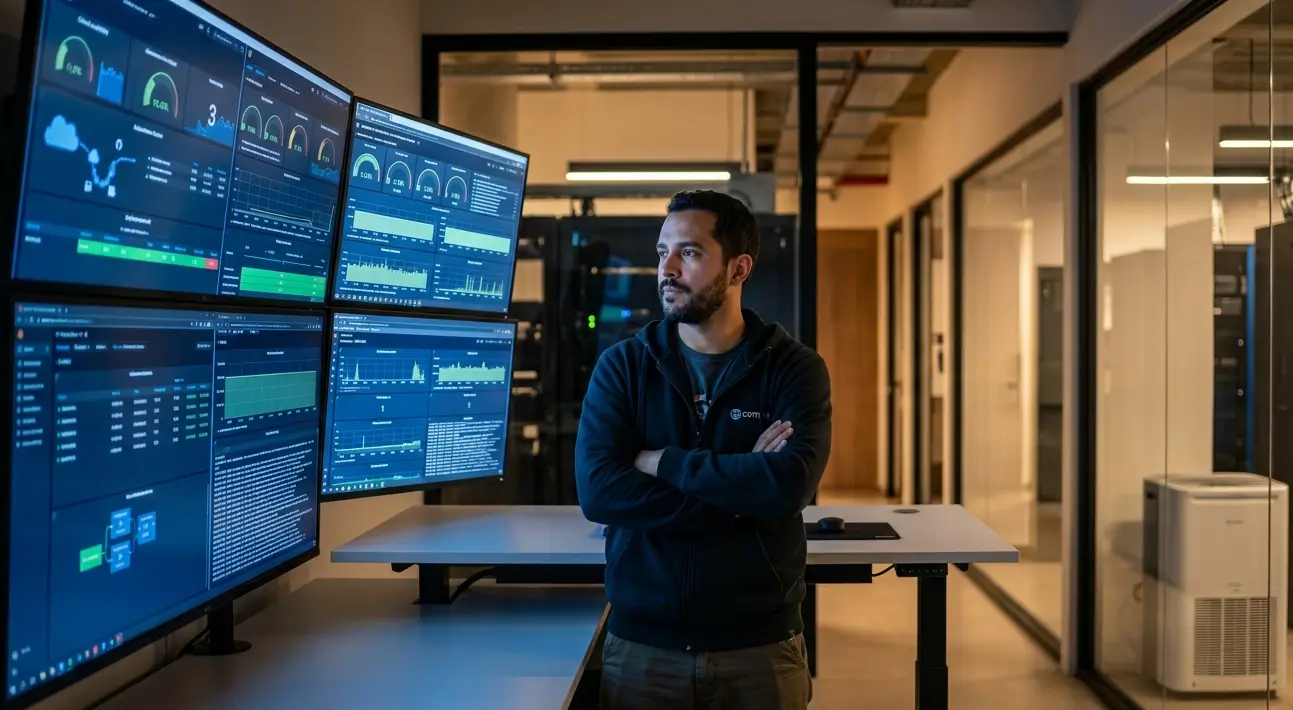
88 days to fill a specialized tech role in 2026

The average time to fill a specialized technical role reached 88 days in 2026; for companies running quarterly product cycles, that hiring delay is a strategic liability that tech staff augmentation resolves in 7–10 days.
eSparkBiz IT Staff Augmentation Trends, 202670%+ of software firms scaling extended teams
More than 70% of software firms plan to increase use of extended IT teams in 2026, and more than half report that tech staff augmentation directly shortens their release cycles and accelerates product delivery.
NexGenTek IT Staffing Trends Report, 2026Cloud market hit USD 832B in 2025

The global cloud market reached USD 832 billion in 2025, driving a 41% rise in cloud migration projects and fueling demand for DevOps and cloud engineering specialists that conventional hiring can't source fast enough.
Jalasoft IT Staff Augmentation Trends & Global Growth Insights, 2026Why tech staff augmentation is accelerating in 2026
According to NexGenTek's 2026 IT Staffing Trends report, more than 70% of software firms expect to increase their use of extended IT teams this year, and more than half report that tech staff augmentation directly shortens their release cycles; that data reflects a structural change in how engineering capacity is built, not a temporary response to hiring conditions.
The technical roles driving demand in 2026 are not generalist; companies are augmenting for cloud engineers, DevOps specialists, AI developers, cybersecurity experts, and data engineers roles where specialization depth matters more than headcount, and where a skill mismatch discovered six weeks into an engagement costs more than the augmentation contract itself. The cloud market alone reached USD 832 billion in 2025 according to Jalasoft's industry analysis, fueling demand for containerization, service mesh, and cost optimization experts that most internal teams can't source fast enough through traditional hiring.
Tech roles most in demand for staff augmentation in 2026
The demand profile for tech staff augmentation has shifted significantly toward specialized roles that require domain depth, not just technical breadth; companies augmenting for these roles are not filling generalist gaps, they're accessing expertise that would take 6 to 12 months to build internally even if the right candidate could be hired immediately.
- Cloud and DevOps engineers: AWS, GCP, and Azure specialists with hands-on experience in Kubernetes, Terraform, and CI/CD pipeline design; demand is driven by cloud migration projects that rose 41% in 2026 according to Global Growth Insights, requiring expertise that most internal DevOps teams don't have at sufficient depth.
- AI and ML engineers: Engineers with production experience in Python, TensorFlow, PyTorch, LangChain, and LLM integration; 78% of global companies now use AI/ML solutions according to Hostinger's data, creating a talent demand that available supply cannot match through conventional hiring.
- Full-stack developers: Senior engineers in React.js, Next.js, Node.js, and TypeScript who can own frontend-to-backend feature delivery without requiring a separate architect to validate every decision; the most common augmentation role for product teams running agile sprints.
- Data engineers: Specialists in pipeline architecture, ETL design, and data platform engineering for companies whose AI and analytics roadmaps require infrastructure that their software teams weren't built to deliver.
- Cybersecurity specialists: Engineers focused on DevSecOps, application security, and compliance frameworks including SOC 2 and ISO 27001; cybersecurity management solutions grew 35% in adoption in 2026 according to Global Growth Insights, outpacing the supply of qualified specialists in local markets.
What makes tech staff augmentation different from general IT staffing
Tech staff augmentation is a more specific engagement than general IT staffing; the distinction matters because the vetting process, the seniority expectations, and the integration requirements are fundamentally different when you're placing a senior cloud architect versus filling a junior support role.
- Seniority floor: Tech staff augmentation engagements typically require engineers with five or more years of production experience in the specific stack; generalist IT staffing often places mid-level or junior profiles that require more management overhead than a product team running fast sprints can absorb.
- Specialization depth: A tech staff augmentation provider with genuine depth in a stack can place a Kubernetes specialist or an LLM integration engineer; a generalist staffing agency can source a developer who lists those skills on a resume, which is not the same thing.
- Integration expectations: Tech staff augmentation engineers are expected to contribute to architectural decisions, flag technical debt, and push back on bad implementations not just execute tickets; that expectation requires a vetting process that evaluates judgment, not just syntax.
Tech staff augmentation with LATAM engineers: the structural case
LATAM has become the primary nearshore source for tech staff augmentation serving U.S. companies, and the structural reasons are consistent across providers: engineers within one to four hours of U.S. Eastern Time, English proficiency sufficient for real-time technical collaboration, and salaries 50–75% below U.S. benchmarks according to Howdy's 2025 salary data, without a corresponding reduction in the seniority or domain depth that tech staff augmentation requires.
The LATAM talent pool in 2026 includes senior engineers with eight to fifteen years of experience building products for U.S. and European companies across fintech, healthtech, e-commerce, and enterprise SaaS; the depth available in cloud, AI, DevOps, and full-stack roles has expanded significantly as international remote work normalized over the past five years and LATAM engineers accumulated production experience on complex international products.
How to evaluate a tech staff augmentation provider
The gap between providers who deliver and those who don't is almost never visible in the sales process; every provider claims senior talent, fast placement, and deep technical specialization, and the differentiator shows up in the first 30 days when the engineer's actual depth doesn't match what the technical interview suggested.
- Stack-specific vetting: Does the provider run technical assessments designed for the specific stack you need, or do they use a generic coding challenge that doesn't evaluate domain specialization? Ask for the specific criteria used to vet engineers for your stack before signing.
- Pre-hire interview access: Can you conduct your own technical interview with the specific engineer who will be assigned? Providers who restrict this are sourcing from a marketplace with inconsistent quality control, not from a vetted bench.
- Bench vs. marketplace: Is the provider placing engineers from an owned, employed bench, or sourcing on demand from a freelance network? The difference determines placement speed, talent consistency, and accountability when performance doesn't meet expectations.
- Replacement SLA: What is the exact process and timeline for replacing an engineer who isn't performing at the required technical level? This should be written into the standard contract with a defined SLA, not handled as a negotiation after the problem surfaces.
Getting started with tech staff augmentation through CodersLab
The process starts with a technical scoping call to align on stack, seniority requirements, specialization depth, and timeline; CodersLab runs its own multi-stage technical screening including stack-specific assessments and live technical interviews, and clients conduct their own interviews before any engineer is assigned; most tech staff augmentation placements are operational within 7 to 10 business days of contract signing.
Frequently Asked Questions
Most tech staff augmentation placements are operational within 7 to 10 business days of contract signing. The process starts with a technical scoping call to align on stack and specialization; CodersLab runs stack-specific screening and clients interview engineers directly before anyone is assigned to their team.
The most in-demand roles are cloud engineers (AWS, GCP, Azure), DevOps specialists, AI and ML engineers, full-stack developers (React.js, Node.js, TypeScript), data engineers, and cybersecurity specialists. CodersLab maintains depth across all these categories with senior engineers from across LATAM.
LATAM senior engineers cost 50–75% less than U.S. equivalents according to Howdy's 2025 salary benchmarks, without sacrificing seniority or domain depth. Specific rates vary by role, stack, and seniority level; a scoping call is the fastest way to get an accurate monthly estimate for your requirements.
Yes. CodersLab runs its own multi-stage technical screening including stack-specific assessments and live technical interviews, and clients can conduct their own interviews before any engineer is assigned. This applies to all roles and seniority levels, ensuring the placement matches your technical depth requirements.
Tech staff augmentation specifically targets senior engineers with domain depth in specialized stacks; general IT staffing often places mid-level or junior profiles with broader but shallower technical coverage. The vetting process, seniority expectations, and integration requirements are fundamentally different between the two models.
CodersLab replaces engineers who aren't performing at the required technical level without billing for the transition period. The replacement process typically takes five to ten business days depending on role and specialization, and the rest of the team continues delivering without interruption during the transition.
LATAM engineers work within one to four hours of U.S. Eastern Time, with full overlap for EST and CST and partial overlap for PST. This enables real-time standups, same-day code reviews, and unplanned technical escalations without the scheduling overhead that offshore models in Asia require.
Yes. CodersLab places AI and ML engineers with production experience in Python, TensorFlow, PyTorch, LangChain, and LLM integration. 78% of global companies now use AI/ML solutions according to Hostinger's data, creating talent demand that tech staff augmentation from LATAM is well-positioned to fill.
Specialties & Solutions




Need a tech team?
We build and scale nearshore development teams for companies from startups to Fortune 500. +1,200 projects delivered for over 500 companies across LATAM.

Our process. Simple, seamless, streamlined.

Step 1

Let's schedule a strategic call
Tell us about your project in an exploratory session. We'll discuss team structure, technical needs, timelines, budget, and the skills needed to find the best solution for you.
Step 2

We design the solution and select your teams
In just a few days, we define project details, agree on the work model, and select the ideal talent for you. We ensure each profile integrates quickly and effectively.
Step 3

We launch and optimize performance
With agreed milestones, the team starts working immediately. We track progress, provide continuous reports, and adapt to your needs to ensure the best results.