
Product Design Services
If you are evaluating product design services, the question you are trying to answer is not how to make your product look better, it is how to design a product that users adopt, retain, and recommend, and that generates the business outcomes that justified building it in the first place; product design at that level is a business discipline, not an aesthetic one, and it requires a process that connects user research to design decisions to measurable outcomes rather than translating a brief into deliverables.
CodersLab connects US and international enterprises with certified product designers across LATAM, covering end-to-end digital product design from discovery and strategy through UX research, interaction design, visual design, and design system development, with full US timezone alignment and designers who have shipped production digital products for US and international clients across SaaS, fintech, healthtech, and enterprise software.

Product design market: USD 22.71B in 2026
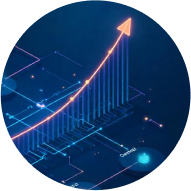
The product design and development services market grew from USD 20.62 billion in 2025 to USD 22.71 billion in 2026, projected to reach USD 54.16 billion by 2035; North America holds 38.60% market share and AI-assisted design is growing at 16.60% CAGR.
Precedence Research Product Design Market, March 2026Market grows to USD 55.2B by 2035

The product design market grows from USD 20.8 billion in 2025 to USD 55.2 billion by 2035 at 10.25% CAGR; companies increasingly leverage specialized design providers to access expertise and optimize costs that internal design teams at equivalent depth cannot match.
Spherical Insights Product Design Market, April 2026Detailed design holds 37.60% of market revenue

Detailed product design and engineering holds the highest revenue share at 37.60% of the market; AI-assisted and generative design is the fastest-growing technology integration at 16.60% CAGR as AI changes the economics of product design execution.
Precedence Research Product Design Segmentation, March 2026Why product design is a USD 22.71 billion market growing at 10.14% annually
The global product design and development services market grew from USD 20.62 billion in 2025 to USD 22.71 billion in 2026, and is projected to reach USD 54.16 billion by 2035 at a CAGR of 10.14% according to Precedence Research's March 2026 analysis; North America held a dominant position with 38.60% market share in 2025, and the AI-assisted design and generative design segment is the fastest-growing technology integration category at a 16.60% CAGR through 2035.
The growth reflects a structural shift in how organizations think about product design investment; companies are increasingly leveraging specialized product design service providers to access advanced expertise and optimize operational costs according to Data Insights Market's February 2026 analysis, because the alternative, building internal product design capability at the depth required to design competitive digital products, requires hiring, tooling, and management overhead that most organizations cannot justify for a function that benefits significantly from external perspective and cross-industry pattern recognition.
What product design services cover
Product design services cover the full lifecycle of digital product creation, from the discovery work that defines what to build through the design execution that specifies how to build it and the validation work that confirms it is working as intended after launch; the scope depends on whether you are designing a new product, expanding an existing one, or redesigning a product that is underperforming against its business objectives.
- Product discovery and strategy: Defining the product vision, user segments, core use cases, and success metrics that will guide design decisions; discovery work prevents the most expensive product design failure mode, building a product that is well-designed but solves a problem that users don't have or don't have enough to justify the solution; the detailed product design and engineering segment accounts for the highest revenue share at 37.60% in the market, reflecting how much of product design investment concentrates in the execution phase after strategy is defined.
- End-to-end UX and visual design: Designing the complete user experience from first interaction through core use cases, covering information architecture, user flows, wireframes, interaction design, visual design, and the micro-interactions and feedback states that define how the product feels to use; end-to-end design engagements produce a complete, development-ready design specification rather than individual design artifacts that engineers have to interpret and reconcile.
- Design systems: Building the component libraries, design tokens, pattern documentation, and governance processes that enable consistent product design at scale; organizations with mature design systems ship features faster with fewer design-development discrepancies, and the investment in a design system returns compounding value as the system is used across an expanding product surface over time.
- Prototyping and validation: Building interactive prototypes that simulate the designed product experience for user testing before development investment is committed; prototyping and testing is the highest-leverage activity in product design because it surfaces usability problems when fixing them costs design hours rather than engineering sprints.
- AI-assisted product design: Integrating AI tools into the product design process for faster ideation, automated component generation, and AI-driven personalization design; the AI-assisted design segment is growing at a 16.60% CAGR according to Precedence Research's March 2026 analysis, reflecting how AI is changing the economics of product design by reducing the time required for certain tasks while increasing the design output per designer.
- Design-to-development handoff: Producing the annotated design specifications, component documentation, and design QA processes that ensure what is built matches what was designed; handoff quality is the most common source of design-development friction in product teams that have separate design and engineering functions, and resolving it requires both documentation discipline and the collaboration processes that keep designers engaged through development rather than treating handoff as the design team's exit point.
What separates product design that ships from product design that stalls
The most common failure mode in product design engagements is a design process that produces excellent artifacts but does not connect those artifacts to the engineering team's build process in a way that results in a shipped product that matches the design intent; the gap between a design file and a shipped product is where most product design investment is lost, and it is almost always a process failure rather than a quality failure.
- Design-engineering collaboration from day one: Product design that involves engineering input during the design phase rather than after design is complete consistently produces designs that are feasible to implement on the target timeline; engineers who have been part of the design process understand the intent behind decisions and can make implementation trade-offs that preserve the design intent rather than simplifying it arbitrarily under deadline pressure.
- Scope discipline: Product design engagements that scope the design work to what can be built and validated within the current development cycle consistently deliver; engagements that scope to an ideal state that is larger than the team can build in the available time consistently result in a subset of the design being implemented without the integration that makes the design work as a system.
- Continuous validation over waterfall delivery: Product design processes that test and validate at each phase consistently identify problems earlier than those that design the complete product before testing anything; the cost of changing a design decision increases by an order of magnitude at each stage of the product development process, making early validation the highest-return practice in product design.
- Metrics-anchored design decisions: Product design decisions that are made with reference to a specific business metric consistently produce more focused designs than those made with reference to design principles alone; the metric provides a decision criterion that resolves the ambiguities that design principles leave open and creates an objective basis for evaluating whether design iterations are improving or degrading against the goal.
Product design services with LATAM designers through CodersLab
The product design and development services market is projected to grow from USD 20.8 billion in 2025 to USD 55.2 billion by 2035 at a CAGR of 10.25% during the forecast period according to Spherical Insights' April 2026 analysis; the growth is driven by customer demand for products that combine innovative features with high quality and customized solutions, and by business need to decrease product development time and enhance operational productivity.
CodersLab connects enterprises with product designers based across LATAM who have experience designing and shipping digital products for US and international clients, working within one to four hours of U.S. Eastern Time; the timezone alignment matters specifically for product design because design work requires frequent collaboration with product managers, engineers, and stakeholders to resolve the decisions that emerge throughout the design process rather than through asynchronous review cycles that slow the design iteration speed that competitive product development requires.
How CodersLab structures product design engagements
Product design engagements start with a discovery call to define the product scope, the user segments being designed for, the business metric the design needs to move, and the development timeline the design needs to fit within; most product design engagements produce an initial prototype ready for user testing within four to six weeks, with complete design specifications ready for development handoff within eight to fourteen weeks depending on product scope and complexity.
Organizations that need ongoing product design support as a continuous function rather than a project can engage through an embedded product designer retainer, where a dedicated LATAM product designer works within the product team at a defined weekly capacity covering discovery, design, validation, and design QA across continuous development cycles; this model is more effective than periodic project engagements for teams that are building and shipping continuously, because it maintains design quality and consistency across releases rather than concentrating design effort in project phases with gaps in between.
Frequently Asked Questions
Product design services covers the end-to-end creation of a digital product, including product strategy, UX research, interaction design, visual design, design systems, prototyping, and design-to-development handoff; it is the complete product design function. UX design services focuses specifically on the user experience layer within a product, typically within an existing design and development context. Product design is a broader scope that includes UX design as one of its components.
Initial prototypes ready for user testing typically take four to six weeks; complete design specifications for development handoff take eight to fourteen weeks depending on product scope and complexity. The discovery call at the start of the engagement produces a realistic timeline based on the product scope, development timeline, and team capacity rather than a generic estimate.
A complete product design engagement produces a product discovery report with user research findings, information architecture documentation, user flow diagrams, wireframes covering all primary and secondary flows, an interactive prototype for user testing, visual design specifications, a component library or design system contribution, and annotated handoff documentation ready for the development team.
LATAM product designers cost 50-75% less than equivalent US-based designers without sacrificing the research methodology, design quality, or shipping experience that produces business results. Specific engagement costs depend on product scope, research intensity, and whether the engagement is project-based or an ongoing retainer; a discovery call is the fastest way to get an accurate estimate for your specific product situation.
CodersLab's product designers work with Figma for design, prototyping, and design system management; FigJam and Miro for discovery workshops and journey mapping; Maze and UserTesting for prototype validation; Zeroheight or Storybook for design system documentation; and Jira or Linear for design task management within agile development cycles. Tool selection is adapted to the client's existing product development stack.
Yes. Product design engagements are structured to produce development-ready specifications that integrate with your existing development process; the design team aligns with your sprint cadence, participates in sprint planning and review, and conducts design QA on shipped features to ensure implementation matches design intent. Design-engineering collaboration from day one is how the gap between design files and shipped products is closed.
Yes. Design system development is a standard component of end-to-end product design engagements for teams that don't have one, and a separate engagement for teams that have an existing system that needs expansion or governance improvement. Organizations with mature design systems ship features faster with fewer design-development discrepancies, and the investment compounds as the system is used across an expanding product surface.
Validation uses interactive prototypes tested with real users from your target segment before development investment is committed; usability testing surfaces the problems that the design team and stakeholders cannot see because they are too close to the product. The validation process defines test scenarios, recruits participants, conducts sessions, synthesizes findings, and iterates on the design before finalizing specifications for development handoff.
Specialties & Solutions


Need a tech team?
We build and scale nearshore development teams for companies from startups to Fortune 500. +1,200 projects delivered for over 500 companies across LATAM.

Our process. Simple, seamless, streamlined.

Step 1

Let's schedule a strategic call
Tell us about your project in an exploratory session. We'll discuss team structure, technical needs, timelines, budget, and the skills needed to find the best solution for you.
Step 2

We design the solution and select your teams
In just a few days, we define project details, agree on the work model, and select the ideal talent for you. We ensure each profile integrates quickly and effectively.
Step 3

We launch and optimize performance
With agreed milestones, the team starts working immediately. We track progress, provide continuous reports, and adapt to your needs to ensure the best results.