
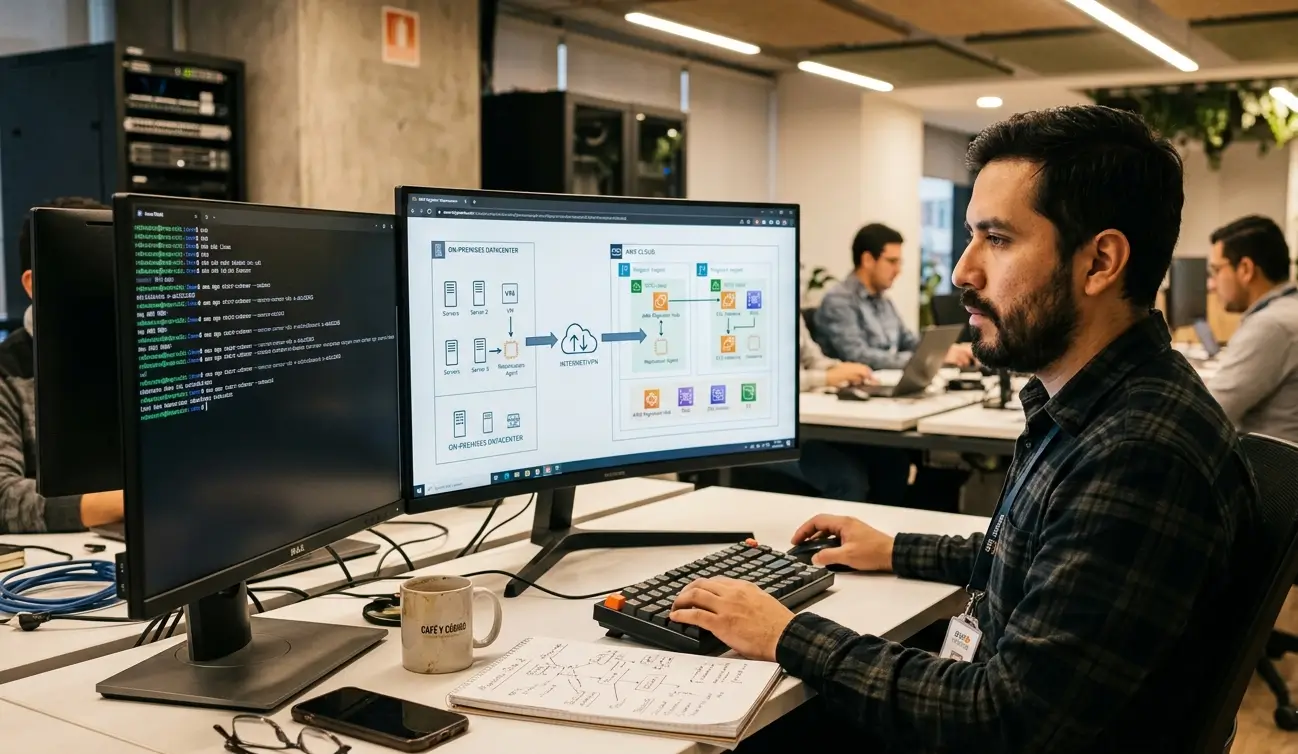
Cloud Migration Services
If you are evaluating cloud migration services, the decision has already been made that your workloads are moving to the cloud; what remains is choosing a partner who can execute the migration without the three failure modes that derail most enterprise cloud migrations: cost overruns from unoptimized architecture decisions made under delivery pressure, security misconfigurations introduced during the lift-and-shift phase, and the 30-day post-migration performance crisis that emerges when a legacy application behaves differently in a cloud environment than it did on-premises.
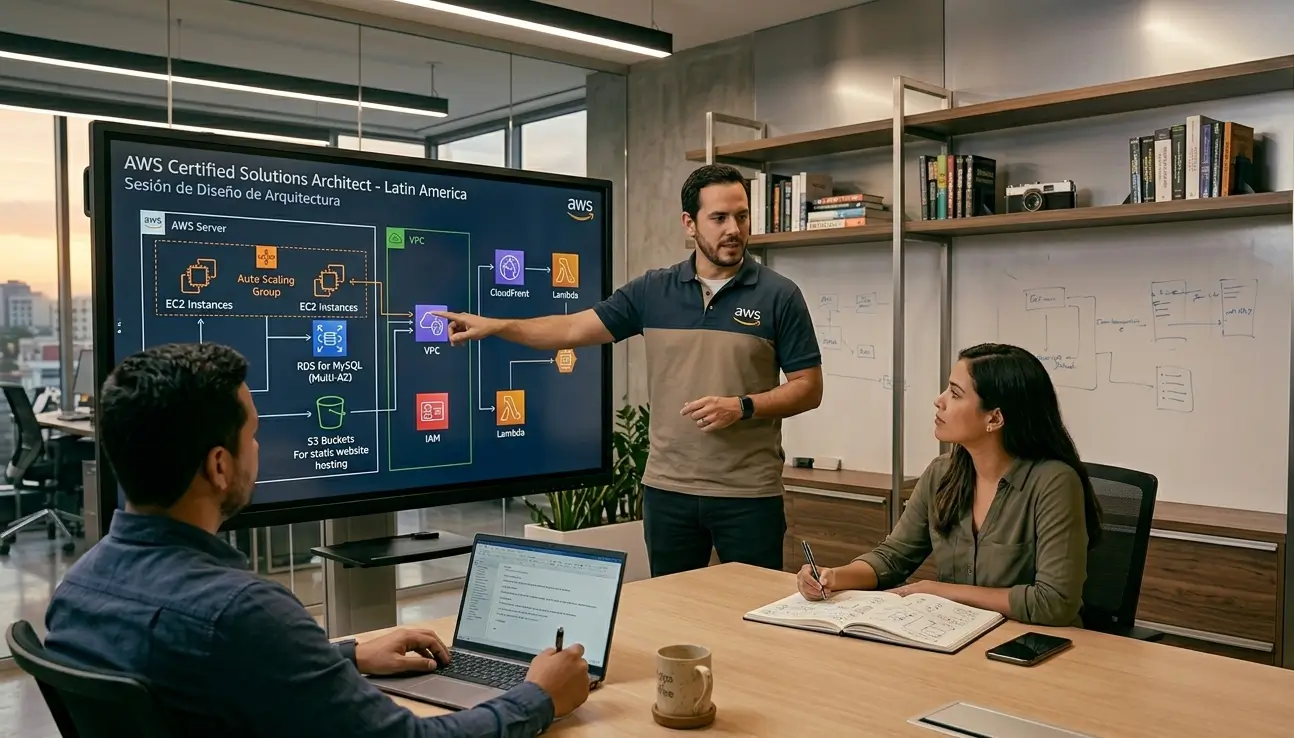
CodersLab connects US and international enterprises with certified cloud migration architects across LATAM, covering AWS, Azure, and GCP migrations from discovery and landing zone design through workload migration, optimization, and the post-migration managed services engagement that protects the investment after go-live, with full US timezone alignment and architects who hold AWS Solutions Architect, Azure Architect Expert, and Google Cloud Professional certifications.
Cloud migration market: USD 31.5B in 2026
The cloud migration services market reached USD 31.5 billion in 2026 at a 22.4% CAGR; 94% of enterprises use at least one cloud service and 75% of CFOs plan to increase cloud budgets this year, making migration the top enterprise infrastructure priority.
MarketsandMarkets via Medha Cloud & Auvik, March 202678% of successful migrations use certified architects
78% of successful enterprise cloud migrations involved at least one certified cloud architect according to MarketsandMarkets 2026 data; MSPs offering migration services report an average deal size of USD 42,000 with 35% converting to ongoing managed services.
MarketsandMarkets Cloud Migration Data, 2026Market grows to USD 86.06B by 2034

The cloud migration services market grows from USD 15.76 billion in 2026 to USD 86.06 billion by 2034 at a 23.64% CAGR, with North America dominating at 34% market share and the SME segment growing fastest as certified talent accessibility improves.
Fortune Business Insights Cloud Migration Market, 2026Why cloud migration is a USD 31.5 billion market growing at 22.4% annually
The cloud migration services market reached USD 31.5 billion in 2026 and is growing at a 22.4% CAGR according to MarketsandMarkets data compiled by Medha Cloud; 94% of enterprises use at least one cloud service in 2026, up from 89% in 2023, and 75% of CFOs plan to increase technology budgets this year with cloud as the primary allocation according to Auvik's March 2026 cloud migration statistics.
The market growth is not driven by organizations starting their cloud journey, it is driven by the second and third waves of cloud adoption: organizations that migrated early and are now re-architecting to reduce the technical debt accumulated during initial lift-and-shift migrations, organizations in regulated industries that delayed migration until cloud compliance frameworks matured sufficiently, and mid-market organizations that are now migrating at scale as cloud tooling and talent accessibility improved since 2020.
What cloud migration services cover
Cloud migration is not a single service, it is a program that covers discovery, architecture, execution, and post-migration optimization across multiple phases; the scope of each phase and the sequencing between them determines whether a migration delivers its projected business value or produces a cloud environment that costs more to operate than the on-premises infrastructure it replaced.
- Cloud readiness assessment and discovery: Inventorying your existing infrastructure, applications, and data to determine migration complexity, identify applications that are good candidates for lift-and-shift versus those that require re-architecting, and produce the cost model that makes the migration business case defensible before significant investment is committed; 78% of successful enterprise migrations involved at least one certified cloud architect according to MarketsandMarkets 2026 data, and the discovery phase is where that architecture expertise creates the most durable value.
- Landing zone design: Building the cloud account structure, network topology, identity and access management framework, security baseline, and governance policies that every migrated workload will inherit; a poorly designed landing zone is the root cause of most post-migration security incidents and cost overruns, because fixing architectural decisions after workloads are running in the cloud is significantly more expensive and disruptive than getting them right before the first workload migrates.
- Workload migration execution: Moving applications, databases, and data from on-premises to cloud, using the migration strategy appropriate to each workload, rehost for applications that run without modification, replatform for applications that benefit from managed services without full re-architecture, and refactor for applications where the cloud-native version delivers materially better performance, cost, or reliability than the lifted version.
- Database migration: Migrating relational and non-relational databases to managed cloud database services while maintaining data integrity, minimizing downtime, and establishing the backup and recovery architecture that regulatory compliance and business continuity requirements demand; database migration is consistently the highest-risk phase of enterprise cloud migrations because data loss or corruption during migration is not recoverable.
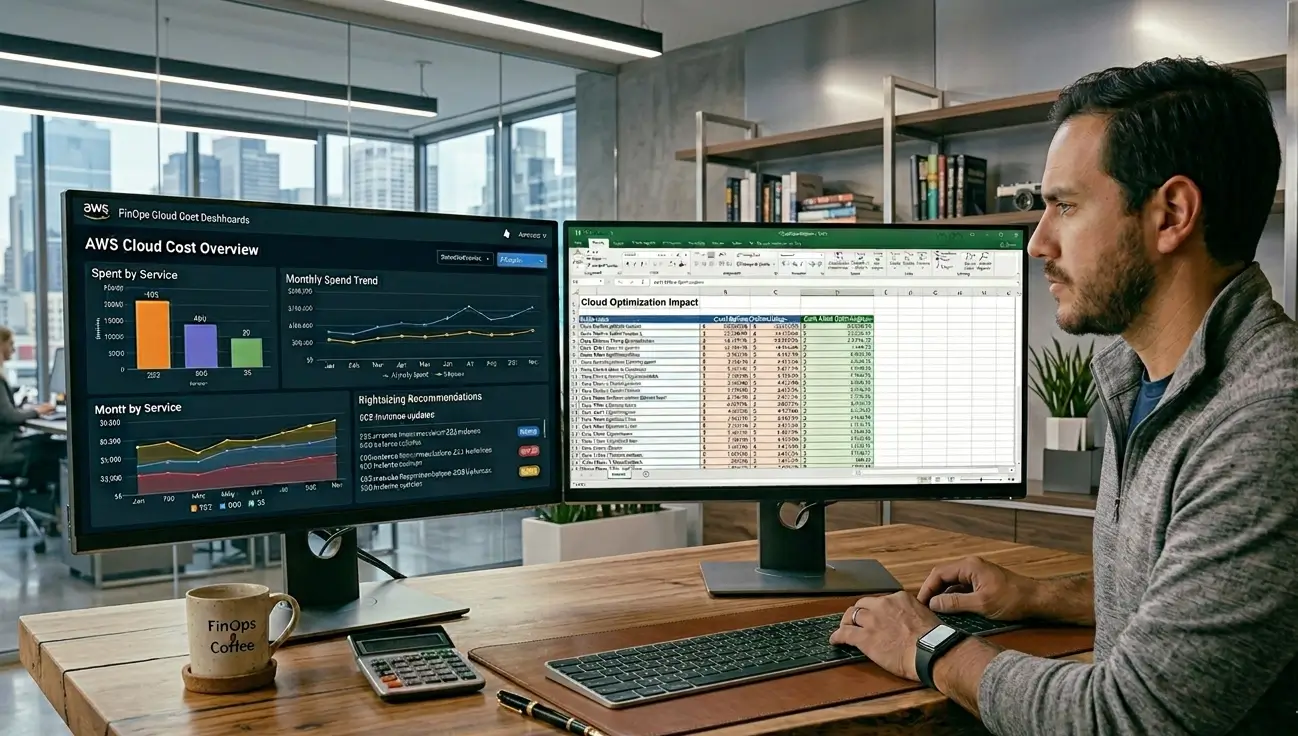
- Post-migration optimization: Rightsizing compute instances, implementing auto-scaling policies, optimizing storage tiering, and establishing the FinOps practices that prevent cloud spend from growing unchecked after migration; the FinOps Foundation's State of FinOps 2024 report found that reducing waste is the top priority for cloud financial management teams, and organizations without active post-migration optimization consistently overspend their projected cloud budgets by 30 to 40%.
The most common cloud migration failure modes — and how to avoid them
Cloud migration failure is well documented; Gartner's research consistently finds that a significant percentage of enterprise cloud migrations fail to deliver their projected cost savings, and the failure modes are predictable enough that experienced migration architects know how to design around them before the first workload moves.
- Skipping the discovery phase: Organizations that begin migrating workloads before completing a thorough application and infrastructure inventory consistently discover mid-migration that their complexity and cost assumptions were wrong; the applications that looked simple in an inventory spreadsheet have undocumented dependencies, hardcoded IP addresses, or legacy licensing constraints that make cloud migration significantly more complex than planned.
- Lift-and-shift without right-sizing: Moving a virtual machine from on-premises to the cloud at equivalent specs migrates the application but not the cost efficiency; on-premises servers are typically sized for peak load and run at 20 to 30% average utilization, while cloud pricing reflects actual consumption; organizations that don't right-size during migration pay cloud prices for on-premises resource allocation patterns.
- Neglecting the landing zone: Migrations that begin without a properly designed landing zone accumulate security debt with every workload that moves; fixing IAM misconfigurations, network segmentation gaps, and logging deficiencies after dozens of workloads are running in the cloud is a remediation project that costs more than building the landing zone correctly before migration began.
- No post-migration optimization plan: Cloud spend is variable and grows with usage in ways that on-premises infrastructure costs do not; organizations that migrate without establishing FinOps practices and cloud cost governance consistently see their cloud bills grow faster than their workload growth justifies, eroding the cost savings that made the migration business case viable.
Cloud migration services with LATAM architects through CodersLab
Fortune Business Insights projects the cloud migration services market to grow from USD 15.76 billion in 2026 to USD 86.06 billion by 2034 at a 23.64% CAGR, with North America accounting for 34% of global market share; according to Fortune Business Insights, the SME segment is growing fastest as cloud tooling and certified talent availability have improved sufficiently for mid-market organizations to execute migrations that previously required enterprise-scale consulting budgets.
CodersLab connects enterprises with AWS Solutions Architect, Azure Architect Expert, and Google Cloud Professional certified migration architects based across LATAM, working within one to four hours of U.S. Eastern Time; LATAM cloud architects cost 50-75% less than equivalent US-based professionals according to Howdy's 2025 salary benchmarks, making certified cloud migration expertise accessible to mid-market organizations that cannot justify US-rate consulting fees for a migration program that spans 6 to 18 months.
How CodersLab structures cloud migration engagements
Migration engagements start with a cloud readiness assessment that inventories your existing infrastructure, scores each application for migration complexity and cloud readiness, and produces the cost model and migration wave plan that forms the project baseline; most assessments complete within two to three weeks and produce the documentation that makes the migration business case defensible to finance and leadership before significant migration investment is committed.
Migration execution follows a wave-based approach that starts with the lowest-complexity workloads to build team confidence and validate the landing zone design before migrating business-critical applications; post-migration optimization and FinOps engagement begins in parallel with the final migration waves to ensure that cloud spend governance is in place before the full workload portfolio is running in the cloud.
Frequently Asked Questions
Cloud migration timelines depend on workload complexity and volume; a single application migration can complete in two to four weeks, while an enterprise-scale migration of 50 to 200 workloads typically takes 6 to 18 months executed in waves. The cloud readiness assessment at the start of the engagement produces a realistic wave plan with timeline estimates based on actual inventory complexity rather than assumptions.
Lift-and-shift moves an application to the cloud without modification; fastest and lowest risk, but doesn't capture cloud-native performance or cost benefits. Replatform moves the application to equivalent managed cloud services with minimal code changes; captures managed service benefits without full re-architecture. Refactor redesigns the application as cloud-native; highest cost and complexity, justified when the cloud-native version delivers materially better performance or cost than the lifted version.
LATAM cloud architects cost 50-75% less than equivalent US-based professionals according to Howdy's 2025 salary benchmarks, without sacrificing certification level or platform expertise. Specific migration costs depend on workload volume, complexity, and target cloud platform; the cloud readiness assessment produces the cost model that makes the migration business case defensible before significant investment is committed.
Qualified cloud migration architects hold platform certifications including AWS Solutions Architect Professional, Microsoft Azure Solutions Architect Expert (AZ-305), and Google Cloud Professional Cloud Architect; for migrations with significant data engineering components, AWS Database Specialty and Azure Data Engineer certifications are additionally relevant. CodersLab matches architects to engagements based on the target platform and workload types involved.
Cost overruns in cloud migrations come from three sources: inaccurate complexity estimates from skipping discovery, over-provisioning from lifting on-premises resource allocations to cloud without right-sizing, and post-migration spend growth from missing FinOps governance. CodersLab's migration engagements include discovery-based cost modeling, right-sizing analysis as part of migration planning, and post-migration FinOps practices that establish cloud cost governance before the full workload portfolio is running.
A landing zone is the cloud account structure, network topology, IAM framework, security baseline, and governance policies that every migrated workload inherits; it is the foundation that determines whether your cloud environment is secure and governable by design or requires remediation after workloads are already running. A poorly designed landing zone is the root cause of most post-migration security incidents and cost overruns; building it correctly before migration begins is the highest-leverage investment in a migration program.
Yes. 35% of MarketsandMarkets migration data shows projects converting to ongoing managed services contracts after migration completion; CodersLab's cloud managed services engagement covers post-migration infrastructure monitoring, cost optimization, security posture management, and platform updates that protect the migration investment after go-live. The managed services scope is defined during migration planning and activated in parallel with the final migration wave.
CodersLab's migration architects cover AWS, Microsoft Azure, and Google Cloud Platform, including hybrid and multi-cloud architectures for organizations that need workloads distributed across multiple providers; platform selection guidance is part of the cloud readiness assessment for organizations that haven't yet committed to a primary cloud provider or are considering a multi-cloud strategy.
Specialties & Solutions


Need a tech team?
We build and scale nearshore development teams for companies from startups to Fortune 500. +1,200 projects delivered for over 500 companies across LATAM.

Our process. Simple, seamless, streamlined.

Step 1

Let's schedule a strategic call
Tell us about your project in an exploratory session. We'll discuss team structure, technical needs, timelines, budget, and the skills needed to find the best solution for you.
Step 2

We design the solution and select your teams
In just a few days, we define project details, agree on the work model, and select the ideal talent for you. We ensure each profile integrates quickly and effectively.
Step 3

We launch and optimize performance
With agreed milestones, the team starts working immediately. We track progress, provide continuous reports, and adapt to your needs to ensure the best results.