
Cloud Security Services
If you are evaluating cloud security services, the challenge is specific to your cloud environment: the shared responsibility model means your cloud provider secures the infrastructure, but everything above the hypervisor, your data, your identities, your configurations, your applications, is your responsibility, and 66% of security leaders report lacking confidence in their ability to detect cloud threats in real time.
CodersLab connects US and international enterprises with certified cloud security specialists across LATAM, covering AWS, Azure, and GCP security assessments, identity and access management, Zero Trust architecture, cloud compliance, and DevSecOps integration, with full US timezone alignment and specialists who hold AWS Security, Azure Security Engineer, and CCSP certifications.

Cloud security market: USD 60.37B in 2026

The global cloud security market reached USD 60.37 billion in 2026 and is projected to reach USD 224.16 billion by 2034 at a 17.80% CAGR, with North America dominating at 38% market share driven by cloud-first enterprise adoption.
Fortune Business Insights, 2026277 days average to detect a cloud breach
Organizations faced 1,925 cyberattacks per week in Q1 2025, while the average time to detect a cloud breach remains 277 days; 66% of security leaders lack confidence in their real-time cloud threat detection capability.
SentinelOne Cloud Security Statistics, February 202645% of enterprises report cloud breaches

45% of enterprises report having experienced a cloud breach, while Zero Trust adoption reached 53% and 41% of enterprises integrated AI-driven cloud security solutions for real-time threat mitigation in 2025.
Business Research Insights Cloud Security Market, 2025Why cloud security is the fastest-growing cybersecurity segment in 2026
The global cloud security market reached USD 60.37 billion in 2026 and is projected to reach USD 224.16 billion by 2034, growing at a CAGR of 17.80% according to Fortune Business Insights; North America dominates with 38% of global market share, driven by the concentration of cloud-first enterprises and the escalating sophistication of attacks targeting cloud infrastructure.
The threat data supports the investment urgency: organizations faced 1,925 cyberattacks per week in Q1 2025 according to SentinelOne's 2026 cloud security statistics, the average time to detect a cloud breach remains 277 days, and 45% of enterprises report having experienced a cloud breach according to Business Research Insights; organizations with dedicated cloud security programs consistently detect and contain breaches faster and at lower cost than those relying on general IT security teams who lack cloud-specific expertise.
What cloud security services cover in practice
Cloud security is not a single service, it covers a range of assessment, implementation, and monitoring functions that address the specific attack surfaces that cloud environments create, which are fundamentally different from the on-premise security challenges that most internal IT teams were trained to address.
- Cloud security posture management (CSPM): Continuous assessment of your cloud configurations against security best practices and compliance benchmarks, identifying misconfigurations that expose your environment to attack; misconfiguration is consistently the leading cause of cloud breaches because cloud environments are complex, change frequently, and are often configured by developers who lack security training rather than by security specialists.
- Identity and access management (IAM): Designing and implementing the access control architecture that governs who can do what in your cloud environment; IAM is the #1 most targeted attack surface in cloud environments according to IBM's X-Force 2026 report, and over-permissioned identities, unused service accounts, and missing MFA enforcement are the misconfigurations that attackers exploit most frequently in cloud breaches.
- Zero Trust architecture: Implementing the "never trust, always verify" security model across your cloud environment, replacing implicit trust based on network location with explicit verification of every access request; Zero Trust adoption reached 53% among enterprises in 2025 according to Business Research Insights, driven by the recognition that perimeter-based security is inadequate for cloud environments where the network perimeter no longer exists.
- Cloud penetration testing: Actively attempting to exploit vulnerabilities in your cloud environment, including misconfigured storage buckets, weak IAM policies, container escape vulnerabilities, and lateral movement paths between cloud services; cloud penetration testing is growing at the highest CAGR within the broader pen testing market at 15.9% according to MarketsandMarkets, reflecting the rapid migration of sensitive workloads to cloud infrastructure.
- DevSecOps integration: Embedding security controls into your CI/CD pipeline so that security vulnerabilities are identified and remediated during development rather than discovered post-deployment; DevSecOps shifts security left in the development lifecycle, reducing the cost of vulnerability remediation by an order of magnitude compared to fixing issues in production.
- Cloud compliance: Mapping your cloud environment's security controls to specific compliance frameworks including SOC 2, PCI DSS, HIPAA, and ISO 27001, with automated evidence collection, gap assessment, and remediation guidance that satisfies auditor requirements without requiring your engineering team to manually compile compliance documentation.
The misconfiguration problem that drives cloud security demand
The most common source of cloud breaches is not sophisticated zero-day exploits or nation-state attackers, it is misconfiguration, which is the security equivalent of leaving the door unlocked because someone didn't know it needed to be locked; cloud environments are complex, change constantly, and are typically managed by engineers whose primary expertise is infrastructure and application development rather than security.
- Exposed storage buckets: S3 buckets, Azure Blob containers, and GCP Cloud Storage buckets configured with public access when they should be private are consistently among the most commonly exploited cloud misconfigurations, exposing sensitive data to anyone who knows the URL.
- Over-permissioned IAM roles: Service accounts and IAM roles with broader permissions than their function requires create lateral movement paths that attackers use to escalate privileges after initial access; the principle of least privilege is universally recommended but infrequently implemented consistently across growing cloud environments.
- Unencrypted data at rest and in transit: Data stored or transmitted without encryption exposes sensitive information to attackers who gain access to storage or network traffic; encryption configuration is a compliance requirement under PCI DSS, HIPAA, and GDPR, but is frequently misconfigured or inconsistently applied across cloud environments that have grown rapidly.
- Missing MFA on privileged accounts: Administrative accounts without multi-factor authentication are the entry point for the majority of cloud account takeover incidents; according to Microsoft's 2025 Digital Defense Report, MFA blocks over 99% of password-based attacks, yet privileged cloud accounts without MFA remain common in environments that prioritized velocity over security during cloud migration.
Cloud security services with LATAM specialists through CodersLab
CodersLab connects enterprises with certified cloud security specialists based across LATAM, holding AWS Certified Security Specialty, Microsoft Azure Security Engineer Associate, Google Cloud Professional Cloud Security Engineer, and CCSP certifications, working within one to four hours of U.S. Eastern Time; according to Howdy's 2025 salary benchmarks, LATAM cybersecurity specialists cost 50-75% less than equivalent US-based professionals without a corresponding reduction in certification level or cloud platform expertise.
The cloud security talent pool in LATAM has expanded significantly as cloud adoption in the region grew and engineers accumulated production experience securing cloud environments for US and international clients; the combination of timezone alignment, certified expertise, and cost efficiency makes nearshore LATAM cloud security engagement the dominant model for US companies that need cloud security depth beyond what their internal DevOps teams can provide.
How CodersLab structures cloud security engagements
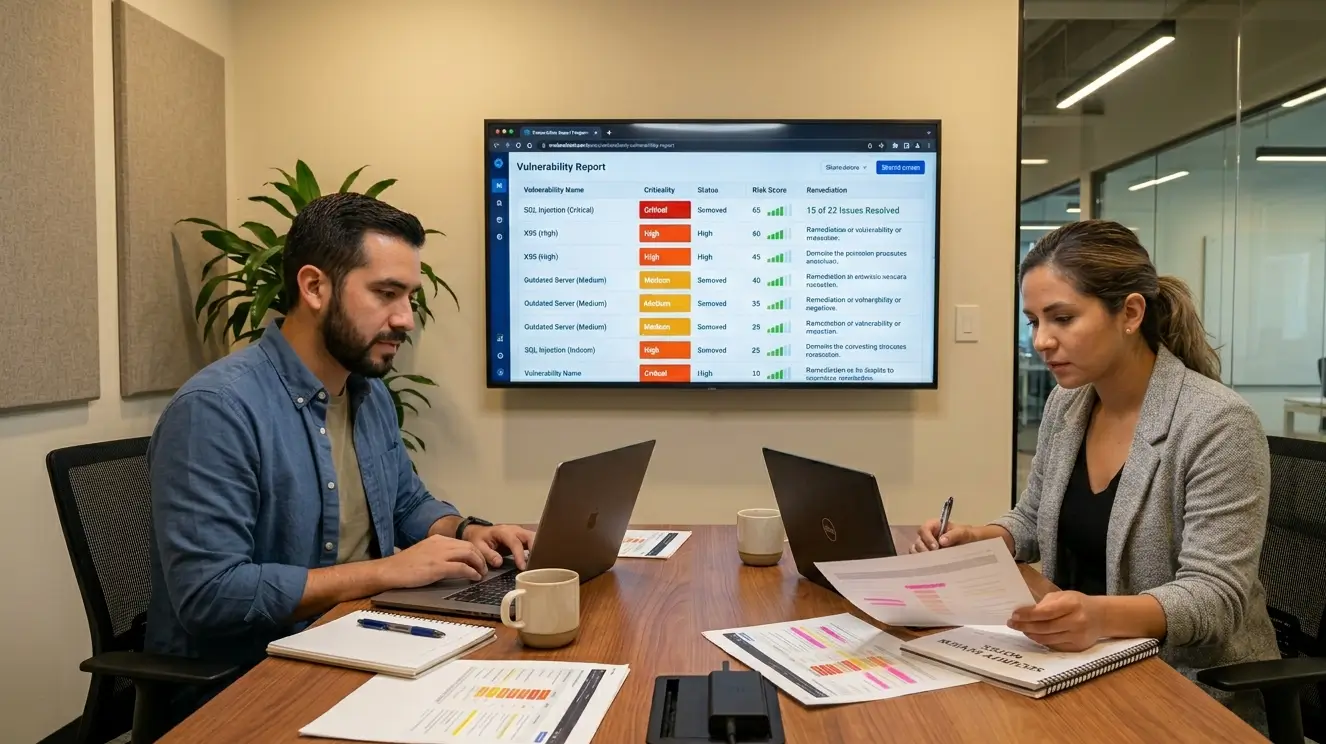
Cloud security engagements start with a cloud security posture assessment that maps your current AWS, Azure, or GCP environment against security best practices, identifies the highest-risk misconfigurations and compliance gaps, and produces a prioritized remediation roadmap; most initial assessments complete within two to three weeks, with remediation support beginning immediately after findings are reviewed.
Ongoing cloud security engagements are structured as retainers covering continuous CSPM monitoring, IAM governance, and compliance reporting, with monthly security reviews that track remediation progress and identify new risks introduced by infrastructure changes; the engagement scope is adjusted quarterly as your cloud environment evolves.
Frequently Asked Questions
The shared responsibility model defines what the cloud provider secures versus what the customer is responsible for. Your cloud provider (AWS, Azure, GCP) secures the physical infrastructure and hypervisor; you are responsible for everything above that, including your data, identities, applications, configurations, and network controls. Most cloud breaches exploit customer-side responsibilities, not provider infrastructure failures.
The most commonly exploited cloud security vulnerabilities are misconfigurations including publicly exposed storage buckets, over-permissioned IAM roles, missing MFA on privileged accounts, and unencrypted data at rest and in transit. These are not sophisticated exploits; they are configuration errors that automated scanning and CSPM tools can identify and that certified cloud security specialists can remediate systematically.
Most initial cloud security posture assessments complete within two to three weeks, covering your AWS, Azure, or GCP environment against security best practices and compliance benchmarks. The assessment produces a prioritized remediation roadmap with findings ranked by exploitability and business impact; remediation support begins immediately after findings are reviewed with your team.
Recognized cloud security certifications include AWS Certified Security Specialty, Microsoft Azure Security Engineer Associate (AZ-500), Google Cloud Professional Cloud Security Engineer, CCSP (Certified Cloud Security Professional), and CISSP for senior security architects. CodersLab matches specialists to engagements based on the cloud platform and compliance framework requirements specific to each client environment.
LATAM cybersecurity specialists cost 50-75% less than equivalent US-based professionals according to Howdy's 2025 salary benchmarks, without sacrificing certification level or cloud platform depth. Specific engagement costs depend on scope, cloud environment complexity, and whether the engagement covers assessment only or includes ongoing managed security services; a scoping call provides an accurate estimate.
Cloud security engagements through CodersLab are structured to satisfy the technical control requirements of SOC 2 Type II, PCI DSS, HIPAA, ISO 27001, and GDPR for organizations operating in European markets. Compliance coverage is mapped during the initial assessment, with automated evidence collection that reduces the manual burden of audit preparation for each applicable framework.
Zero Trust is a security model that eliminates implicit trust based on network location, requiring explicit verification of every access request regardless of whether it originates inside or outside the network perimeter. Zero Trust adoption reached 53% among enterprises in 2025 because cloud environments have no meaningful network perimeter; users, devices, and services access cloud resources from anywhere, making perimeter-based security models fundamentally inadequate.
Yes. DevSecOps integration embeds security controls into your CI/CD pipeline, scanning infrastructure-as-code for misconfigurations before deployment, running automated security tests as part of the build process, and enforcing security policies at the pipeline level. This shifts security left in the development lifecycle, identifying and remediating vulnerabilities during development rather than discovering them in production after deployment.
Specialties & Solutions



Need a tech team?
We build and scale nearshore development teams for companies from startups to Fortune 500. +1,200 projects delivered for over 500 companies across LATAM.

Our process. Simple, seamless, streamlined.

Step 1

Let's schedule a strategic call
Tell us about your project in an exploratory session. We'll discuss team structure, technical needs, timelines, budget, and the skills needed to find the best solution for you.
Step 2

We design the solution and select your teams
In just a few days, we define project details, agree on the work model, and select the ideal talent for you. We ensure each profile integrates quickly and effectively.
Step 3

We launch and optimize performance
With agreed milestones, the team starts working immediately. We track progress, provide continuous reports, and adapt to your needs to ensure the best results.