

Penetration Testing Services
If you are evaluating penetration testing services, the question is not whether your systems have vulnerabilities, they do, the question is whether you find them before someone else does; a penetration test puts certified ethical hackers on your infrastructure with the explicit objective of finding every exploitable weakness before a malicious actor can use it against you.
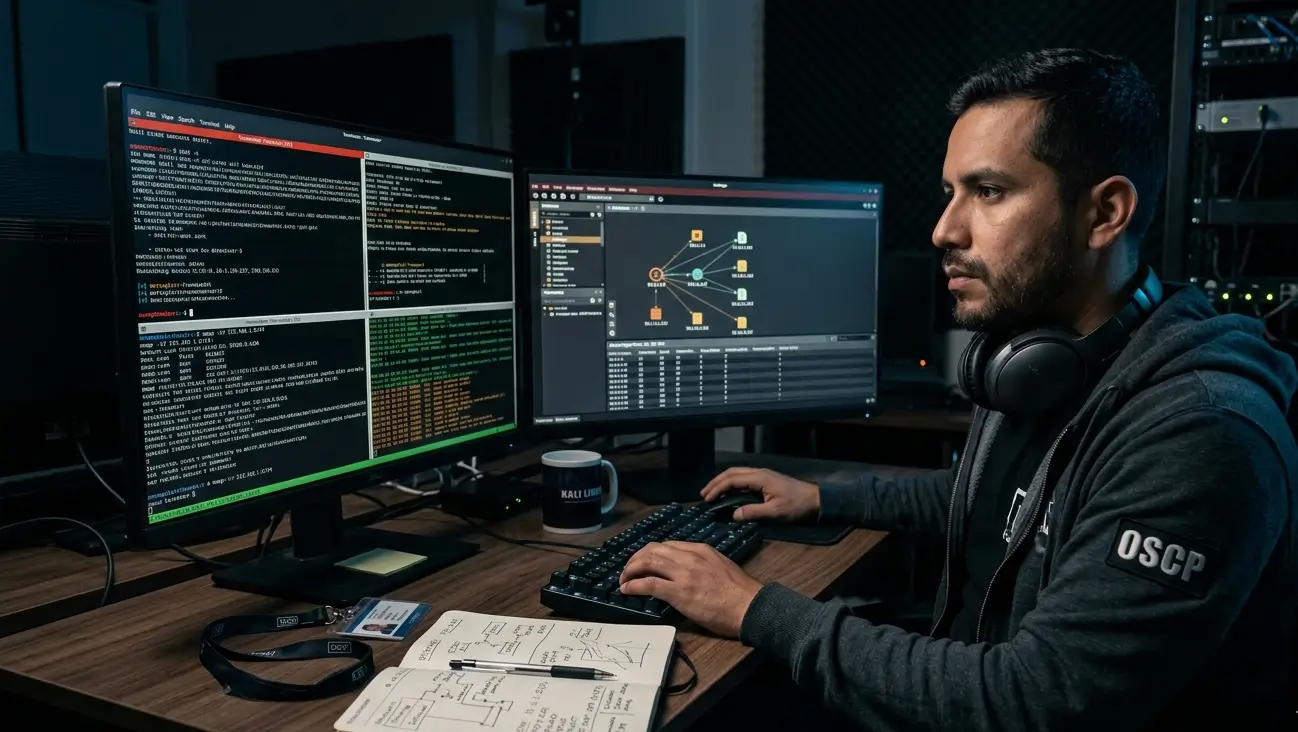
CodersLab connects US and international enterprises with certified penetration testing specialists across LATAM, covering network, application, cloud, and social engineering assessments with full US timezone alignment, structured reporting that maps findings to remediation priorities, and specialists who hold OSCP, CEH, and CISSP certifications.
Pen testing market: USD 3.09B in 2026

The global penetration testing market reached USD 3.09 billion in 2026, growing to USD 7.41 billion by 2034 at 11.60% CAGR, with North America accounting for 35.10% of global demand driven by regulatory compliance requirements.
Fortune Business Insights, 2026AI phishing achieves 54% click-through rate

AI-generated phishing emails achieve a 54% click-through rate compared to 12% for traditional phishing according to Microsoft's 2025 Digital Defense Report, making social engineering assessments a critical component of any penetration testing program.
Microsoft Digital Defense Report, 202575.4% of pen testing is manual in 2025

Manual penetration testing dominates the market at 75.4% share, reflecting the need for human judgment that automated scanners cannot replicate; cloud security penetration testing grows at the highest CAGR of 15.9% as cloud workloads expand.
MarketsandMarkets Penetration Testing Report, 2025Why penetration testing demand keeps growing despite better security tools
The global penetration testing market reached USD 3.09 billion in 2026 and is projected to reach USD 7.41 billion by 2034, growing at a CAGR of 11.60% according to Fortune Business Insights; North America accounts for 35.10% of global demand, and the growth continues despite widespread adoption of automated vulnerability scanners because those tools find known vulnerabilities, while penetration testing finds the attack chains that automated tools miss, the combinations of misconfigurations, weak credentials, and legitimate access paths that a skilled human attacker would chain together to reach your most sensitive systems.
According to IBM's X-Force Threat Intelligence Index 2026, supply chain and third-party breaches quadrupled over the past five years, and North America became the most attacked region for the first time in six years, accounting for 29% of all incident response cases; organizations that test their security posture proactively through penetration testing consistently experience fewer breach incidents than those that rely solely on perimeter defenses and automated scanning.
What penetration testing services actually cover
Penetration testing is not a single service, it covers a spectrum of assessment types that target different attack surfaces, and the right scope depends on what your organization needs to protect and what regulatory frameworks govern your data handling.
- Network penetration testing: Simulating external and internal attacker access to your network infrastructure, identifying exploitable vulnerabilities in firewalls, routers, switches, and servers; manual network penetration testing dominates the market with 75.4% share according to MarketsandMarkets 2025 data, reflecting the continued need for human judgment in assessing complex network environments that automated tools assess incompletely.
- Web application penetration testing: Testing web applications for OWASP Top 10 vulnerabilities including injection attacks, broken authentication, insecure direct object references, and cross-site scripting, with manual exploitation attempts that go beyond what automated scanners detect; web application testing is mandatory under PCI DSS for any organization handling payment card data.
- Cloud penetration testing: Assessing cloud environments in AWS, Azure, and GCP for misconfigurations, excessive permissions, exposed storage buckets, and lateral movement paths; cloud security penetration testing is growing at the highest CAGR of 15.9% within the pen testing market according to MarketsandMarkets, reflecting the rapid migration of sensitive workloads to cloud environments that many security teams don't fully understand how to assess.
- Social engineering assessments: Simulated phishing campaigns, vishing attacks, and physical security tests that evaluate whether your employees and processes are the weakest link in your security posture; Microsoft's 2025 Digital Defense Report found that AI-generated phishing emails achieve a 54% click-through rate compared to 12% for traditional phishing, making social engineering assessments more critical than ever.
- Red team operations: Full-scope adversary simulations that combine network, application, and social engineering techniques to achieve specific business-relevant objectives, testing not just individual vulnerabilities but the entire security program's ability to detect, respond to, and contain a sophisticated attack.
What to look for when evaluating penetration testing services providers
The penetration testing market is populated by providers ranging from solo contractors to large consulting firms, and the quality variance is significant; a penetration test that finds nothing is not necessarily a clean bill of health, it may be a sign that the tester didn't look hard enough or lacked the skills to chain vulnerabilities into realistic attack paths.
- Certifications and methodology: Qualified penetration testers hold recognized certifications including OSCP (Offensive Security Certified Professional), CEH (Certified Ethical Hacker), GPEN, or CISSP; ask specifically which certifications the testers assigned to your engagement hold, not just whether the company employs certified staff in general.
- Manual vs. automated testing ratio: A penetration test that is primarily automated scanner output with minimal manual exploitation is not a penetration test, it is a vulnerability scan with a higher price tag; ask what percentage of the engagement involves manual testing and how many hours a human tester will actively spend attempting to exploit your systems.
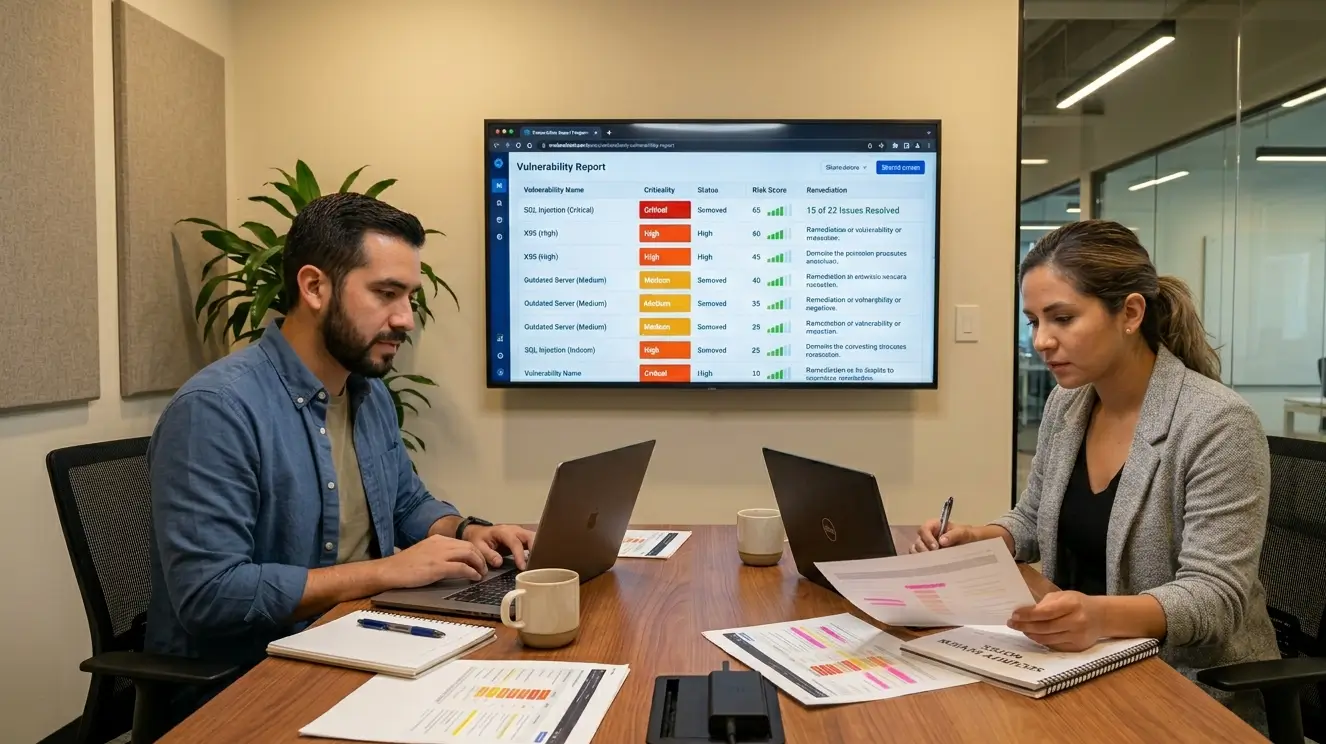
- Reporting quality: The value of a penetration test is largely in the report; a good report maps each finding to its business impact, provides a realistic risk rating based on exploitability and data sensitivity, and gives the remediation team actionable steps to fix each issue, not just a CVE number and a generic recommendation.
- Retesting policy: After remediating findings from a penetration test, does the provider retest to confirm the vulnerabilities are actually fixed? Providers who don't offer retesting leave you with the assumption that your fixes worked rather than the confirmation that they did.
Penetration testing compliance requirements in 2026
Penetration testing is not just a security best practice, it is a regulatory requirement for organizations operating under several major compliance frameworks, and the consequences of non-compliance in 2026 are significantly more severe than they were five years ago.
- PCI DSS: Requires penetration testing at least annually and after any significant infrastructure change for all organizations that store, process, or transmit cardholder data; the BFSI segment dominated the penetration testing market in 2025 according to Data Bridge Market Research, driven directly by PCI DSS and financial services regulatory requirements.
- SOC 2 Type II: While SOC 2 does not explicitly mandate penetration testing, auditors increasingly expect evidence of penetration testing as part of demonstrating the Security trust service criteria, particularly for software companies handling sensitive customer data.
- ISO 27001: Requires organizations to assess information security risks and implement appropriate controls; penetration testing is the most direct way to validate that those controls actually work against a motivated attacker rather than just existing on paper.
- HIPAA: Requires covered entities and business associates to conduct regular technical and non-technical evaluations of security safeguards; penetration testing satisfies the technical evaluation requirement and provides the documentation that auditors expect.
Penetration testing services with LATAM specialists through CodersLab
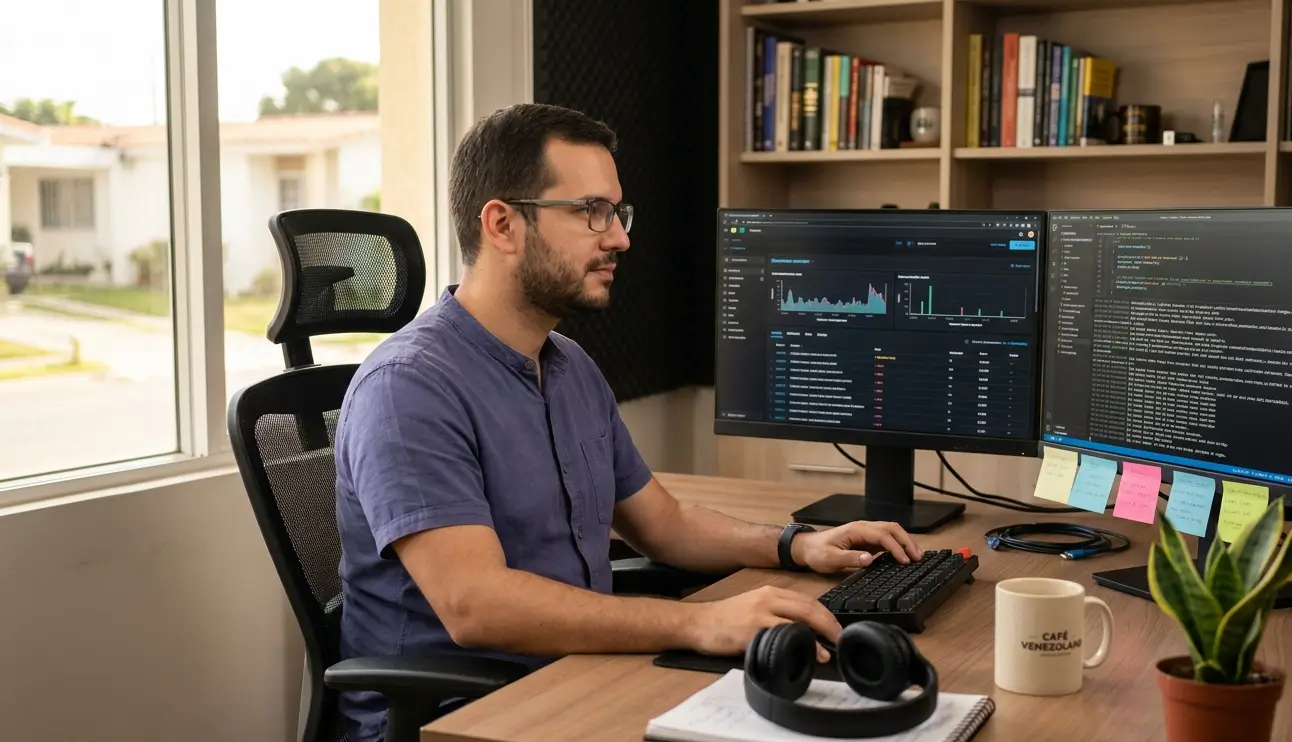
CodersLab's penetration testing engagements connect enterprises with certified ethical hackers based across LATAM, working within one to four hours of U.S. Eastern Time; this timezone alignment matters for penetration testing specifically because active testing often surfaces questions, findings, or decisions that require real-time communication between the testing team and the client's security or IT leadership, not asynchronous exchanges across a 12-hour offshore time difference.
According to Howdy's 2025 salary benchmarks, LATAM cybersecurity specialists cost 50-75% less than equivalent US-based professionals without a corresponding reduction in certification level or technical depth; the LATAM talent pool in 2026 includes certified penetration testers with experience in financial services, healthcare, retail, and enterprise SaaS environments across both US and international clients.
How CodersLab structures penetration testing engagements
Engagements start with a scoping call to define the target systems, testing methodology, rules of engagement, and the regulatory frameworks that need to be satisfied; most penetration testing engagements are completed within two to four weeks from kickoff, with a draft report delivered within five business days of testing completion and a final report incorporating client feedback within ten business days.
Retesting for critical and high findings is included in standard engagements, and the final report is structured to satisfy the documentation requirements of PCI DSS, SOC 2, ISO 27001, and HIPAA auditors without requiring additional formatting or translation.
Frequently Asked Questions
PCI DSS requires penetration testing at least annually and after significant infrastructure changes. SOC 2 auditors expect annual testing for software companies. Outside compliance requirements, organizations with active development pipelines or recent cloud migrations benefit from testing every six months, as new code and infrastructure changes create new attack surface faster than annual testing can track.
A vulnerability scan uses automated tools to identify known vulnerabilities against a database of CVEs; it finds what is there, not what can be exploited. A penetration test uses certified ethical hackers to actively attempt to exploit vulnerabilities and chain them into realistic attack paths that reach sensitive data; it finds what an attacker could actually do with what is there, which is a significantly different and more actionable output.
Most penetration testing engagements complete active testing within two to four weeks from kickoff, depending on scope; web application tests for a single application typically take one to two weeks, while full network and cloud assessments for enterprise environments take three to four weeks. Draft reports are delivered within five business days of testing completion.
Recognized penetration testing certifications include OSCP (Offensive Security Certified Professional), CEH (Certified Ethical Hacker), GPEN, GWAPT for web applications, and CISSP for senior security professionals. OSCP is considered the most rigorous because it requires passing a 24-hour hands-on exam rather than a multiple-choice test, making it the most reliable signal of practical exploitation capability.
Yes. PCI DSS requires penetration testing at least annually and after any significant infrastructure change for all organizations that store, process, or transmit cardholder data. The penetration test must cover the entire cardholder data environment and must be performed by a qualified internal resource or a qualified external third party with organizational independence from the systems being tested.
A quality penetration testing report includes an executive summary for non-technical stakeholders, a technical findings section with each vulnerability mapped to its exploitability, business impact, and CVSS score, evidence of successful exploitation including screenshots and proof-of-concept details, and remediation recommendations specific to your technology stack, not generic best practices.
LATAM cybersecurity specialists cost 50-75% less than equivalent US-based professionals according to Howdy's 2025 salary benchmarks, without sacrificing certification level or technical depth. Specific engagement costs depend on scope, target systems, and testing methodology; a scoping call is the fastest way to get an accurate estimate for your specific environment.
A penetration test has a defined scope and objective of finding as many vulnerabilities as possible within that scope; the client's security team typically knows testing is occurring. A red team engagement simulates a full adversary operation with a specific business-relevant objective, often without the security team's knowledge, testing not just vulnerabilities but the entire security program's ability to detect and respond to a sophisticated attack.
Specialties & Solutions


Need a tech team?
We build and scale nearshore development teams for companies from startups to Fortune 500. +1,200 projects delivered for over 500 companies across LATAM.

Our process. Simple, seamless, streamlined.

Step 1

Let's schedule a strategic call
Tell us about your project in an exploratory session. We'll discuss team structure, technical needs, timelines, budget, and the skills needed to find the best solution for you.
Step 2

We design the solution and select your teams
In just a few days, we define project details, agree on the work model, and select the ideal talent for you. We ensure each profile integrates quickly and effectively.
Step 3

We launch and optimize performance
With agreed milestones, the team starts working immediately. We track progress, provide continuous reports, and adapt to your needs to ensure the best results.