
AI Automation Services
If you're evaluating AI automation services, the decision comes down to one question: which workflows in your operation are consuming senior talent on tasks that a well-designed AI system could handle faster, cheaper, and without the error rates that manual execution introduces at scale?
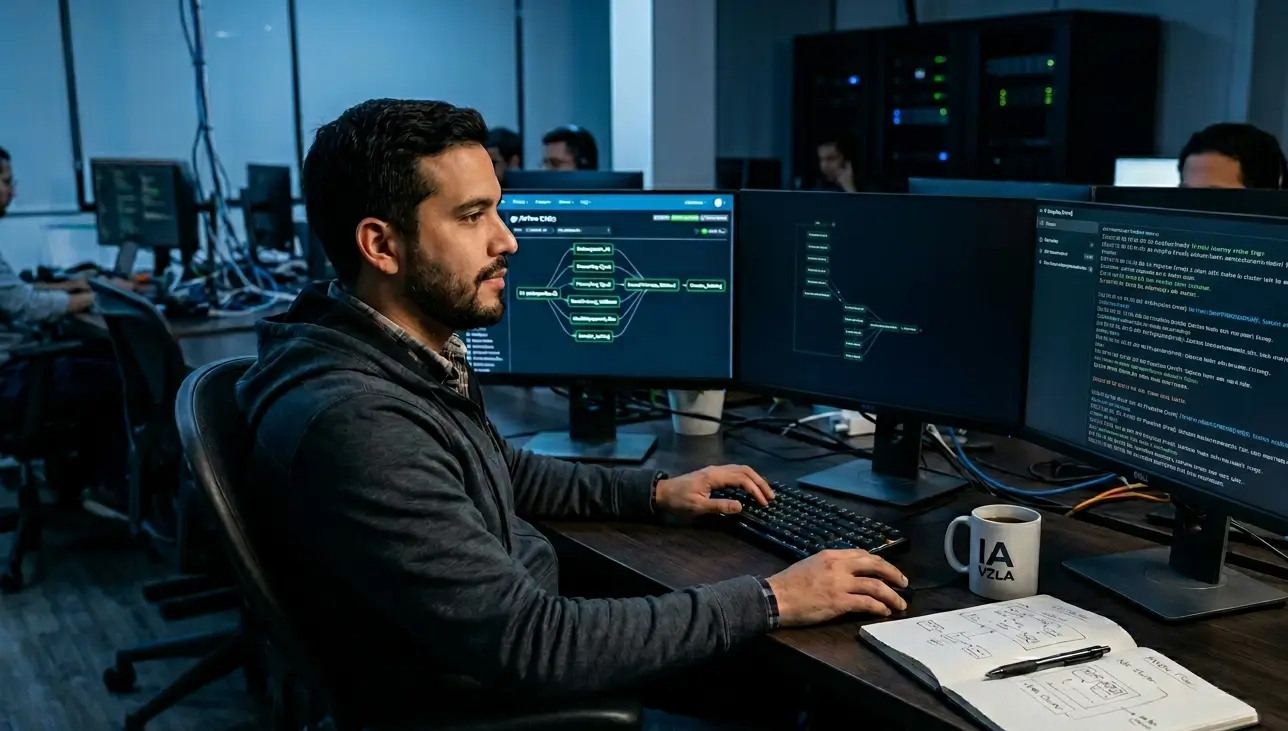
CodersLab delivers AI automation services through dedicated engineering teams based across LATAM, building production-ready automation systems for US and international companies with full timezone alignment, multi-stage technical vetting, and a delivery model that goes from scoping call to working prototype in weeks, not quarters.
AI automation market: USD 169.46B in 2026

The global AI automation market reached USD 129.92B in 2025 and is projected to hit USD 169.46B in 2026, growing at 31.4% CAGR as enterprises shift AI automation from pilot budget to core operations.
Grand View Research, 202635% operational cost reduction in year one
Companies adopting AI automation report 35% average reduction in operational costs within the first year and 250% average ROI within 18 months, according to McKinsey and AdAI research compiled in 2025–2026.
McKinsey Global Institute & AdAI, 2025–202640% of enterprise apps will have AI agents by 2026

Gartner projects 40% of enterprise applications will include task-specific AI agents by end of 2026, up from less than 5% in 2025; 72% of large enterprises have already adopted some form of AI automation.
Gartner via Cyntexa & McKinsey, 2026Why AI automation has moved from pilot to production priority in 2026
The global AI automation market reached USD 129.92 billion in 2025 and is projected to reach USD 169.46 billion in 2026, growing at a CAGR of 31.4% toward USD 1.14 trillion by 2033 according to Grand View Research; that growth reflects a structural shift in how enterprises approach operational efficiency not as a cost-cutting exercise, but as a competitive necessity.
According to Gartner, 40% of enterprise applications will include task-specific AI agents by the end of 2026, up from less than 5% in 2025; companies already operating at scale with AI automation report a 35% average reduction in operational costs within the first year according to McKinsey (2025), and an average ROI of 250% within 18 months numbers that have moved AI automation from innovation budget to core operations budget for most enterprise technology leaders.
What AI automation services actually cover
AI automation is not a single technology or a single engagement type; it's an umbrella term that covers several distinct categories of intelligent workflow optimization, and the right implementation depends entirely on which processes in your operation are generating the most friction, cost, or delay.
- Intelligent process automation (IPA): Combining robotic process automation with AI capabilities to handle exception cases, contextual decision-making, and continuous process improvement across finance, HR, procurement, and supply chain functions that traditional RPA can't handle without constant human intervention.
- AI agent development: Building autonomous AI agents that can take actions and make decisions without step-by-step human instructions; 51% of companies have already deployed AI agents according to Master of Code (2026), and 48% are running agentic systems in production, not just piloting them.
- Generative AI automation: Integrating LLMs and generative AI into content creation, customer service, software development, and knowledge management workflows to replace repetitive high-volume tasks with AI-generated outputs that maintain quality at a fraction of the cost.
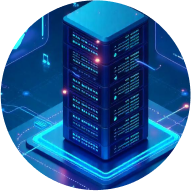
- Predictive automation: Building ML models that anticipate process failures, demand fluctuations, or customer behavior patterns before they occur, enabling proactive intervention rather than reactive response across operations, maintenance, and customer experience functions.
- Custom workflow automation: Designing and implementing end-to-end automation pipelines for specific business processes that off-the-shelf tools can't handle, with API integrations, data pipelines, and monitoring systems built for your specific tech stack and operational requirements.
How to evaluate AI automation services providers
The AI automation market is crowded and the claims are consistent: faster workflows, lower costs, production-ready systems; the differentiator is almost never in the pitch, it's in whether the provider has engineers who have actually shipped AI automation systems into production environments rather than built demos that work in controlled conditions and break under real operational load.
- Production experience vs. pilot experience: Ask specifically whether the team has shipped AI automation systems that are currently running in production at scale, and request examples of the monitoring, error handling, and fallback mechanisms they built; providers who only reference pilots or prototypes are selling you their learning curve, not their expertise.
- Integration depth: Most AI automation engagements require deep integration with existing systems ERP, CRM, data warehouses, internal APIs; a provider who can't demonstrate experience integrating with your specific stack is going to spend your budget figuring out what an experienced team already knows.
- Model selection transparency: Which foundation models does the provider use and why? Providers who default to a single LLM for every use case are optimizing for familiarity, not performance; the right model depends on latency requirements, cost per token, context window needs, and compliance constraints that vary by use case.
- Maintenance and monitoring plan: AI systems degrade over time as data distributions shift and model behavior changes; what is the provider's post-deployment plan for monitoring performance, retraining models, and managing model updates without disrupting production workflows?
AI automation services with LATAM engineers through CodersLab
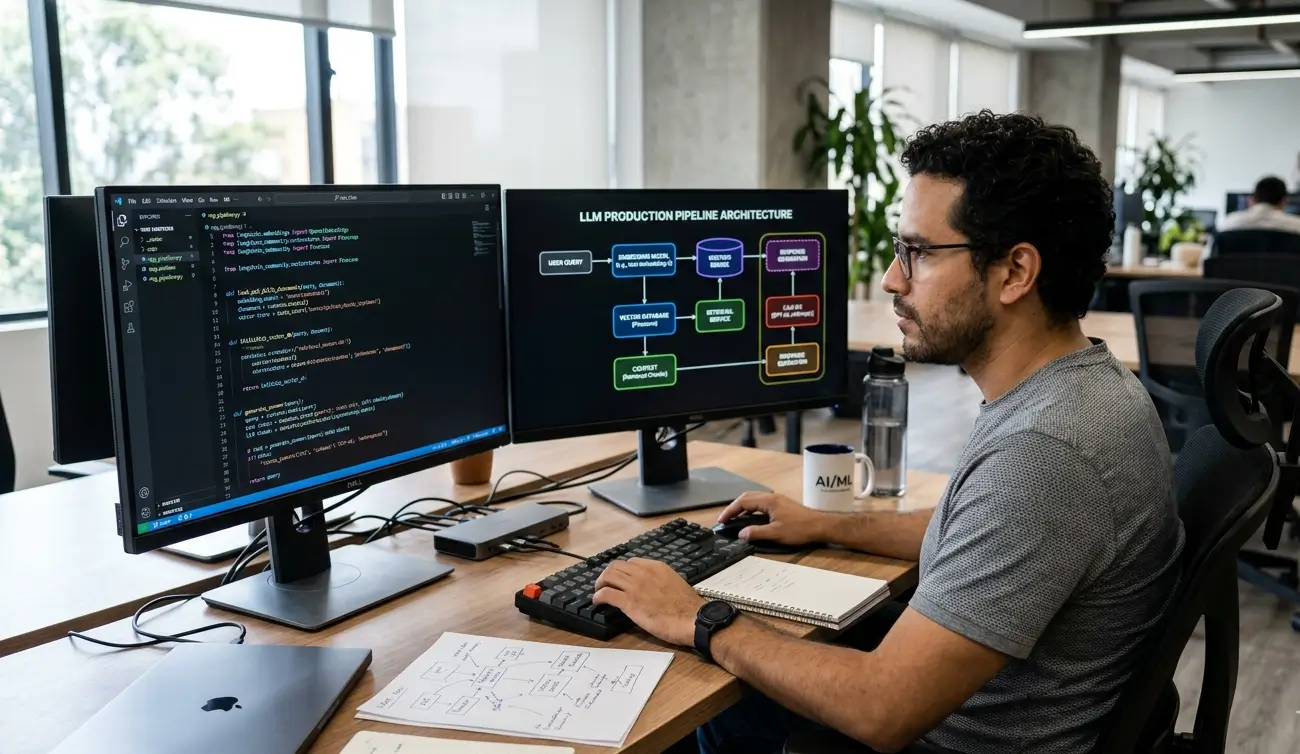
CodersLab's AI automation engineering teams combine deep technical expertise in Python, LangChain, LLM integration, and MLOps with the timezone alignment and communication standards that US companies need for real-time collaboration on complex technical implementations; engineers work within one to four hours of U.S. Eastern Time, making it possible to iterate on AI automation systems at sprint velocity rather than the overnight handoff cycles that offshore models introduce.
According to Howdy's 2025 salary benchmarks, LATAM AI engineers cost 50–75% less than equivalent US hires without a corresponding reduction in seniority or technical depth; the LATAM talent pool in 2026 includes engineers with production experience in LLM integration, computer vision, NLP, and agentic AI systems built for enterprise clients across fintech, healthtech, retail, and logistics.
AI automation implementation: what to expect
A well-structured AI automation engagement follows a consistent pattern regardless of the specific use case or technology stack; the variables are the complexity of the workflow being automated, the quality of the data available to train or fine-tune models, and the depth of integration required with existing systems.
- Discovery and scoping (week 1–2): Technical assessment of target workflows, data audit, model selection, integration mapping, and definition of success metrics before any development begins; this phase prevents the most common failure mode in AI automation building a system that works technically but doesn't integrate with how the business actually operates.
- Prototype and validation (week 3–6): Working prototype of the core automation logic with real data, validated against the success metrics defined in discovery; the prototype phase is where most AI automation investments either confirm viability or surface the integration complexity that wasn't visible in the scoping phase.
- Production build and deployment (week 7–14): Full production implementation with monitoring, alerting, fallback mechanisms, and documentation; CodersLab's AI automation teams include MLOps engineers who build the infrastructure layer that keeps AI systems performing reliably after initial deployment.
- Monitoring and optimization (ongoing): Continuous performance monitoring, model retraining triggers, and quarterly reviews of automation ROI against baseline metrics established before deployment.
Getting started with AI automation services at CodersLab
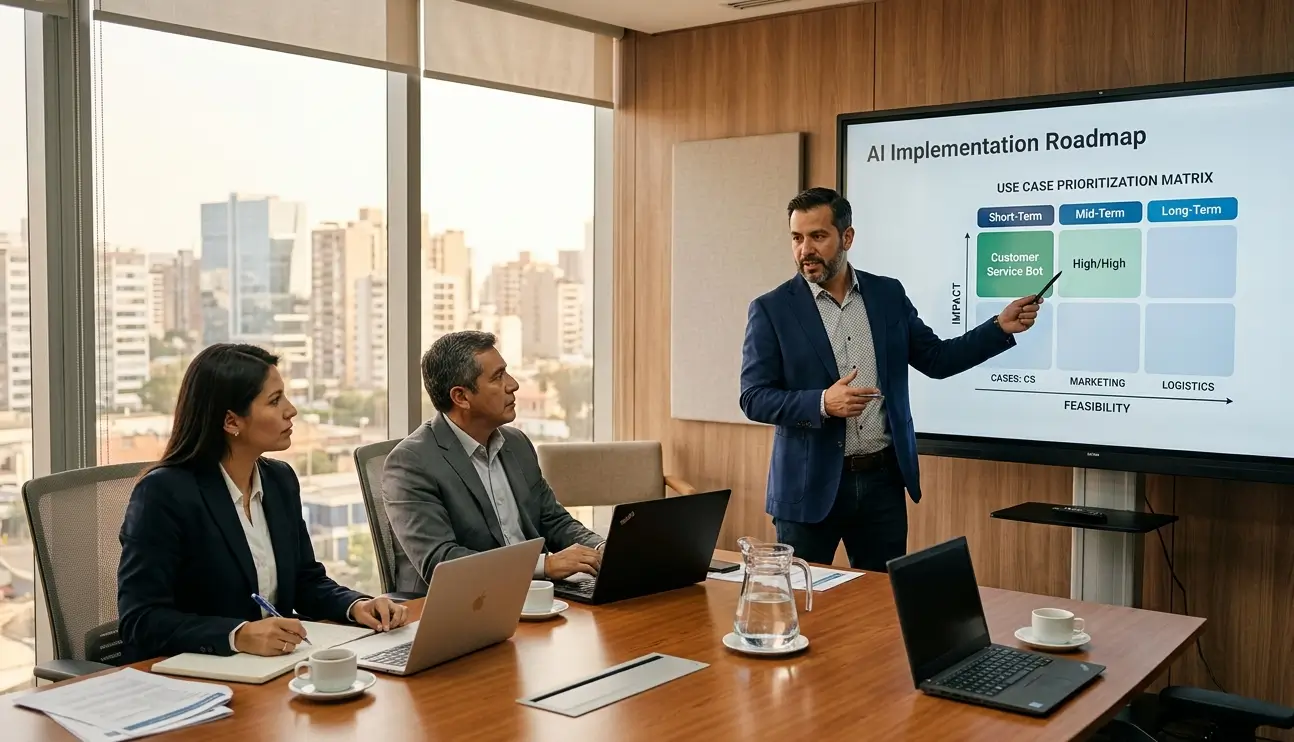
The process starts with a technical scoping call to identify the highest-value automation opportunities in your operation, assess data readiness, and define the engagement model that fits your timeline and budget; most AI automation engagements have a working prototype within four to six weeks and production systems operational within 10 to 14 weeks of contract signing, depending on integration complexity.
Frequently Asked Questions
A working prototype typically takes four to six weeks from contract signing; full production deployment takes 10 to 14 weeks depending on integration complexity and data readiness. The process starts with a technical scoping call to assess target workflows, data availability, and integration requirements before any development begins.
Companies that implement AI automation report 35% average reduction in operational costs within the first year and 250% average ROI within 18 months according to McKinsey and AdAI research (2025–2026). ROI varies by use case; customer service and data processing automation consistently deliver the fastest returns.
AI automation covers intelligent process automation, AI agent development, generative AI integration, predictive automation, and custom workflow automation. The right implementation depends on which workflows generate the most friction, cost, or delay in your specific operation this is assessed in the scoping phase before development starts.
LATAM AI engineers cost 50–75% less than equivalent US hires according to Howdy's 2025 salary benchmarks, without sacrificing seniority or technical depth. Specific engagement costs depend on scope, team size, and timeline; a scoping call is the fastest way to get an accurate estimate for your specific requirements.
CodersLab's AI automation teams work with Python, LangChain, LLM APIs (GPT, Claude, Gemini, LLaMA), TensorFlow, PyTorch, and MLOps infrastructure across AWS, GCP, and Azure. Model selection is use-case specific the right model depends on latency, cost, context window, and compliance requirements unique to each engagement.
Yes. Most AI automation engagements require deep integration with existing ERP, CRM, data warehouses, and internal APIs. CodersLab's teams assess integration requirements during the scoping phase and include dedicated integration engineers for engagements where system complexity is the primary technical challenge.
CodersLab includes post-deployment monitoring, alerting, and fallback mechanisms as part of every production AI automation engagement. MLOps engineers monitor model performance, set up retraining triggers, and conduct quarterly ROI reviews against the baseline metrics established before deployment began.
Yes. SMB adoption of AI automation jumped from 22% in 2024 to 38% in 2026 according to McKinsey and Salesforce research, driven by cloud-based automation tools that don't require enterprise-scale infrastructure. CodersLab structures engagements for companies at different stages of AI maturity, from first automation pilot to full production scale.
Specialties & Solutions



Need a tech team?
We build and scale nearshore development teams for companies from startups to Fortune 500. +1,200 projects delivered for over 500 companies across LATAM.

Our process. Simple, seamless, streamlined.

Step 1

Let's schedule a strategic call
Tell us about your project in an exploratory session. We'll discuss team structure, technical needs, timelines, budget, and the skills needed to find the best solution for you.
Step 2

We design the solution and select your teams
In just a few days, we define project details, agree on the work model, and select the ideal talent for you. We ensure each profile integrates quickly and effectively.
Step 3

We launch and optimize performance
With agreed milestones, the team starts working immediately. We track progress, provide continuous reports, and adapt to your needs to ensure the best results.