
AI Integration Services
If you're evaluating AI integration services, the challenge isn't finding the right AI model it's connecting that model to your existing systems, data pipelines, and operational workflows in a way that actually works in production, not just in a controlled demo environment where data is clean and edge cases don't exist.
CodersLab delivers AI integration services through dedicated engineering teams across LATAM, connecting machine learning models, LLMs, and intelligent automation tools with enterprise applications, legacy platforms, and cloud environments for US and international companies with full timezone alignment and production-grade engineering from the first sprint.

AI integration services market: USD 130B by 2035
The AI integration services market grows from USD 49.55 billion in 2025 to USD 130 billion by 2035, driven by enterprise demand for scalable, interoperable AI deployments connected to real operational systems.
Market Research Future, 202678% of organizations use AI in ≥1 business function
78% of organizations now use AI in at least one business function in 2026, with worker access growing 50% in 2025; yet only 34% are truly reimagining their business the integration gap is the critical bottleneck.
Deloitte State of AI in the Enterprise, 2026AI integration platform market: USD 88.32B by 2033
The AI integration platform market reaches USD 88.32 billion by 2033 at 34.4% CAGR, with North America dominating at 37.4% market share as enterprises prioritize connecting AI models to existing workflows at scale.
Grand View Research, 2025Why AI integration has become the critical bottleneck in enterprise AI adoption
The AI integration services market is projected to grow from USD 49.55 billion in 2025 to USD 130 billion by 2035, growing at a CAGR of 10.12% according to Market Research Future; that growth reflects a specific problem that most enterprises encounter within six months of starting their AI journey the gap between a working AI model and a working AI-powered business process is almost entirely an integration problem.
According to Deloitte's State of AI in the Enterprise 2026 report, 78% of organizations now use AI in at least one business function, and worker access to AI tools grew 50% in 2025; but only 34% are truly reimagining their business with AI, and the AI skills gap is identified as the single biggest barrier to integration not model quality, not compute costs, but the engineering complexity of connecting AI capabilities to the systems and workflows where they need to operate at production quality and scale.
What AI integration services cover in practice
AI integration is not a single service; it covers a spectrum of technical challenges that depend on your existing infrastructure, the AI capabilities you're deploying, and the operational workflows those capabilities need to enhance or replace.
- LLM integration: Connecting large language models GPT, Claude, Gemini, LLaMA, Mistral to your existing applications, customer-facing systems, internal tools, and data sources through APIs, prompt engineering, RAG architectures, and fine-tuning pipelines that make the model contextually useful rather than generically capable.
- ML model deployment and integration: Taking trained machine learning models from notebook to production by building the serving infrastructure, API layers, monitoring systems, and retraining pipelines that keep models performing reliably at scale in real operational environments.
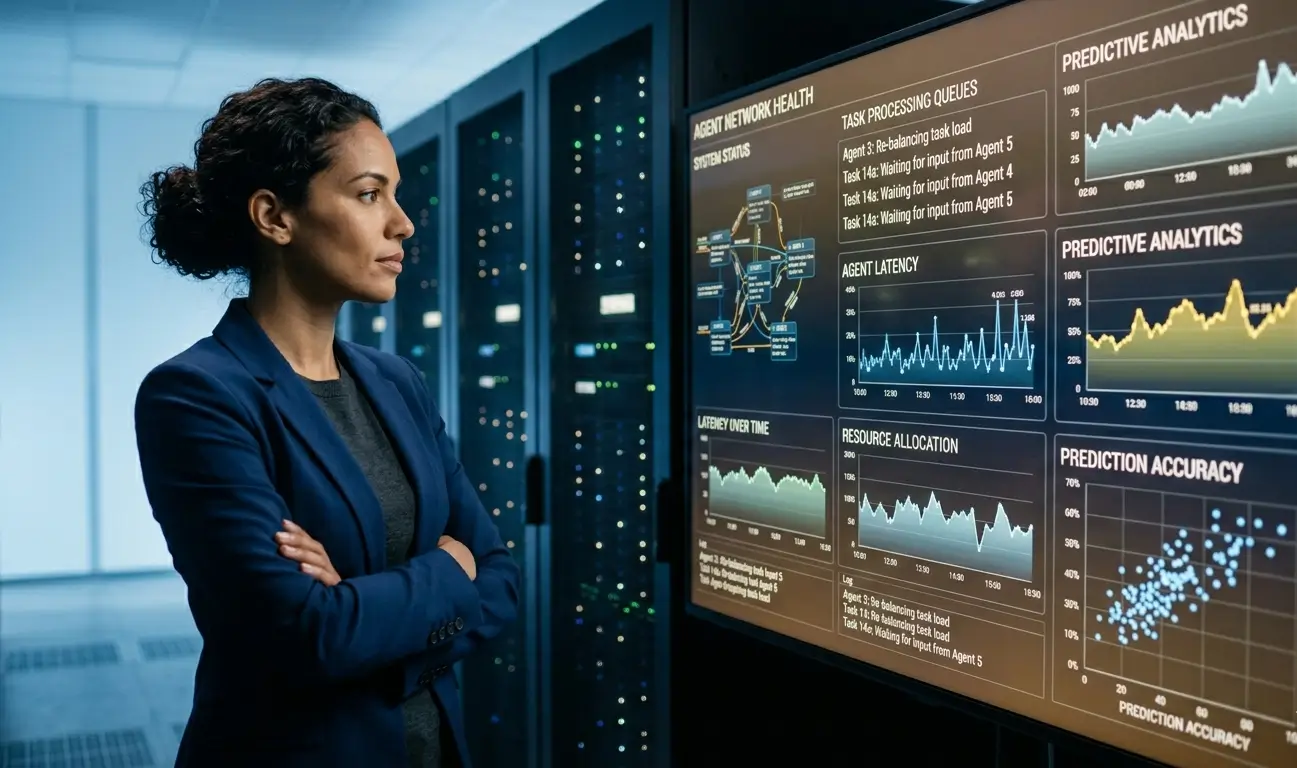
- Agentic AI integration: Connecting AI agents to your existing system stack databases, CRMs, internal APIs, third-party platforms with the authentication layers, permission models, error handling, and audit trails that make agentic systems safe to run in production enterprise environments where a misrouted action has real operational consequences.
- Data pipeline integration: Building the data infrastructure that AI systems require ETL pipelines, vector databases, embedding workflows, and real-time data feeds to ensure AI models receive the right data in the right format at the right time to operate at production quality.
- Legacy system AI enablement: Adding AI capabilities to existing systems that weren't designed for machine learning, through API wrappers, middleware integration layers, and event-driven architectures that let modern AI models interact with legacy platforms without requiring a full system rewrite.
The integration complexity that most AI projects underestimate
The most common reason AI integration projects run over budget and over schedule is not model performance it's the gap between what an AI model can do in isolation and what it needs to do inside a real enterprise environment where data is messy, systems have undocumented behaviors, and operational requirements are more complex than any requirements document captures.
- Data quality and availability: AI models require clean, structured, consistently formatted data to operate reliably; most enterprise data environments have none of these properties by default, and the data engineering work required to prepare data for AI integration is typically 40–60% of the total project effort on first integrations.
- Authentication and security: Connecting AI systems to enterprise applications requires navigating SSO, role-based access controls, data residency requirements, and compliance frameworks particularly in regulated industries like financial services and healthcare that add engineering complexity not visible in scoping estimates.
- Latency and reliability requirements: Production AI integration has latency and uptime requirements that development environments don't; building the caching layers, fallback mechanisms, and monitoring infrastructure that keep AI-integrated systems performing under real user load is a distinct engineering discipline from building the integration itself.
- Model governance and auditability: Enterprise AI deployments in regulated environments require audit trails, explainability frameworks, and human override mechanisms that need to be designed into the integration architecture from the beginning, not retrofitted after deployment.
AI integration services with LATAM engineers through CodersLab
The AI integration platform market reached USD 8.34 billion in 2025 and is projected to reach USD 88.32 billion by 2033 at a 34.4% CAGR according to Grand View Research, with North America accounting for 37.4% of global market share; the engineers building these integrations are increasingly sourced from LATAM, where the combination of timezone alignment, technical depth, and cost efficiency makes nearshore teams the dominant model for US companies with complex AI integration requirements.
CodersLab's AI integration teams include engineers with production experience in LLM integration, RAG architecture, vector databases, ML model deployment, and agentic AI systems; they work within one to four hours of U.S. Eastern Time, making it possible to iterate on complex integration challenges at sprint velocity rather than the overnight cycles that offshore models introduce into technical problem-solving.
How CodersLab structures AI integration engagements
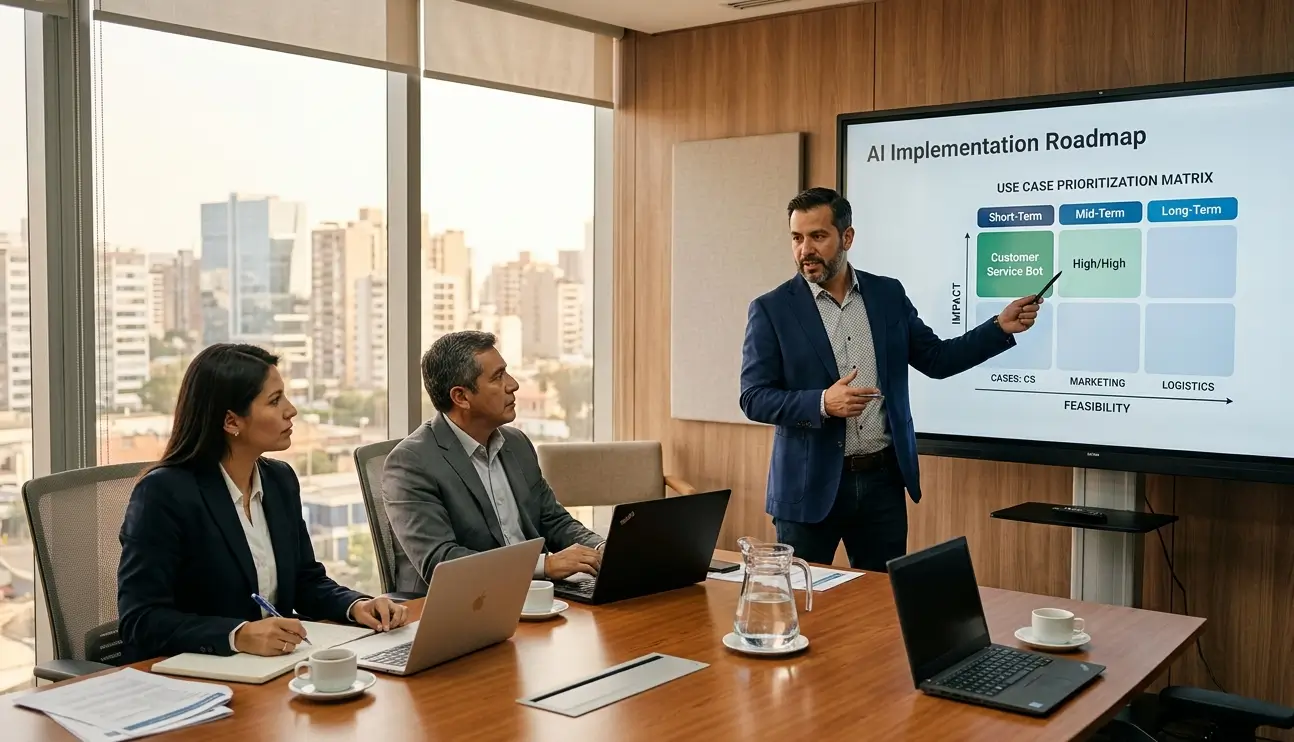
AI integration projects have a consistent failure pattern: insufficient discovery leads to underestimated complexity, which leads to scope changes, timeline overruns, and a production system that works differently than the one that was specified. CodersLab's integration engagements are structured to surface that complexity in the discovery phase, before it becomes a budget problem in the build phase.
- Technical discovery (week 1–2): Audit of existing systems, data infrastructure, and integration requirements; identification of the highest-risk integration points; definition of success metrics and acceptance criteria before any development begins.
- Architecture design (week 2–3): Integration architecture documentation covering data flows, API contracts, security model, monitoring approach, and fallback mechanisms; reviewed and approved before build starts to prevent architectural decisions from being made under delivery pressure.
- Iterative build (week 4–12): Sprint-based development with working integration components delivered at each sprint boundary; integration points validated against real data in staging environments before production deployment.
- Production deployment and monitoring (week 12+): Deployment with full observability logging, alerting, performance dashboards and a defined support model for the post-launch period when real usage surfaces edge cases that testing didn't anticipate.
How to scope an AI integration engagement with CodersLab
The process starts with a technical scoping call to map your existing systems, identify the AI capabilities you want to integrate, and assess the integration complexity that will determine timeline and team composition; most AI integration engagements have a working integration in staging within six to eight weeks and production deployment within 12 to 16 weeks, depending on the depth of legacy system involvement and data engineering requirements.
Frequently Asked Questions
A completed AI integration connects your chosen AI capabilities LLMs, ML models, AI agents to your existing systems, data pipelines, and operational workflows in a production-grade implementation with monitoring, fallback mechanisms, and documentation. The output is a running system, not a prototype or proof of concept.
Most AI integration engagements have a working integration in staging within six to eight weeks and production deployment within 12 to 16 weeks, depending on legacy system complexity and data engineering requirements. The scoping call is the fastest way to get an accurate timeline estimate for your specific environment.
CodersLab's integration teams work with LLMs including GPT, Claude, Gemini, LLaMA, and Mistral; ML frameworks including TensorFlow and PyTorch; vector databases including Pinecone and Weaviate; and orchestration tools including LangChain and LlamaIndex, across AWS, GCP, and Azure infrastructure.
Yes. Legacy system AI enablement is a core part of CodersLab's integration services, using API wrappers, middleware layers, and event-driven architectures to connect modern AI capabilities to existing platforms without requiring a full system rewrite. The discovery phase maps integration complexity before development starts.
Data preparation typically represents 40–60% of total effort on first AI integration projects. CodersLab's teams include data engineers who build the ETL pipelines, embedding workflows, and vector database infrastructure that AI systems require to operate reliably, as part of the integration engagement rather than as a separate workstream.
LATAM AI engineers cost 50–75% less than equivalent US hires according to Howdy's 2025 salary benchmarks, without sacrificing seniority or technical depth. Specific engagement costs depend on scope, integration complexity, and team size; a technical scoping call is the fastest way to get an accurate estimate.
AI integration for regulated industries financial services, healthcare, insurance requires audit trails, explainability frameworks, and human override mechanisms designed into the architecture from the start. CodersLab's integration architects include these requirements in the technical discovery phase before development begins.
CodersLab includes post-deployment monitoring, alerting, and a defined support model for the post-launch period as part of every production AI integration engagement. Real usage surfaces edge cases that testing doesn't anticipate; the support period is when integration quality is actually validated against real operational conditions.
Specialties & Solutions




Need a tech team?
We build and scale nearshore development teams for companies from startups to Fortune 500. +1,200 projects delivered for over 500 companies across LATAM.

Our process. Simple, seamless, streamlined.

Step 1

Let's schedule a strategic call
Tell us about your project in an exploratory session. We'll discuss team structure, technical needs, timelines, budget, and the skills needed to find the best solution for you.
Step 2

We design the solution and select your teams
In just a few days, we define project details, agree on the work model, and select the ideal talent for you. We ensure each profile integrates quickly and effectively.
Step 3

We launch and optimize performance
With agreed milestones, the team starts working immediately. We track progress, provide continuous reports, and adapt to your needs to ensure the best results.