
DevSecOps 2026 | Protect the Software Supply Chain
2026-08-11T21:40:20
DevSecOps in 2026: How to Protect the Software Supply Chain
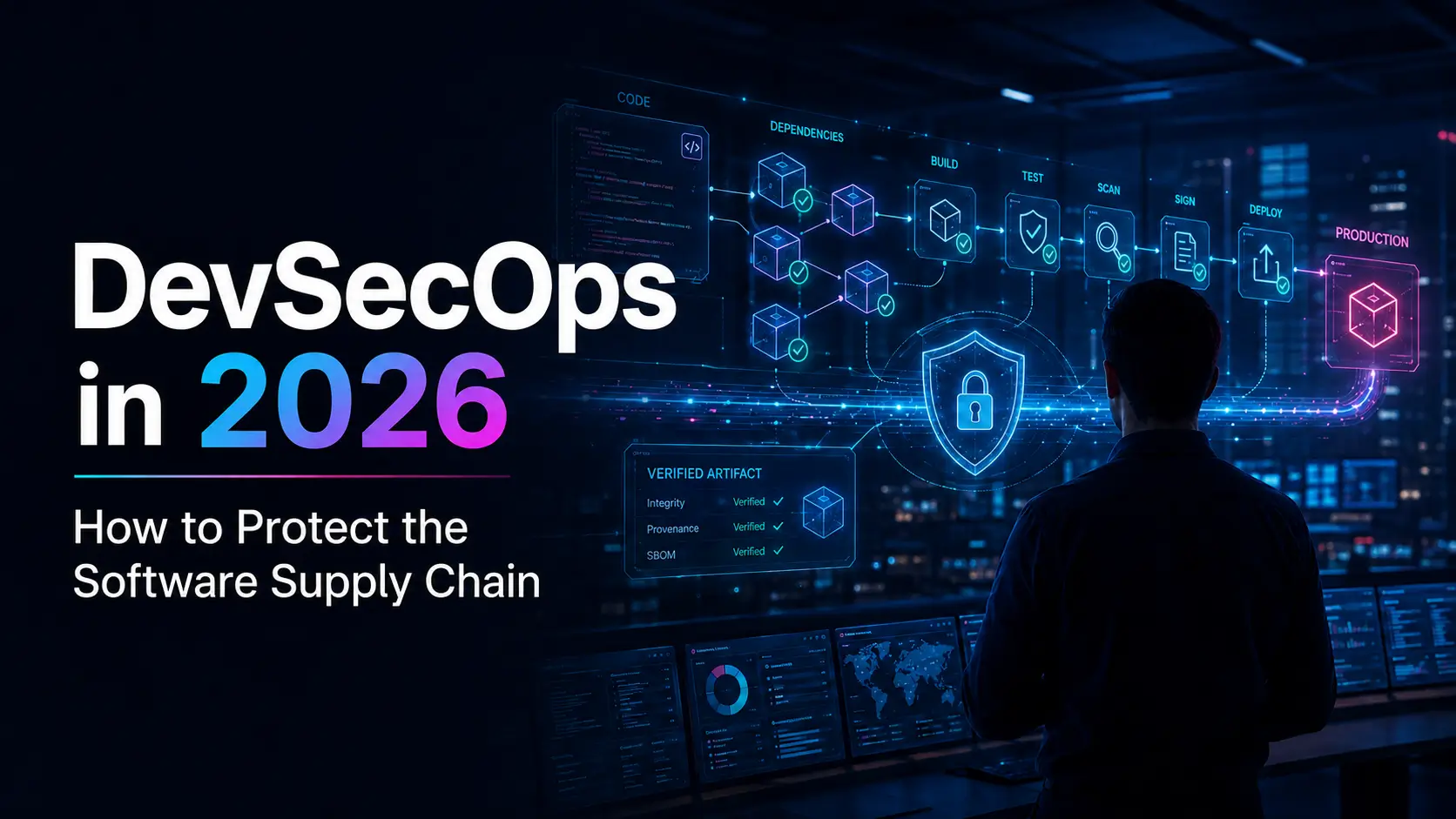
DevSecOps protects the software supply chain by integrating security controls from planning through deployment and operations. Its purpose is to detect vulnerable dependencies, unauthorized changes, exposed credentials, and manipulated artifacts before they reach production. In 2026, this discipline is especially important because enterprise applications depend on third-party packages, cloud services, artificial intelligence tools, and automated processes that expand the attack surface.
Adopting DevSecOps does not mean adding an isolated security review at the end of a project. It means establishing continuous controls over source code, libraries, repositories, container images, CI/CD pipelines, and infrastructure. Every component should be identifiable, verifiable, and linked to an authorized person, version, and process.
What Is the Software Supply Chain?
The software supply chain includes every element used to build, test, distribute, and run an application. This includes the company’s own code, open-source dependencies, commercial packages, build tools, repositories, cloud providers, containers, and third-party services connected through APIs.
An application can have well-protected proprietary code and still be exposed because of a vulnerable or compromised dependency. It can also be affected if an attacker gains access to the repository, alters a build process, or introduces a container image different from the approved one. For this reason, security must cover the software’s entire journey rather than being limited to an assessment of the finished product.
Complexity increases when transitive dependencies are involved. A company may directly install a package that, in turn, downloads other components maintained by third parties. Without an up-to-date inventory, the team may not know which libraries are actually present, which versions the application uses, or which components require an urgent fix.
CodersLab DevSecOps services help integrate security controls into the development lifecycle. This approach combines automation, traceability, and approval criteria to reduce risk without turning every deployment into a manual process.
Why Do External Dependencies Represent a Risk?
External dependencies shorten development time and eliminate the need to build functionality that already exists. Risk arises when they are incorporated without evaluating their origin, maintenance, permissions, vulnerability history, or compatibility with internal policies. An outdated version may retain known flaws, while an uncontrolled automatic update may introduce changes that have not yet been reviewed.
The organization needs to define authorized repositories, block unapproved versions, and record the complete dependency tree. It should also establish package-selection criteria such as maintenance frequency, available documentation, vulnerability response, and project continuity. These measures do not eliminate the use of open-source software; they make it possible to use it with greater control.
Version lockfiles should be kept in the repository to guarantee reproducible builds. If each run downloads a different version, the team loses the ability to demonstrate which components were included in a release. A reproducible build makes it easier to investigate incidents, compare artifacts, and reconstruct an earlier version under the same conditions.
How Does DevSecOps Integrate Security into Development?
DevSecOps adds automated checks at every stage of the workflow. When a developer proposes a change, the pipeline can analyze the code, review dependencies, search for secrets, run tests, and validate infrastructure configuration. If a critical requirement is not met, the change is blocked before it can move toward production.
Static analysis helps identify insecure patterns without running the application. Dynamic analysis evaluates its behavior during execution. Software composition analysis reviews packages and dependencies, while infrastructure-as-code scanning detects risky configurations before cloud resources are created. These controls provide different signals and should be applied according to the application type and level of risk.
Automation needs rules tailored to the organization’s context. Blocking every finding without considering severity can create excessive alerts and delays. Ignoring findings to preserve speed leaves vulnerabilities untreated. An effective policy defines which risks stop a deployment, which require review, and which may be temporarily accepted through a documented exception.
The National Institute of Standards and Technology’s SSDF organizes secure development around preparing the organization, protecting software, producing well-secured software, and responding to vulnerabilities. This framework provides a common language for connecting technical controls with business processes and responsibilities.
What Controls Should a Secure CI/CD Pipeline Include?
A secure pipeline should operate with least privilege and temporary credentials. Each task should access only the resources essential to its function. Keys must not be stored in source code or written directly into configuration files. Secrets should be kept in specialized services and provided to a process only for as long as they are required.
Pipeline changes require the same level of review as application code. Modifying a build instruction can alter the final result, bypass a test, or send information to an external destination. Protected branches, peer review, and mandatory approvals help prevent unilateral changes to sensitive processes.
Build environments should be isolated, ephemeral, and verifiable. They should be removed after completing a task to prevent residue from carrying over between runs. Tools and actions used within the pipeline should be pinned to specific versions. Downloading tools from uncontrolled locations during every build introduces an external dependency that is difficult to audit.
Generated artifacts should be signed and retain information about their provenance. A signature verifies that a file has not been modified after the build. Provenance records which repository, version, workflow, and environment were involved in its creation. Before deployment, the platform can validate both forms of evidence and reject any artifact that did not originate from the authorized process.
What Role Does an SBOM Play in Software Security?
A Software Bill of Materials, or SBOM, is a structured inventory of the components included in an application. It identifies the packages, versions, suppliers, and dependency relationships that form part of each release. When a vulnerability is disclosed, the team can query this inventory to determine whether the affected component is present and which systems use it.
The SBOM should be generated automatically during the build and associated with the corresponding artifact. A manually created inventory may become outdated after the very next change. It should also be stored in an interoperable format so it can integrate with analysis tools, vulnerability-management systems, and audit processes.
Having an SBOM does not mean the software is secure. The document provides visibility, but it must be supported by monitoring, prioritization, and remediation. The company should define who receives an alert, how actual exposure is determined, how quickly the team must respond, and how the applied solution is recorded.
This level of traceability can be complemented by CodersLab Cybersecurity services. Evaluating applications, infrastructure, and identities together helps turn technical findings into decisions based on operational impact and business exposure.
How Can AI-Generated Code Be Protected?
Code generated by artificial intelligence tools should be treated as a proposal that requires validation. A model may produce useful functions, but it can also suggest nonexistent packages, outdated versions, insecure configurations, or solutions that do not comply with the organization’s policies. Accepting the output without review can introduce risks that are difficult to identify during functional testing.
The company needs to establish what information may be shared with these tools. Secrets, personal data, proprietary code, and internal configurations should not be sent to external services without authorization. It is also advisable to record when AI-assisted code is used and maintain human accountability for its review, testing, and approval.
The same automated controls should apply to manually written and AI-generated code. Static analysis, unit testing, dependency reviews, and secret detection remain necessary. The speed of code generation should not exceed the team’s ability to verify what it incorporates into the product.
How Can a Company Implement DevSecOps Without Slowing Down Delivery?
Implementation should begin with an assessment of the current workflow. The organization needs to identify where code is stored, how changes are approved, which tools build the artifacts, who can deploy, and what information is available about dependencies. This map makes it possible to prioritize controls at the points with the greatest impact.
The next step is to establish a minimum baseline. Branch protection, multifactor authentication, centralized secret management, dependency analysis, and deployment logging usually provide immediate improvement. Artifact signing, SBOM generation, dynamic analysis, and infrastructure-as-code validation can then be added according to the team’s maturity.
Metrics should reflect prevention and response capabilities. It is useful to measure how long the team takes to remediate critical vulnerabilities, what percentage of repositories run automated controls, how many exceptions remain open, and which artifacts have verifiable provenance. Measuring only the number of alerts does not demonstrate that risk is decreasing.
Adoption also requires clear responsibilities. Development should remediate issues in the code; security should define policies and support their application; operations should protect environments; and product teams should consider risk when prioritizing releases. DevSecOps works when these teams share criteria and evidence within the same process.
CodersLab can support this process through QA & Software Testing. Integrating functional, security, and regression testing into the pipeline helps verify that fixes do not create new failures and that every release continues to meet defined standards.
What Should Companies Prioritize in 2026?
The priority should be to regain visibility and control over the components that reach production. This requires inventorying dependencies, limiting permissions, protecting repositories, isolating builds, and verifying artifacts before deployment. An organization cannot manage a risk it does not know about or respond quickly without traceability.
Companies should also review their relationships with software suppliers. Contracts and procurement processes can request evidence of secure development, vulnerability management, component updates, and SBOM availability. This information makes it possible to evaluate a product beyond its visible features and facilitates the response when a threat affects multiple suppliers.
DevSecOps turns security into a continuous development capability. Its value does not depend on installing a single tool, but on connecting people, policies, and automation around a verifiable workflow. Protecting the software supply chain means knowing every component, controlling who can modify it, and demonstrating that the deployed version matches the version that was reviewed and approved.
Frequently Asked Questions About DevSecOps
What is DevSecOps?
DevSecOps is an approach that integrates security into every stage of software development, from planning and coding to testing, deployment, and operations.
What is the software supply chain?
It is the set of components, dependencies, tools, repositories, processes, and providers used to develop, build, and publish an application.
How does DevSecOps protect the software supply chain?
DevSecOps applies automated controls to code, dependencies, secrets, CI/CD pipelines, containers, and artifacts before they reach production.
What risks do NPM dependencies and other packages create?
Dependencies may contain known vulnerabilities, malicious code, outdated versions, or transitive components that the company does not know about. They should therefore be analyzed, pinned to specific versions, and kept up to date.
What is an SBOM, and what is it used for?
An SBOM is a structured inventory of the components and versions included in an application. It allows a company to quickly identify whether a vulnerability affects any of its systems.
What controls does a secure CI/CD pipeline need?
It needs least-privilege access, secure secret management, change reviews, automated code and dependency analysis, isolated environments, and artifact verification before deployment.
Can AI-generated code be insecure?
Yes. It may include vulnerable configurations, nonexistent packages, outdated dependencies, or practices that do not comply with internal policies. It must always be reviewed, tested, and analyzed before being incorporated.
How can a company begin implementing DevSecOps?
It can begin by protecting repositories, enabling multifactor authentication, centralizing secrets, analyzing dependencies, and automating security controls within its pipelines.
Sources

Recent Posts
Scroll
Generative AI Supply Chain Personalization | CodersLab
2026-07-31T21:08:37
Generative AI enables real-time personalization of every link in the supply chain, from demand forec...

Agentic AI | Cybersecurity Threats in 2026
2026-07-27T16:45:43
Artificial intelligence has crossed a line that security experts had been anticipating for years; wh...

47 AI Adoption Statistics That Define Enterprise Technology in 2026
2026-05-21T21:47:29
Artificial intelligence has crossed the line from strategic priority to operational infrastructure i...

Multi-experience development: creating apps for multiple devices
2025-07-14T13:41:48
Multi-experience development is the standard that companies must follow to develop successful applic...

API Trends and Best Practices for 2025 | CodersLab
2025-07-11T22:14:29
The Internet would not be the same without the help of APIs. This is how they will evolve in the fut...

Test Automation: Essential Tools for Developers
2025-07-09T20:29:51
Test automation is very important for the day-to-day work of developers. Here’s everything you...

The role of UX/UI in the success of modern apps
2025-07-07T20:06:04
Two critical factors for modern applications are user experience and user interface. Find out why. ...
Sustainable software development: practices for green code
2025-07-03T18:34:48
Nowadays, companies are interested not only in using high-quality tools, but also environmentally fr...
The role of Data Science in software development today
2025-06-30T14:46:52
Data science is a discipline that can drive all of an organization’s efforts. Here’s wha...
Microservices: Modern Architecture for Scalable Solutions
2025-06-26T12:57:33
Software architecture has a new standard for developing its products and services: microservices. ...
Agile development: methodologies and benefits in software projects
2025-06-23T12:28:13
Agile philosophy is one of the best frameworks for software development. Learn about its origins, pr...

7 great reasons to apply Scrum methodologies in project management
2025-06-20T11:54:21
The Scrum methodology enables a more organized and autonomous workflow for the development of digita...

7 extraordinary examples of green technology transforming businesses
2025-06-17T11:49:25
Technology helps people minimize their carbon footprint on the planet. Discover the seven most impor...

Top Programming Languages in Demand for 2025 | CodersLab
2025-05-09T14:10:32
All programming languages are useful, but some are more important than others. Find out which ones. ...

Blockchain beyond cryptocurrencies: solutions for software development
2025-04-30T18:09:08
Blockchain is not just for trading cryptocurrencies. Learn about its implications for software devel...

The rise of Progressive Web Applications (PWA) in 2025
2025-04-18T20:34:55
Progressive web apps combine the best of native apps with web technology. Here’s what you need...
Cybersecurity in software development: key strategies
2025-04-15T20:22:49
Software development is a critical process that requires the highest level of digital security measu...
DevOps: best practices for successful continuous delivery
2025-04-11T13:40:22
The integration between Development and Operations is increasingly being implemented among companies...

Integrating artificial intelligence into software development
2025-04-08T21:27:29
The integration of artificial intelligence into software development is now a reality. What do you n...
Tailor-made software will optimize all your company’s processes
2025-03-28T20:56:36
Custom software allows companies to use the full potential of tools designed solely for their needs....
Artificial intelligence forever changed software development
2025-03-25T20:49:41
Software development has changed since artificial intelligence entered the scene. Learn about its im...

Challenges & opportunities for women’s representation in tech
2025-03-17T14:30:17
Now is the right time to reflect on the role of women in technology and their outlook for the future...

Android 16 is coming: 6 new features you can’t miss
2025-02-26T20:14:59
Android 16 is here. Here are 6 features you should know about to get the most out of it. ...

Artificial intelligence and ethics: are we about to cross the line?
2025-02-24T17:11:28
The rapid development of AI requires an ethical perspective that prevents it from crossing boundarie...

Software engineering: the hidden spark igniting the technological revolution
2025-02-18T16:38:22
Today’s technological revolutions would not be possible without software development. Learn mo...

Discover the 5 superpowers of the Internet of Things that will transform your business
2025-02-14T15:58:11
The Internet of Things has arrived to make us live in a much more interconnected world. ...

Edge computing: connect the future today and unleash your organization’s hidden potential
2025-02-11T16:23:58
La computación de borde es un enfoque que agiliza la transmisión y procesamiento de datos. Esto es l...

Quantum computing: the dawn of a revolution of no return in data processing
2025-02-07T15:54:06
It is the future of computing as we know it. Discover why and the things we are already capable of d...
DeepSeek: the chinese assistant challenging AI giants
2025-02-03T19:18:27
DeepSeek is the AI assistant of the moment. What makes it so special, and why is everyone using it? ...

Discover why Rust is a new paradigm for web development
2025-01-27T12:54:49
Rust is a programming language that allows you to build different products and tools. Learn more. ...

The Product Manager is the mastermind behind your products
2025-01-20T18:43:39
The product manager is the leader in the entire process of management, development, and strategy beh...

Full-stack developer: The best architect for your digital success
2025-01-15T18:44:14
A full-stack developer covers all areas of software development. Learn about their responsibilities ...

Why apply responsive design to your digital products?
2025-01-06T15:15:18
Responsive design is no longer an optional feature, but rather a mandatory one for the success of an...

The great input of agile methodologies in project management
2025-01-03T15:12:00
Agile methodologies transform project management by providing flexibility, collaboration, and adapta...

Telecom Software Solutions: optimize and transform your communications
2024-12-26T19:46:29
Telecom software solutions enhance efficiency and innovation in modern business communications. ...
Integrate your digital services with APIs: everything you need to know
2024-12-26T19:38:50
APIs enable seamless and scalable integration of digital services, facilitating connectivity between...

The future of software development: meet the composable architecture
2024-12-26T19:34:36
Composable architecture revolutionizes software development by enabling modular, flexible, and easil...
The power of the software factory to transform your company
2024-12-10T12:40:16
Software factories accelerate technology solution development, driving digital transformation and bu...

Cloud technology is a turning point and we’ll tell you why
2024-12-05T19:32:19
Cloud technology radically changes resource access and management, enabling unprecedented scalabilit...
Scrum master: the key factor to carry out your projects
2024-12-05T18:38:47
The Scrum Master drives project success by facilitating collaboration, removing impediments, and pro...

7 benefits of developing apps with ReactJS
2024-10-10T12:00:14
ReactJS offers speed, flexibility, and a robust ecosystem, facilitating development of dynamic and s...

What’s ReactJS and how does it work?
2024-10-07T12:00:11
ReactJS is a JavaScript library that enables building interactive user interfaces using reusable com...
Transform your legacy systems with microservices: the definitive guide for IT leaders
2024-10-03T16:36:37
Microservices modernize legacy systems by breaking applications into independent services, enhancing...

Web usability: principles and how to improve it in your business
2024-09-24T20:35:15
Web usability makes it easy for users to navigate and quickly find what they need, enhancing user ex...
Progressive web applications: what are they, advantages and examples
2024-09-16T12:12:51
Progressive web apps combine the best of websites and native apps, offering speed, offline accessibi...

Service Design with a UX Focus: What to Consider
2024-08-20T15:26:16
UX service design focuses on understanding users, creating intuitive processes, and delivering satis...
9 Key Soft Skills in Software Development
2024-08-13T19:29:23
Soft skills such as communication, teamwork, and problem-solving are essential for success in softwa...
How Generative AI is Revolutionizing the Future of Software Development
2024-08-07T17:56:20
Generative artificial intelligence revolutionizes the future of software with continuous innovation,...

The Value of Cybersecurity in Companies
2024-07-30T19:19:56
Cybersecurity protects businesses against digital threats, safeguarding critical information and mai...
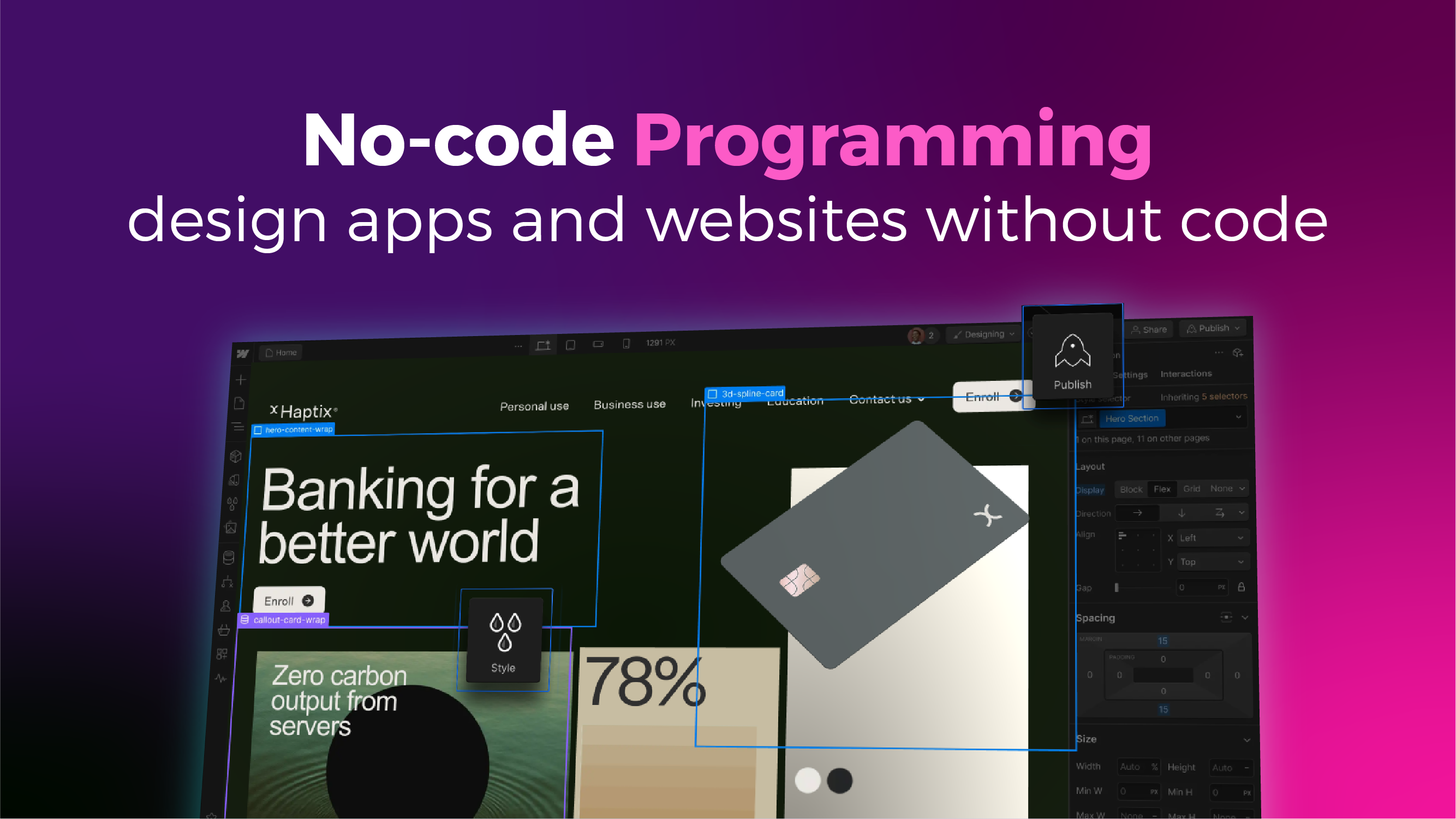
No-code programming: design apps and websites without code
2024-07-26T14:12:20
No-code programming facilitates agile development of digital solutions without the need to learn pro...

Tailor-made and state-of-the-art digital products: the CencoSud case study
2024-07-12T19:25:37
At CodersLab, our primary focus is on understanding and addressing the immediate software and digita...

Transforming Cloud Costs with FinOps: The Key to Enterprise Efficiency
2024-07-11T20:27:07
Streamlining Operations Across the Entire Enterprise Network In today’s business landscape, ma...

IT Staffing: The Perfect Complement for Retail Businesses in Latin America
2024-07-10T19:39:31
Flexibility, Tech Talent, and Efficiency through Active Sourcing Introduction The retail landscape i...

Software Quality in Banking: A QA Approach
2024-06-13T01:03:07
In the fast-paced financial world, where each transaction and data point hold immense significance, ...
The future is already here: Artificial Intelligence Trends 2024
2024-06-13T01:02:27
This 2024 starts with full force as far as new digital solutions are concerned and brings great news...
Growth, wellness and efficiency: the healthcare industry and the support of technological innovation
2024-06-13T01:01:39
Technology contributes in many ways, not only to achieve objectives, meet goals and improve producti...
At CodersLab we are your strategic ally in the year of Operational Efficiency.
2024-06-13T01:00:45
The concept of Operational Efficiency will be the protagonist of this year for companies, since in a...
4 IT Staffing trends that will triumph in 2024 thanks to AI support
2024-06-13T00:59:45
Recruitment agencies or IT Staffing will be the protagonists in the market this season, as they will...
Rust development services: Unleashing the power of Coderslab
2024-06-12T20:36:04
In the ever-evolving world of software development, choosing the right programming language can make...