

Generative AI Supply Chain Personalization | CodersLab
2026-07-31T21:08:37
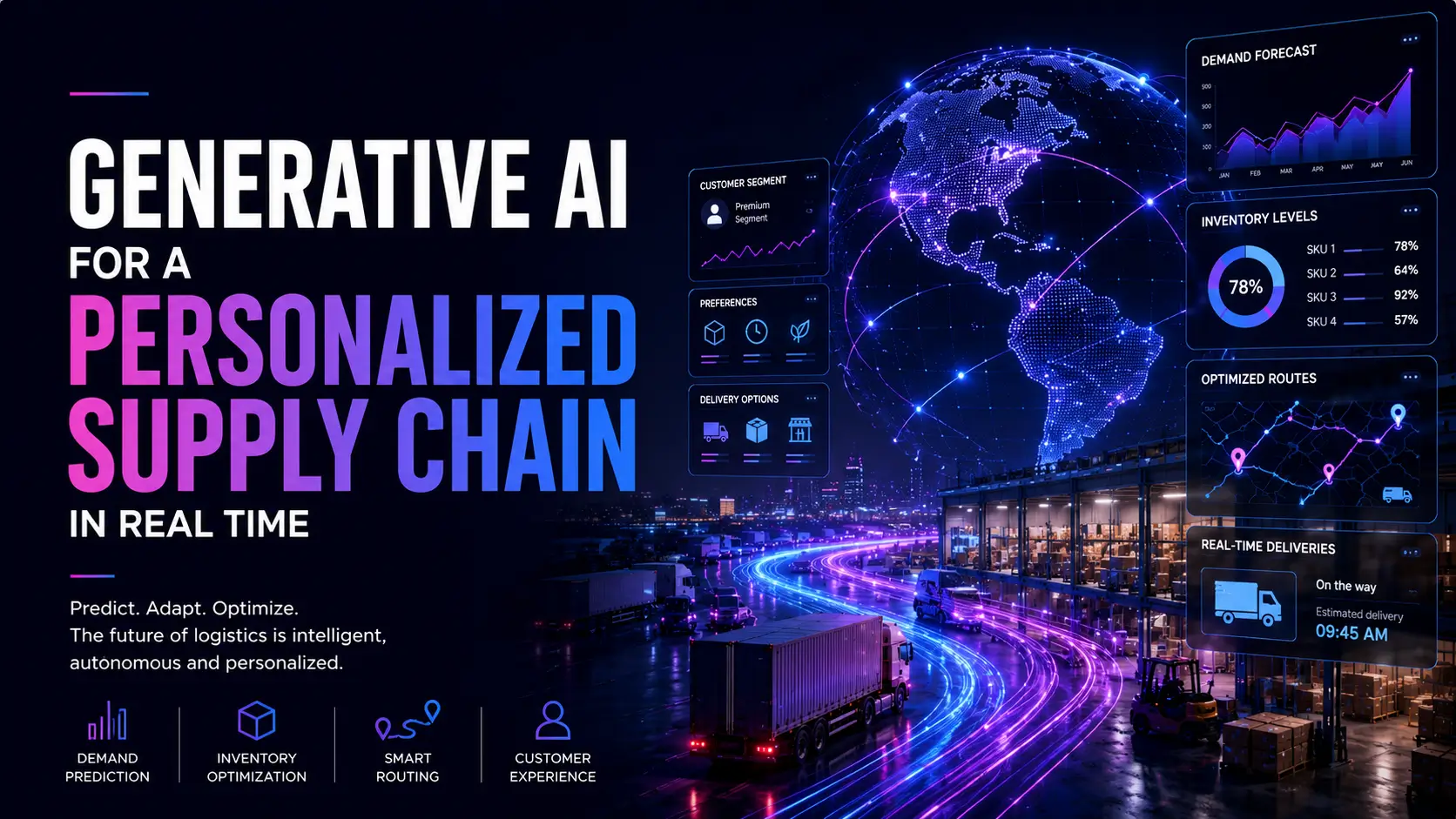
Generative AI enables real-time personalization of every link in the supply chain, from demand forecasting to final customer delivery, reducing decision-making time from days to minutes according to research published in January 2025 by Harvard Business Review, conducted by researchers from Microsoft Research and MIT, who documented how global companies achieved substantial improvements in costs and service levels by adopting this technology.
Organizations with complex logistics operations face a growing challenge because customers demand personalized experiences, predictive deliveries, and solutions tailored to their specific context; traditional planning methods based on spreadsheets and fixed rules no longer respond with the speed or accuracy that today’s market demands, creating a competitive gap that only generative artificial intelligence can close with the necessary depth and granularity.
What is supply chain personalization with generative AI?
Supply chain personalization with generative AI consists of using artificial intelligence models capable of creating, simulating, and executing logistics strategies adapted to each customer, product, and channel in real time, without relying on predefined rules that limit the ability to respond to unforeseen scenarios or sudden changes in market conditions.
Unlike traditional automation, which follows fixed instructions for repetitive tasks like reordering inventory when it drops below a certain threshold or dispatching via the precalculated shortest route, generative AI analyzes historical and real-time data to design new solutions; dynamic distribution routes that recalculate when a port closes; predictive inventory levels that anticipate seasonal peaks by region, channel, and product category; personalized fulfillment options that adjust to each customer segment’s behavior, preferences, and history without human intervention in each individual decision.
This ability to generate responses not explicitly programmed by an engineer is what differentiates generative AI from any previous automation tool and what makes it the ultimate accelerator for supply chains seeking simultaneously operational efficiency, cost reduction, and competitive differentiation against rivals still operating with static planning models.
How does generative AI work in supply chain management?
The technology acts on three axes that transform customer experience and operational efficiency comprehensively, complementing existing ERP, WMS, and TMS systems with an intelligence layer that orchestrates tactical and strategic decisions in real time without requiring replacement of current infrastructure or disruption of ongoing operations.
The first axis is granular demand forecasting; generative models process sales data, seasonality, purchasing patterns, behavior across digital channels, and external variables like weather conditions, economic indicators, and social media consumption trends to anticipate which product each customer segment will need at the SKU, warehouse, and sales channel level with a precision that traditional statistical methods cannot achieve because they fail to capture non-linear relationships between hundreds of simultaneously interacting variables.
The second axis is dynamic route design and inventory allocation; when a disruption occurs, such as a border closure, a port strike, or a sudden demand spike from a viral trend, generative AI redesigns the entire logistics network and reallocates resources in real time to maintain the delivery promise to the customer, evaluating thousands of possible combinations in seconds rather than relying on a human planner who would need hours or days to manually recalculate each affected variable.
The third axis is fulfillment personalization; each customer receives delivery options, packaging, communication, and payment methods automatically generated from their purchase history, expressed preferences, and browsing behavior, which increases satisfaction measured by indicators like Net Promoter Score and reduces cart abandonment rates in digital channels, a problem that costs the retail sector billions of dollars annually according to multiple industry analyses.
MIT researchers demonstrated in December 2025, using the Beer Distribution Game as an academic testbed, that the most recent generative AI models achieve autonomous supply chain management with results superior to human operators, an advance that the scientific community did not expect to see materialized for several years according to Harvard Business Review in its December 2025 edition.
Implementing these capabilities requires a scalable cloud development architecture that processes large volumes of transactional data and IoT sensor data, executes AI models in production with latency under one hundred milliseconds, and guarantees operational continuity even during processing spikes that can multiply normal system load by ten.
What benefits does generative AI bring to the supply chain?
The integration of generative AI into the supply chain produces measurable improvements in three areas critical to profitability and competitiveness for any organization with significant logistics operations.
In operational costs, the ability to predict demand with granular precision reduces excess inventory and stockouts, two primary sources of financial loss representing between twenty and thirty percent of total logistics costs in companies with complex supply chains according to CodersLab’s accumulated experience in optimization projects for retail and manufacturing clients in LATAM.
In decision speed, operations teams move from weekly planning cycles to real-time adjustments that allow responding to disruptions before they impact the end customer, reducing reaction time from days to minutes and eliminating the cascade of negative effects that a single delayed decision can trigger across the entire downstream logistics network.
In customer experience, fulfillment personalization and predictive communication increase satisfaction measured in post-purchase surveys and strengthen retention; the customer receives what they need, when they need it, and through their preferred channel, a combination that according to CodersLab’s experience with retail and banking clients increases repurchase rates by fifteen to twenty-five percent in the first twelve months following implementation of AI-powered personalization solutions.
Big Data and Analytics support is essential to feed these models with clean, structured, real-time data that accurately reflects the operational reality of the business and does not introduce biases or errors that degrade the quality of predictions and automated decisions.
How does intelligent automation impact customer experience?
Intelligent automation with generative AI transforms customer experience by anticipating their logistics needs before they explicitly express them, creating a perception of proactive service that differentiates the provider in markets where most competitors still operate with reactive customer service models.
A generative system can detect that a corporate retail customer increases their orders every September in preparation for the year-end season and automatically adjust inventory levels, priority distribution routes, and financing options for that specific profile, without the customer having to request any adaptation or the account manager having to manually intervene to authorize the necessary changes.
The tangible result is a seamless experience where the customer perceives that the provider understands their business and adapts to their operational cycles naturally, strengthening the long-term commercial relationship, reducing the likelihood of churn to competitors, and increasing customer lifetime value, a metric that leading companies monitor as a primary indicator of business health.
Why choose CodersLab to implement generative AI in supply chain?
Implementing generative AI in the supply chain requires integrating language and vision models with ERP systems, inventory platforms, supplier data, digital sales channels, and IoT devices distributed across warehouses and transportation routes, an engineering task that demands simultaneous expertise in software architecture, applied data science, and deep sector knowledge of each industry’s logistics dynamics.
CodersLab designs and builds custom digital solutions for leading companies in LATAM and the United States, with presence in over twelve countries and a decade of experience delivering high-impact projects across sectors like retail, banking, insurance, healthcare, telecommunications, logistics, and mining, combining specialized engineering teams with dedicated work squads that accelerate digital transformation from initial diagnosis to production deployment and ongoing support.
Our machine learning teams develop generative models trained with each client’s proprietary data and adjusted to the particularities of their operation, their market, and their business objectives, avoiding generic pre-trained solutions that fail to capture the specific dynamics of each supply chain and produce inconsistent results when applied outside the context for which they were originally designed.
The digital transformation of the supply chain with generative AI represents a strategic investment whose return materializes in reduced operational costs, increased revenue through improved customer experience, and strengthened competitive position in markets where adaptation speed determines who leads and who is relegated to competing exclusively on price.
Sources
- Harvard Business Review, January 2025 How Generative AI Improves Supply Chain Management. Authors: Ishai Menache (Microsoft Research), Jeevan Pathuri (Microsoft), David Simchi-Levi (MIT), Tom Linton (McKinsey)
- Harvard Business Review, December 2025 When Supply Chains Become Autonomous. Authors: Carol Long (Harvard), David Simchi-Levi (MIT), Andre P. Calmon (Georgia Tech), Flavio P. Calmon (Harvard)

Recent Posts
Scroll
DevSecOps 2026 | Protect the Software Supply Chain
2026-08-11T21:40:20
DevSecOps in 2026: How to Protect the Software Supply Chain DevSecOps protects the software supply c...

Agentic AI | Cybersecurity Threats in 2026
2026-07-27T16:45:43
Artificial intelligence has crossed a line that security experts had been anticipating for years; wh...

47 AI Adoption Statistics That Define Enterprise Technology in 2026
2026-05-21T21:47:29
Artificial intelligence has crossed the line from strategic priority to operational infrastructure i...

Multi-experience development: creating apps for multiple devices
2025-07-14T13:41:48
Multi-experience development is the standard that companies must follow to develop successful applic...

API Trends and Best Practices for 2025 | CodersLab
2025-07-11T22:14:29
The Internet would not be the same without the help of APIs. This is how they will evolve in the fut...

Test Automation: Essential Tools for Developers
2025-07-09T20:29:51
Test automation is very important for the day-to-day work of developers. Here’s everything you...

The role of UX/UI in the success of modern apps
2025-07-07T20:06:04
Two critical factors for modern applications are user experience and user interface. Find out why. ...

Sustainable software development: practices for green code
2025-07-03T18:34:48
Nowadays, companies are interested not only in using high-quality tools, but also environmentally fr...

The role of Data Science in software development today
2025-06-30T14:46:52
Data science is a discipline that can drive all of an organization’s efforts. Here’s wha...

Microservices: Modern Architecture for Scalable Solutions
2025-06-26T12:57:33
Software architecture has a new standard for developing its products and services: microservices. ...

Agile development: methodologies and benefits in software projects
2025-06-23T12:28:13
Agile philosophy is one of the best frameworks for software development. Learn about its origins, pr...

7 great reasons to apply Scrum methodologies in project management
2025-06-20T11:54:21
The Scrum methodology enables a more organized and autonomous workflow for the development of digita...

7 extraordinary examples of green technology transforming businesses
2025-06-17T11:49:25
Technology helps people minimize their carbon footprint on the planet. Discover the seven most impor...

Top Programming Languages in Demand for 2025 | CodersLab
2025-05-09T14:10:32
All programming languages are useful, but some are more important than others. Find out which ones. ...

Blockchain beyond cryptocurrencies: solutions for software development
2025-04-30T18:09:08
Blockchain is not just for trading cryptocurrencies. Learn about its implications for software devel...

The rise of Progressive Web Applications (PWA) in 2025
2025-04-18T20:34:55
Progressive web apps combine the best of native apps with web technology. Here’s what you need...

Cybersecurity in software development: key strategies
2025-04-15T20:22:49
Software development is a critical process that requires the highest level of digital security measu...
DevOps: best practices for successful continuous delivery
2025-04-11T13:40:22
The integration between Development and Operations is increasingly being implemented among companies...

Integrating artificial intelligence into software development
2025-04-08T21:27:29
The integration of artificial intelligence into software development is now a reality. What do you n...

Tailor-made software will optimize all your company’s processes
2025-03-28T20:56:36
Custom software allows companies to use the full potential of tools designed solely for their needs....

Artificial intelligence forever changed software development
2025-03-25T20:49:41
Software development has changed since artificial intelligence entered the scene. Learn about its im...

Challenges & opportunities for women’s representation in tech
2025-03-17T14:30:17
Now is the right time to reflect on the role of women in technology and their outlook for the future...

Android 16 is coming: 6 new features you can’t miss
2025-02-26T20:14:59
Android 16 is here. Here are 6 features you should know about to get the most out of it. ...

Artificial intelligence and ethics: are we about to cross the line?
2025-02-24T17:11:28
The rapid development of AI requires an ethical perspective that prevents it from crossing boundarie...

Software engineering: the hidden spark igniting the technological revolution
2025-02-18T16:38:22
Today’s technological revolutions would not be possible without software development. Learn mo...

Discover the 5 superpowers of the Internet of Things that will transform your business
2025-02-14T15:58:11
The Internet of Things has arrived to make us live in a much more interconnected world. ...

Edge computing: connect the future today and unleash your organization’s hidden potential
2025-02-11T16:23:58
La computación de borde es un enfoque que agiliza la transmisión y procesamiento de datos. Esto es l...

Quantum computing: the dawn of a revolution of no return in data processing
2025-02-07T15:54:06
It is the future of computing as we know it. Discover why and the things we are already capable of d...
DeepSeek: the chinese assistant challenging AI giants
2025-02-03T19:18:27
DeepSeek is the AI assistant of the moment. What makes it so special, and why is everyone using it? ...

Discover why Rust is a new paradigm for web development
2025-01-27T12:54:49
Rust is a programming language that allows you to build different products and tools. Learn more. ...

The Product Manager is the mastermind behind your products
2025-01-20T18:43:39
The product manager is the leader in the entire process of management, development, and strategy beh...

Full-stack developer: The best architect for your digital success
2025-01-15T18:44:14
A full-stack developer covers all areas of software development. Learn about their responsibilities ...

Why apply responsive design to your digital products?
2025-01-06T15:15:18
Responsive design is no longer an optional feature, but rather a mandatory one for the success of an...

The great input of agile methodologies in project management
2025-01-03T15:12:00
Agile methodologies transform project management by providing flexibility, collaboration, and adapta...

Telecom Software Solutions: optimize and transform your communications
2024-12-26T19:46:29
Telecom software solutions enhance efficiency and innovation in modern business communications. ...

Integrate your digital services with APIs: everything you need to know
2024-12-26T19:38:50
APIs enable seamless and scalable integration of digital services, facilitating connectivity between...

The future of software development: meet the composable architecture
2024-12-26T19:34:36
Composable architecture revolutionizes software development by enabling modular, flexible, and easil...

The power of the software factory to transform your company
2024-12-10T12:40:16
Software factories accelerate technology solution development, driving digital transformation and bu...

Cloud technology is a turning point and we’ll tell you why
2024-12-05T19:32:19
Cloud technology radically changes resource access and management, enabling unprecedented scalabilit...

Scrum master: the key factor to carry out your projects
2024-12-05T18:38:47
The Scrum Master drives project success by facilitating collaboration, removing impediments, and pro...

7 benefits of developing apps with ReactJS
2024-10-10T12:00:14
ReactJS offers speed, flexibility, and a robust ecosystem, facilitating development of dynamic and s...

What’s ReactJS and how does it work?
2024-10-07T12:00:11
ReactJS is a JavaScript library that enables building interactive user interfaces using reusable com...

Transform your legacy systems with microservices: the definitive guide for IT leaders
2024-10-03T16:36:37
Microservices modernize legacy systems by breaking applications into independent services, enhancing...

Web usability: principles and how to improve it in your business
2024-09-24T20:35:15
Web usability makes it easy for users to navigate and quickly find what they need, enhancing user ex...
Progressive web applications: what are they, advantages and examples
2024-09-16T12:12:51
Progressive web apps combine the best of websites and native apps, offering speed, offline accessibi...

Service Design with a UX Focus: What to Consider
2024-08-20T15:26:16
UX service design focuses on understanding users, creating intuitive processes, and delivering satis...

9 Key Soft Skills in Software Development
2024-08-13T19:29:23
Soft skills such as communication, teamwork, and problem-solving are essential for success in softwa...
How Generative AI is Revolutionizing the Future of Software Development
2024-08-07T17:56:20
Generative artificial intelligence revolutionizes the future of software with continuous innovation,...

The Value of Cybersecurity in Companies
2024-07-30T19:19:56
Cybersecurity protects businesses against digital threats, safeguarding critical information and mai...
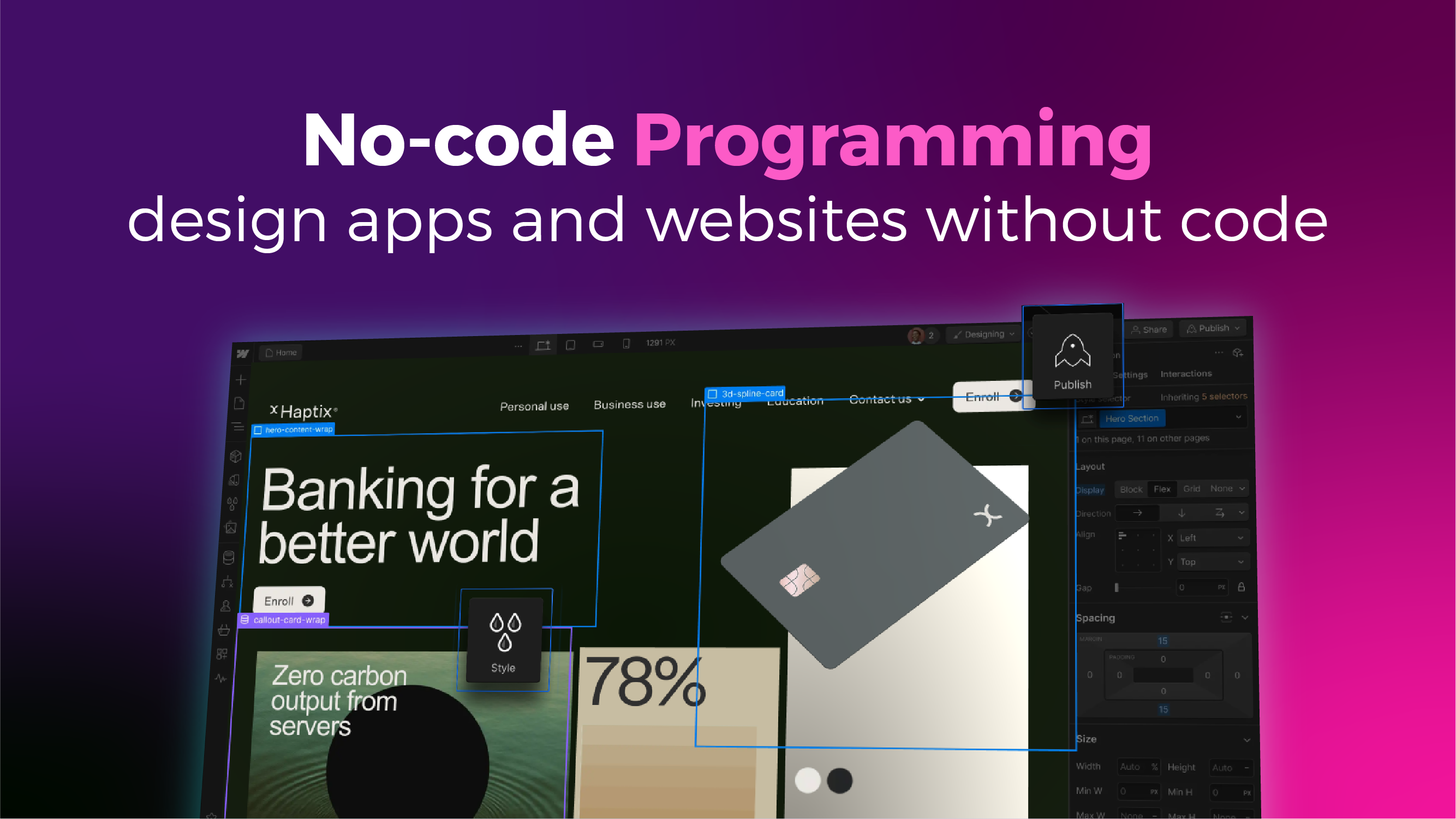
No-code programming: design apps and websites without code
2024-07-26T14:12:20
No-code programming facilitates agile development of digital solutions without the need to learn pro...

Tailor-made and state-of-the-art digital products: the CencoSud case study
2024-07-12T19:25:37
At CodersLab, our primary focus is on understanding and addressing the immediate software and digita...

Transforming Cloud Costs with FinOps: The Key to Enterprise Efficiency
2024-07-11T20:27:07
Streamlining Operations Across the Entire Enterprise Network In today’s business landscape, ma...

IT Staffing: The Perfect Complement for Retail Businesses in Latin America
2024-07-10T19:39:31
Flexibility, Tech Talent, and Efficiency through Active Sourcing Introduction The retail landscape i...

Software Quality in Banking: A QA Approach
2024-06-13T01:03:07
In the fast-paced financial world, where each transaction and data point hold immense significance, ...
The future is already here: Artificial Intelligence Trends 2024
2024-06-13T01:02:27
This 2024 starts with full force as far as new digital solutions are concerned and brings great news...
Growth, wellness and efficiency: the healthcare industry and the support of technological innovation
2024-06-13T01:01:39
Technology contributes in many ways, not only to achieve objectives, meet goals and improve producti...

At CodersLab we are your strategic ally in the year of Operational Efficiency.
2024-06-13T01:00:45
The concept of Operational Efficiency will be the protagonist of this year for companies, since in a...

4 IT Staffing trends that will triumph in 2024 thanks to AI support
2024-06-13T00:59:45
Recruitment agencies or IT Staffing will be the protagonists in the market this season, as they will...
Rust development services: Unleashing the power of Coderslab
2024-06-12T20:36:04
In the ever-evolving world of software development, choosing the right programming language can make...