

47 AI Adoption Statistics That Define Enterprise Technology in 2026
2026-05-21T21:47:29

Artificial intelligence has crossed the line from strategic priority to operational infrastructure in 2026; the question enterprises are asking is no longer whether to adopt AI but which implementations are delivering measurable returns and which are consuming budget without producing business value.
This post compiles 47 verified AI adoption statistics from research published between 2024 and 2026, organized by category, to give technology leaders a data-driven picture of where enterprise AI stands today.
Market Size and Investment
1. The global AI market reached USD 514.5 billion in 2026, a 19% increase from USD 390.9 billion in 2025, according to Resourcera and Companies History citing Stanford HAI and Fortune Business Insights data.
2. The global AI market is projected to grow to USD 3.5 trillion by 2033, at a CAGR of 30.6% between 2027 and 2033, according to Fortune Business Insights.
3. Global corporate AI investment reached USD 581.7 billion in 2025, a 130% increase year over year, according to Stanford HAI’s 2026 AI Index Report.
4. Global private AI investment reached USD 344.7 billion in 2025, up 127.5% from 2024, with generative AI capturing nearly half of that funding, according to Stanford HAI 2026.
5. In Q1 2026, global venture capital funding reached USD 300 billion, with AI capturing USD 242 billion, equivalent to 80% of the total, according to Companies History.
6. OpenAI closed a record USD 122 billion funding round at an USD 852 billion valuation in March 2026, according to Companies History and multiple market sources.
7. PwC estimates AI will add USD 15.7 trillion in value to the global economy by 2030 through productivity gains and new markets, according to AI Cloudbase citing PwC’s Global AI Economic Report.
Enterprise Adoption Rates
8. 88% of organizations use AI in at least one business function in 2026, according to Stanford’s AI Index 2026, cited by Companies History and Resourcera.
9. 65% of organizations use generative AI in at least one business function in Q1 2026, double the rate from ten months earlier, according to Companies History.
10. 72% of large enterprises have at least one AI workload running in production in 2026, up from 55% in 2024 and just 20% in 2020, according to Companies History.
11. At least 1.35 billion people worldwide actively use AI tools in 2026, equal to roughly 16.3% of the global population, according to Resourcera.
12. ChatGPT reached 900 million weekly active users in February 2026, more than doubling from 400 million a year earlier, processing over 2 billion daily queries, according to Companies History.
13. Only 8% of organizations have no AI initiatives planned or underway in 2026, down from 35% in 2021, according to Medha Cloud’s statistics compilation.
14. Process automation leads enterprise AI adoption at 76%, followed by customer service at 56%, IT operations at 51%, and marketing at 48%, according to Second Talent and Medha Cloud.
15. 89% of organizations expect to adopt generative AI by 2027, according to Second Talent’s enterprise AI adoption statistics.
ROI and Business Value
16. Companies report a 3.7x ROI for every dollar invested in generative AI and related technologies, according to Netguru’s 2026 AI adoption analysis.
17. Organizations report an average 340% ROI within 18 months of generative AI implementation, according to Hashmeta’s January 2026 statistics compilation.
18. 5.8x average ROI on AI investment within 14 months of production deployment, according to McKinsey Global AI Survey 2025, cited in Medha Cloud’s March 2026 compilation.
19. 44% of AI projects that move to production achieve positive ROI within 12 months, according to Forrester research cited in Medha Cloud’s March 2026 statistics.
20. Financial services companies lead AI ROI at 4.2x, with media and telecommunications close behind at 3.9x, according to AmplifAI’s 2026 generative AI statistics.
21. Organizations deploying generative AI across three or more business functions capture the most value, according to AmplifAI’s analysis of enterprise AI investment patterns.
22. Nearly three-quarters of organizations reported their most advanced AI initiatives met or exceeded ROI expectations in 2024, according to Netguru’s 2026 AI adoption analysis.
23. Organizations using AI in IT operations report 31% fewer critical incidents and 28% faster mean time to resolution, according to Medha Cloud’s March 2026 compilation.
Productivity and Workforce Impact
24. 37% average productivity improvement in roles augmented by AI tools, compared to 12% improvement from traditional automation alone, according to Medha Cloud’s March 2026 statistics.
25. AI-assisted software developers produce 40-55% more code per week, according to GitHub Copilot research cited in Medha Cloud’s 2026 compilation.
26. Productivity gains of 40-70% are reported across knowledge work tasks in organizations that have deployed generative AI, according to Hashmeta’s January 2026 statistics.
27. 67% of knowledge workers use AI tools weekly in 2026, according to Hashmeta’s generative AI statistics compilation.
28. 67% of jobs now require AI skills, according to Second Talent’s enterprise AI adoption statistics.
29. Boston Consulting Group found that successful AI transformations allocate 70% of their efforts to upskilling people, updating processes, and evolving culture, rather than technology implementation, according to Netguru’s 2026 analysis.
30. 73% of developers use AI coding assistants regularly in 2026, according to Hashmeta’s verified statistics compilation.
AI Agents and Agentic AI
31. The AI agents market is projected to exceed USD 10.9 billion in 2026, up from USD 7.6-7.8 billion in 2025, growing at over 45% CAGR according to Grand View Research, cited in Salesmate’s April 2026 statistics.
32. Gartner projects that 40% of enterprise applications will embed task-specific AI agents by end of 2026, up from less than 5% in 2025.
33. Over 40% of agentic AI projects are at risk of cancellation by 2027 if governance, observability, and ROI clarity are not established, according to Gartner cited in Salesmate’s 2026 analysis.
34. Organizations see ROI of 5x-10x per dollar invested in AI agents as systems learn and scale, according to OneReach’s April 2026 agentic AI statistics.
35. In a best-case scenario, agentic AI could generate nearly 30% of enterprise application software revenue by 2035, surpassing USD 450 billion, according to Gartner research cited in OneReach.
Challenges and Failure Modes
36. 79% of enterprises face significant challenges in scaling AI despite high investment levels, according to Writer’s May 2026 enterprise AI adoption survey.
37. 73% of organizations report data quality as their biggest challenge in AI implementation, according to Second Talent’s enterprise AI adoption statistics.
38. 97% of enterprises struggled to demonstrate business value from early generative AI efforts despite high investment, according to Netguru’s 2026 AI adoption analysis, highlighting the measurement gap between pilots and production.
39. Organizations that move AI beyond small pilots face challenges in AI security, talent shortages, and poor change management as the primary failure modes, according to WalkMe’s April 2026 AI adoption statistics.
40. Only 23% of organizations consider themselves highly efficient in their AI operations and governance, according to Second Talent’s enterprise statistics.
Industry-Specific Adoption
41. Technology companies lead AI adoption at 94%, followed by financial services at 91% and healthcare at 87%, according to Hashmeta’s January 2026 generative AI statistics.
42. 82% of marketing teams now use AI for content generation in 2026, according to Hashmeta’s verified statistics compilation.
43. 65% of customer interactions are automated with AI in leading enterprises in 2026, according to Hashmeta’s January 2026 statistics.
44. AI-driven predictive maintenance reduces equipment downtime by 45% and maintenance costs by 25% in manufacturing settings, according to Medha Cloud’s March 2026 compilation.
45. 13.48% of enterprises across the EU were actively applying AI technologies to their major departments in 2024, indicating significant room for European adoption growth, according to WalkMe’s April 2026 statistics.
Infrastructure and Technology
46. Cloud AI platforms dominate enterprise AI infrastructure at 82% usage, according to Second Talent’s enterprise AI adoption statistics.
47. 73% of organizations are moving toward edge AI for real-time processing and privacy by 2027, according to Second Talent’s enterprise AI adoption projections.
What These Statistics Mean for Enterprise Technology Leaders
The pattern across these 47 statistics is consistent: AI adoption is no longer an early-mover advantage, it is baseline infrastructure for competitive enterprises in 2026; the organizations that will face the most significant competitive disadvantage in 2027 and beyond are not the ones that failed to adopt AI, they are the ones that adopted it without the engineering rigor to move from pilot to production.
The 97% of enterprises that struggled to demonstrate business value from early generative AI efforts and the 79% that face significant scaling challenges are not failing because AI does not work; they are failing because they treated AI as a strategy problem rather than an engineering problem, and the measurement frameworks, data infrastructure, and MLOps practices required to deliver on AI’s documented ROI potential require the same engineering discipline as any other production software system.
For US and LATAM companies evaluating where to focus AI investment in 2026, the statistics point to three categories with the highest documented ROI and the most established implementation playbooks: process automation, AI-assisted software development, and customer service AI; these are also the categories where LATAM engineering talent has the deepest production experience and where the timezone alignment advantage of nearshore teams matters most for the iteration speed that AI implementation requires.
If you are evaluating how to implement AI in your company with specialized LATAM talent, here is how we work at CodersLab: AI Automation Services
Sources: Stanford HAI AI Index Report 2026, Companies History AI Market Statistics 2026, Resourcera AI Statistics 2026, Fortune Business Insights AI Market 2026, Medha Cloud AI Adoption Statistics March 2026, Hashmeta Generative AI Statistics January 2026, Second Talent Enterprise AI Adoption Statistics, WalkMe AI Adoption Statistics April 2026, AmplifAI Generative AI Statistics 2026, Salesmate AI Agent Adoption Statistics April 2026, OneReach Agentic AI Statistics April 2026, McKinsey Global AI Survey 2025, Forrester AI Research 2025-2026, Gartner AI Research 2025-2026, GitHub Copilot Research, Boston Consulting Group, PwC Global AI Economic Report.

Recent Posts
Scroll
DevSecOps 2026 | Protect the Software Supply Chain
2026-08-11T21:40:20
DevSecOps in 2026: How to Protect the Software Supply Chain DevSecOps protects the software supply c...

Generative AI Supply Chain Personalization | CodersLab
2026-07-31T21:08:37
Generative AI enables real-time personalization of every link in the supply chain, from demand forec...

Agentic AI | Cybersecurity Threats in 2026
2026-07-27T16:45:43
Artificial intelligence has crossed a line that security experts had been anticipating for years; wh...

Multi-experience development: creating apps for multiple devices
2025-07-14T13:41:48
Multi-experience development is the standard that companies must follow to develop successful applic...

API Trends and Best Practices for 2025 | CodersLab
2025-07-11T22:14:29
The Internet would not be the same without the help of APIs. This is how they will evolve in the fut...

Test Automation: Essential Tools for Developers
2025-07-09T20:29:51
Test automation is very important for the day-to-day work of developers. Here’s everything you...

The role of UX/UI in the success of modern apps
2025-07-07T20:06:04
Two critical factors for modern applications are user experience and user interface. Find out why. ...
Sustainable software development: practices for green code
2025-07-03T18:34:48
Nowadays, companies are interested not only in using high-quality tools, but also environmentally fr...

The role of Data Science in software development today
2025-06-30T14:46:52
Data science is a discipline that can drive all of an organization’s efforts. Here’s wha...

Microservices: Modern Architecture for Scalable Solutions
2025-06-26T12:57:33
Software architecture has a new standard for developing its products and services: microservices. ...

Agile development: methodologies and benefits in software projects
2025-06-23T12:28:13
Agile philosophy is one of the best frameworks for software development. Learn about its origins, pr...

7 great reasons to apply Scrum methodologies in project management
2025-06-20T11:54:21
The Scrum methodology enables a more organized and autonomous workflow for the development of digita...

7 extraordinary examples of green technology transforming businesses
2025-06-17T11:49:25
Technology helps people minimize their carbon footprint on the planet. Discover the seven most impor...

Top Programming Languages in Demand for 2025 | CodersLab
2025-05-09T14:10:32
All programming languages are useful, but some are more important than others. Find out which ones. ...

Blockchain beyond cryptocurrencies: solutions for software development
2025-04-30T18:09:08
Blockchain is not just for trading cryptocurrencies. Learn about its implications for software devel...
The rise of Progressive Web Applications (PWA) in 2025
2025-04-18T20:34:55
Progressive web apps combine the best of native apps with web technology. Here’s what you need...

Cybersecurity in software development: key strategies
2025-04-15T20:22:49
Software development is a critical process that requires the highest level of digital security measu...
DevOps: best practices for successful continuous delivery
2025-04-11T13:40:22
The integration between Development and Operations is increasingly being implemented among companies...

Integrating artificial intelligence into software development
2025-04-08T21:27:29
The integration of artificial intelligence into software development is now a reality. What do you n...

Tailor-made software will optimize all your company’s processes
2025-03-28T20:56:36
Custom software allows companies to use the full potential of tools designed solely for their needs....

Artificial intelligence forever changed software development
2025-03-25T20:49:41
Software development has changed since artificial intelligence entered the scene. Learn about its im...

Challenges & opportunities for women’s representation in tech
2025-03-17T14:30:17
Now is the right time to reflect on the role of women in technology and their outlook for the future...

Android 16 is coming: 6 new features you can’t miss
2025-02-26T20:14:59
Android 16 is here. Here are 6 features you should know about to get the most out of it. ...

Artificial intelligence and ethics: are we about to cross the line?
2025-02-24T17:11:28
The rapid development of AI requires an ethical perspective that prevents it from crossing boundarie...

Software engineering: the hidden spark igniting the technological revolution
2025-02-18T16:38:22
Today’s technological revolutions would not be possible without software development. Learn mo...

Discover the 5 superpowers of the Internet of Things that will transform your business
2025-02-14T15:58:11
The Internet of Things has arrived to make us live in a much more interconnected world. ...

Edge computing: connect the future today and unleash your organization’s hidden potential
2025-02-11T16:23:58
La computación de borde es un enfoque que agiliza la transmisión y procesamiento de datos. Esto es l...

Quantum computing: the dawn of a revolution of no return in data processing
2025-02-07T15:54:06
It is the future of computing as we know it. Discover why and the things we are already capable of d...
DeepSeek: the chinese assistant challenging AI giants
2025-02-03T19:18:27
DeepSeek is the AI assistant of the moment. What makes it so special, and why is everyone using it? ...

Discover why Rust is a new paradigm for web development
2025-01-27T12:54:49
Rust is a programming language that allows you to build different products and tools. Learn more. ...

The Product Manager is the mastermind behind your products
2025-01-20T18:43:39
The product manager is the leader in the entire process of management, development, and strategy beh...

Full-stack developer: The best architect for your digital success
2025-01-15T18:44:14
A full-stack developer covers all areas of software development. Learn about their responsibilities ...

Why apply responsive design to your digital products?
2025-01-06T15:15:18
Responsive design is no longer an optional feature, but rather a mandatory one for the success of an...

The great input of agile methodologies in project management
2025-01-03T15:12:00
Agile methodologies transform project management by providing flexibility, collaboration, and adapta...

Telecom Software Solutions: optimize and transform your communications
2024-12-26T19:46:29
Telecom software solutions enhance efficiency and innovation in modern business communications. ...

Integrate your digital services with APIs: everything you need to know
2024-12-26T19:38:50
APIs enable seamless and scalable integration of digital services, facilitating connectivity between...

The future of software development: meet the composable architecture
2024-12-26T19:34:36
Composable architecture revolutionizes software development by enabling modular, flexible, and easil...

The power of the software factory to transform your company
2024-12-10T12:40:16
Software factories accelerate technology solution development, driving digital transformation and bu...

Cloud technology is a turning point and we’ll tell you why
2024-12-05T19:32:19
Cloud technology radically changes resource access and management, enabling unprecedented scalabilit...

Scrum master: the key factor to carry out your projects
2024-12-05T18:38:47
The Scrum Master drives project success by facilitating collaboration, removing impediments, and pro...

7 benefits of developing apps with ReactJS
2024-10-10T12:00:14
ReactJS offers speed, flexibility, and a robust ecosystem, facilitating development of dynamic and s...

What’s ReactJS and how does it work?
2024-10-07T12:00:11
ReactJS is a JavaScript library that enables building interactive user interfaces using reusable com...
Transform your legacy systems with microservices: the definitive guide for IT leaders
2024-10-03T16:36:37
Microservices modernize legacy systems by breaking applications into independent services, enhancing...
Web usability: principles and how to improve it in your business
2024-09-24T20:35:15
Web usability makes it easy for users to navigate and quickly find what they need, enhancing user ex...
Progressive web applications: what are they, advantages and examples
2024-09-16T12:12:51
Progressive web apps combine the best of websites and native apps, offering speed, offline accessibi...

Service Design with a UX Focus: What to Consider
2024-08-20T15:26:16
UX service design focuses on understanding users, creating intuitive processes, and delivering satis...
9 Key Soft Skills in Software Development
2024-08-13T19:29:23
Soft skills such as communication, teamwork, and problem-solving are essential for success in softwa...
How Generative AI is Revolutionizing the Future of Software Development
2024-08-07T17:56:20
Generative artificial intelligence revolutionizes the future of software with continuous innovation,...

The Value of Cybersecurity in Companies
2024-07-30T19:19:56
Cybersecurity protects businesses against digital threats, safeguarding critical information and mai...
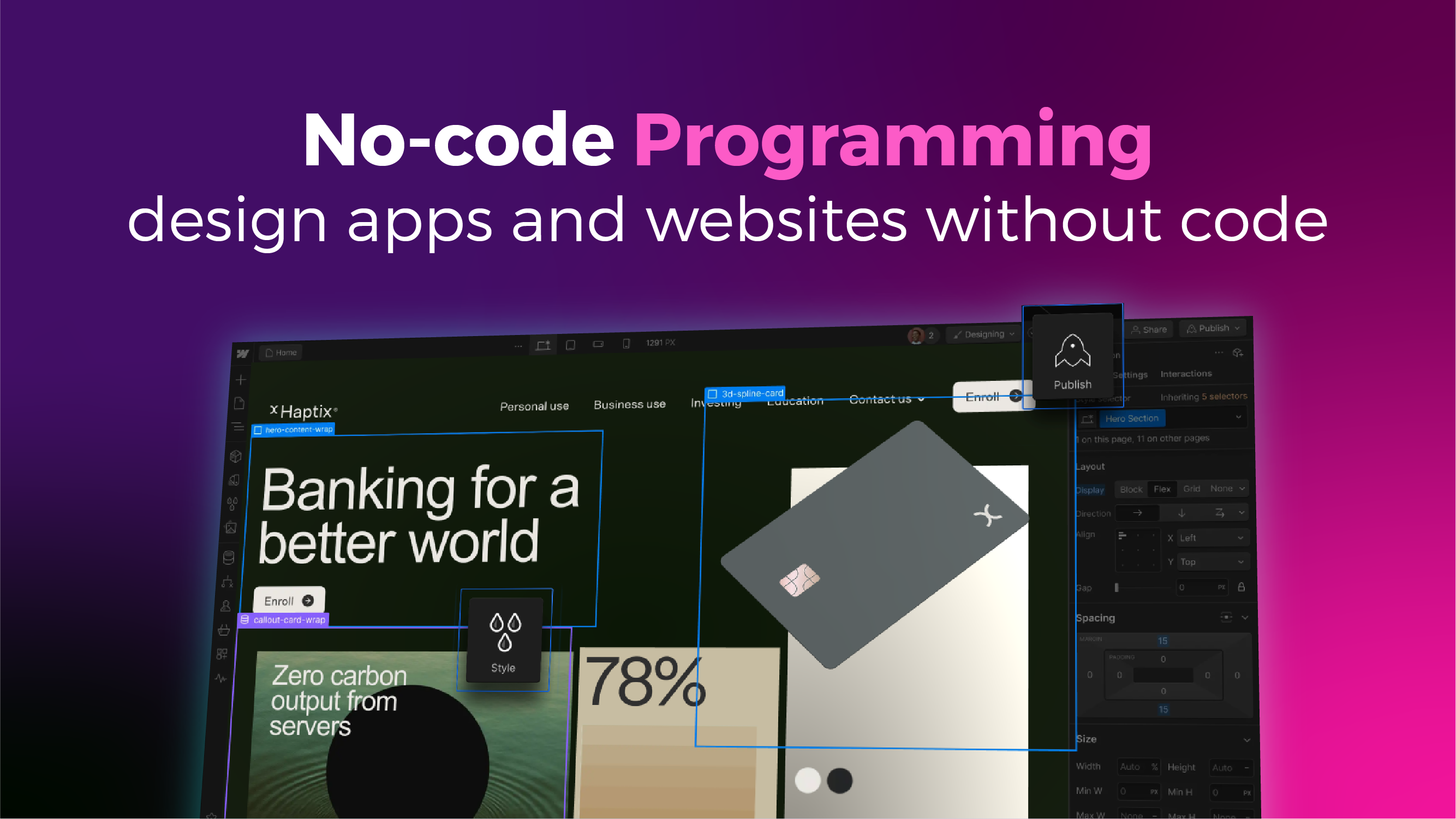
No-code programming: design apps and websites without code
2024-07-26T14:12:20
No-code programming facilitates agile development of digital solutions without the need to learn pro...
Tailor-made and state-of-the-art digital products: the CencoSud case study
2024-07-12T19:25:37
At CodersLab, our primary focus is on understanding and addressing the immediate software and digita...

Transforming Cloud Costs with FinOps: The Key to Enterprise Efficiency
2024-07-11T20:27:07
Streamlining Operations Across the Entire Enterprise Network In today’s business landscape, ma...

IT Staffing: The Perfect Complement for Retail Businesses in Latin America
2024-07-10T19:39:31
Flexibility, Tech Talent, and Efficiency through Active Sourcing Introduction The retail landscape i...

Software Quality in Banking: A QA Approach
2024-06-13T01:03:07
In the fast-paced financial world, where each transaction and data point hold immense significance, ...
The future is already here: Artificial Intelligence Trends 2024
2024-06-13T01:02:27
This 2024 starts with full force as far as new digital solutions are concerned and brings great news...
Growth, wellness and efficiency: the healthcare industry and the support of technological innovation
2024-06-13T01:01:39
Technology contributes in many ways, not only to achieve objectives, meet goals and improve producti...
At CodersLab we are your strategic ally in the year of Operational Efficiency.
2024-06-13T01:00:45
The concept of Operational Efficiency will be the protagonist of this year for companies, since in a...

4 IT Staffing trends that will triumph in 2024 thanks to AI support
2024-06-13T00:59:45
Recruitment agencies or IT Staffing will be the protagonists in the market this season, as they will...
Rust development services: Unleashing the power of Coderslab
2024-06-12T20:36:04
In the ever-evolving world of software development, choosing the right programming language can make...