
Top Programming Languages in Demand for 2025 | CodersLab
2025-05-09T14:10:32

Each programming language offers specific capabilities, applications, and limitations that distinguish it from the others. While all languages are useful, there’ll be some that are more appropriate than others for certain purposes or things you want to develop.
This’ll also determine the professional talents that can be part of a project and which can’t, as, generally, programmers choose a series of programming languages in which to specialize.
What languages are the most in demand this year and why? Let’s find out now.
1. Python
Python, created by Guido van Rossum in 1991, is an interpreted and multi-paradigm language that prioritizes code readability. Its «batteries included» philosophy offers an extensive standard library, covering everything from data manipulation to web development. It’s the most popular language according to indexes like TIOBE and PYPL, thanks to its versatility and active community.
Python has evolved to dominate emerging fields like artificial intelligence and data analysis. Its clean syntax and dynamic typing attract both beginners and tech companies. Platforms like Instagram, Spotify, and Netflix use it in their backends, demonstrating its scalability in high-demand environments.
Python’s community drives its growth with frameworks like Django and Flask, in addition to scientific tools like NumPy and Pandas. Its focus on simplicity allows teams to develop prototypes quickly, reducing the time-to-market for innovative projects.
Key Features
Python stands out for its dynamic typing and minimalist syntax, which facilitate writing clean code and reduce the need for redundant structures. Its massive ecosystem includes over 300,000 packages on PyPI, covering areas like artificial intelligence, automation, and web development.
Furthermore, its cross-platform nature allows it to run on operating systems like Windows, Linux, and macOS, as well as in embedded environments thanks to implementations like MicroPython.
Main Uses
Python is a leader in data science and machine learning, with libraries like Pandas and TensorFlow that simplify analysis and the creation of predictive models.
In web development, frameworks like Django and FastAPI allow building RESTful APIs and scalable applications. It’s also a key tool in DevOps for automating tasks, from deployments to infrastructure monitoring.
2. JavaScript
JavaScript, the language of the web, remains indispensable thanks to its execution in browsers and its adoption in the backend with Node.js. Created in 1995 by Brendan Eich, it has evolved with standards like ES6+ to support complex and real-time applications.
Its ecosystem includes frameworks like React, Angular, and Vue.js, which dominate frontend development. Platforms like Netflix and LinkedIn use Node.js to handle millions of simultaneous requests, demonstrating its efficiency in asynchronous environments.
With tools like TypeScript (typed superset), JavaScript has reinvented itself for enterprise projects. Its integration with technologies like WebAssembly positions it as a pillar for modern web applications.
Key Features
JavaScript is distinguished by its native support for asynchronicity through promises and async/await, ideal for non-blocking operations on servers and browsers. Its ability to function in both frontend and backend (with Node.js) makes it a unified full-stack language.
The global community has created a massive ecosystem, with over 2 million packages on NPM covering everything from UI components to testing tools.
Main Uses
It’s essential for creating interactive web applications, such as Single-page Apps (SPA) and Progressive Web Apps (PWA), using frameworks like React or Vue.js. In the backend, platforms like Express.js allow developing scalable APIs to handle millions of requests.
It’s also used in mobile development with React Native, allowing the creation of native apps for iOS and Android with a single codebase.
3. Go (Golang)
Designed by Google in 2007, Go combines the efficiency of C++ with a simple syntax and native concurrency. It’s ideal for distributed systems and microservices, being key in infrastructures like Kubernetes and Docker.
Its fast compilation and generation of self-contained binaries simplify deployment in the cloud. Companies like Uber and Twitch use it to process millions of real-time transactions with low resource consumption.
Go prioritizes code maintainability, avoiding complex features like class inheritance. This makes it predictable in large teams and long-term projects.
Key Features
Go offers efficient concurrency through goroutines, lightweight threads that optimize resource usage without overloading memory.
Its automatic garbage collection balances performance and memory management, while integrated testing tools facilitate the creation of unit tests and benchmarks. Additionally, it generates self-contained binaries that simplify deployment in any environment.
Main Uses
It’s ideal for high-load backends, such as APIs in fintech or streaming platforms that require handling millions of simultaneous connections.
It’s also used to build robust CLI tools with libraries like Cobra, and in cloud infrastructure, where it’s key in orchestrators like Kubernetes and serverless services.
4. Java
Java, launched by Sun Microsystems in 1995, remains a pillar in enterprise development thanks to its portability («write once, run anywhere») and robustness. It’s key in banks, telecommunications, and Android.
With the JVM (Java Virtual Machine), Java executes code on any device, from mainframes to IoT. Its static typing and object-oriented nature facilitate the creation of maintainable and scalable systems.
The modern version (Java 17+) includes improvements like records, pattern matching, and support for reactive programming, keeping it relevant against younger languages.
Key Features
Java excels in its cross-platform architecture: code is compiled to bytecode executable on any device with a JVM, from servers to IoT devices. Its enterprise ecosystem includes frameworks like Spring Boot and tools like Apache Kafka for distributed systems.
Furthermore, it offers advanced security mechanisms, such as the Security Manager, and long-term support (LTS) updates for critical environments.
Main Uses
It’s fundamental in Android development, although it now shares space with Kotlin. In the enterprise sphere, it’s used to build financial systems, trading platforms, and big data applications with tools like Hadoop.
It’s also key in telecommunications and legacy systems that require stability.
5. Kotlin
Kotlin, created by JetBrains in 2011, is the preferred language for Android after being officially adopted by Google in 2017. It combines Python’s concise syntax with Java’s type safety.
It’s fully interoperable with Java, allowing gradual migration of legacy projects. Companies like Trello and Airbnb use it to develop more efficient mobile apps with less error-prone code.
Kotlin Multiplatform allows sharing business logic between iOS, Android, and web, reducing development costs. Its adoption is growing in the backend with frameworks like Ktor.
Key Features
Kotlin prioritizes safety with null safety, eliminating common errors like NullPointerException at compile time. Its coroutines simplify concurrency for asynchronous operations, while its ability to create DSLs (domain-specific languages) makes it ideal for complex configurations.
Additionally, it’s fully interoperable with Java, allowing gradual migrations.
Main Uses
It’s the official language for Android, used in native apps with Android Jetpack and Compose. In the backend, frameworks like Ktor allow creating modular and efficient APIs.
It also stands out in multiplatform development, allowing sharing business logic between iOS, Android, and web with Kotlin Multiplatform.
6. C#
C#, developed by Microsoft in 2000, is the heart of the .NET ecosystem. With a syntax similar to Java, it has expanded to games (Unity), enterprise applications, and cross-platform development with .NET Core.
Its evolution includes support for functional programming, async/await, and modern patterns like records. Platforms like Stack Overflow and UPS rely on C# for critical services.
With MAUI (Multi-platform App UI), C# allows creating native apps for iOS, Android, and Windows from a single codebase, competing with React Native and Flutter.
Key Features
C# integrates LINQ, a tool for manipulating data with syntax similar to SQL directly in the code.
Its garbage collection is optimized for long-running applications, and it offers GPU support through integration with engines like Unity and DirectX. With .NET Core, it’s cross-platform and compatible with Windows, Linux, and macOS.
Main Uses
It’s the heart of video game development in Unity, an engine that powers 70% of mobile games. In the enterprise sphere, it’s used to build ERPs and CRMs with ASP.NET Core. It’s also relevant in IoT, thanks to .NET Nano Framework for devices with limited resources.
7. Rust
Rust, created by Mozilla in 2010, is the trendy language for critical systems that require security and performance. Its ownership system prevents memory errors without sacrificing speed, competing with C/C++.
It’s key in projects like the Linux kernel, Firefox, and blockchain (Solana, Polkadot). Companies like Microsoft and Amazon are adopting it for secure cloud infrastructures.
Rust attracts developers of systems and low-level applications, thanks to its challenging but rewarding learning curve.
Key Features
Rust guarantees memory safety without a garbage collector, preventing errors like segfaults through its ownership system.
Its focus on safe concurrency prevents data races, and its interoperability with C allows integrating existing libraries. Although its learning curve is steep, it offers low-level control without sacrificing security.
Main Uses
It’s key in operating and embedded systems, such as drivers and firmware. In blockchain, projects like Solana use it for secure smart contracts.
It’s also used in DevOps tools to create fast and reliable CLIs, such as those used in AWS or Cloudflare.
8. Ruby
Ruby, created in 1995 by Yukihiro Matsumoto, is famous for its «developer happiness» philosophy. Its Ruby on Rails framework revolutionized web development with convention over configuration.
Although its popularity has decreased compared to JavaScript and Python, it remains key in startups and MVP projects. Platforms like Shopify and GitHub still rely on its ecosystem.
Ruby 3.0 introduced concurrency with Ractors and performance improvements, revitalizing its adoption in specific niches.
Key Features
Ruby focuses on developer happiness with an expressive syntax close to natural language. Its metaprogramming capability allows modifying code at runtime, and its gem repository (RubyGems) offers over 180,000 packages. Although its performance isn’t the highest, it prioritizes productivity.
Main Uses
It’s ideal for prototyping MVPs quickly with Ruby on Rails, as Shopify and GitHub did. In testing, tools like Capybara automate UI tests. It’s also used in scripting for DevOps, automating tasks with Rake or simple integrations.
9. COBOL
COBOL (1959) remains vital in legacy systems of banks, governments, and airlines. Although outdated, it processes 85% of global banking transactions.
The scarcity of COBOL developers has driven initiatives to modernize it, integrating it with Java or .NET. Companies like IBM offer tools to gradually migrate to cloud architectures.
Its verbose syntax and lack of modern features make it unattractive for new projects, but its maintenance is critical for existing infrastructures.
Key Features
COBOL excels in precise decimal arithmetic, crucial for financial transactions. Its backward compatibility allows running code written in the 70s on modern mainframes, and it’s optimized for batch processing of large volumes of data. Although its syntax is verbose, its stability keeps it relevant.
Main Uses
It remains vital in core banking systems, processing transactions and credit cards. In insurance, it manages policies and actuarial calculations. Today, it’s being modernized by integrating with Java or .NET to expose legacy functionalities as REST APIs, maintaining critical operations without rewriting all the code.
Whether it’s Python, Kotlin, Ruby, Rust, or another language, the important thing is to know how, when, and where to use it to get the most out of it.
Depending on your interests and what you need for your project, you’ll surely need to use one language more than another. Of course, understanding which languages are most in demand in 2025 will give you a clue about which one to select to develop your next project.

Recent Posts
Scroll
DevSecOps 2026 | Protect the Software Supply Chain
2026-08-11T21:40:20
DevSecOps in 2026: How to Protect the Software Supply Chain DevSecOps protects the software supply c...

Generative AI Supply Chain Personalization | CodersLab
2026-07-31T21:08:37
Generative AI enables real-time personalization of every link in the supply chain, from demand forec...

Agentic AI | Cybersecurity Threats in 2026
2026-07-27T16:45:43
Artificial intelligence has crossed a line that security experts had been anticipating for years; wh...

47 AI Adoption Statistics That Define Enterprise Technology in 2026
2026-05-21T21:47:29
Artificial intelligence has crossed the line from strategic priority to operational infrastructure i...

Multi-experience development: creating apps for multiple devices
2025-07-14T13:41:48
Multi-experience development is the standard that companies must follow to develop successful applic...

API Trends and Best Practices for 2025 | CodersLab
2025-07-11T22:14:29
The Internet would not be the same without the help of APIs. This is how they will evolve in the fut...

Test Automation: Essential Tools for Developers
2025-07-09T20:29:51
Test automation is very important for the day-to-day work of developers. Here’s everything you...

The role of UX/UI in the success of modern apps
2025-07-07T20:06:04
Two critical factors for modern applications are user experience and user interface. Find out why. ...
Sustainable software development: practices for green code
2025-07-03T18:34:48
Nowadays, companies are interested not only in using high-quality tools, but also environmentally fr...

The role of Data Science in software development today
2025-06-30T14:46:52
Data science is a discipline that can drive all of an organization’s efforts. Here’s wha...

Microservices: Modern Architecture for Scalable Solutions
2025-06-26T12:57:33
Software architecture has a new standard for developing its products and services: microservices. ...

Agile development: methodologies and benefits in software projects
2025-06-23T12:28:13
Agile philosophy is one of the best frameworks for software development. Learn about its origins, pr...

7 great reasons to apply Scrum methodologies in project management
2025-06-20T11:54:21
The Scrum methodology enables a more organized and autonomous workflow for the development of digita...

7 extraordinary examples of green technology transforming businesses
2025-06-17T11:49:25
Technology helps people minimize their carbon footprint on the planet. Discover the seven most impor...

Blockchain beyond cryptocurrencies: solutions for software development
2025-04-30T18:09:08
Blockchain is not just for trading cryptocurrencies. Learn about its implications for software devel...

The rise of Progressive Web Applications (PWA) in 2025
2025-04-18T20:34:55
Progressive web apps combine the best of native apps with web technology. Here’s what you need...

Cybersecurity in software development: key strategies
2025-04-15T20:22:49
Software development is a critical process that requires the highest level of digital security measu...
DevOps: best practices for successful continuous delivery
2025-04-11T13:40:22
The integration between Development and Operations is increasingly being implemented among companies...

Integrating artificial intelligence into software development
2025-04-08T21:27:29
The integration of artificial intelligence into software development is now a reality. What do you n...

Tailor-made software will optimize all your company’s processes
2025-03-28T20:56:36
Custom software allows companies to use the full potential of tools designed solely for their needs....
Artificial intelligence forever changed software development
2025-03-25T20:49:41
Software development has changed since artificial intelligence entered the scene. Learn about its im...

Challenges & opportunities for women’s representation in tech
2025-03-17T14:30:17
Now is the right time to reflect on the role of women in technology and their outlook for the future...

Android 16 is coming: 6 new features you can’t miss
2025-02-26T20:14:59
Android 16 is here. Here are 6 features you should know about to get the most out of it. ...

Artificial intelligence and ethics: are we about to cross the line?
2025-02-24T17:11:28
The rapid development of AI requires an ethical perspective that prevents it from crossing boundarie...

Software engineering: the hidden spark igniting the technological revolution
2025-02-18T16:38:22
Today’s technological revolutions would not be possible without software development. Learn mo...

Discover the 5 superpowers of the Internet of Things that will transform your business
2025-02-14T15:58:11
The Internet of Things has arrived to make us live in a much more interconnected world. ...

Edge computing: connect the future today and unleash your organization’s hidden potential
2025-02-11T16:23:58
La computación de borde es un enfoque que agiliza la transmisión y procesamiento de datos. Esto es l...

Quantum computing: the dawn of a revolution of no return in data processing
2025-02-07T15:54:06
It is the future of computing as we know it. Discover why and the things we are already capable of d...
DeepSeek: the chinese assistant challenging AI giants
2025-02-03T19:18:27
DeepSeek is the AI assistant of the moment. What makes it so special, and why is everyone using it? ...

Discover why Rust is a new paradigm for web development
2025-01-27T12:54:49
Rust is a programming language that allows you to build different products and tools. Learn more. ...

The Product Manager is the mastermind behind your products
2025-01-20T18:43:39
The product manager is the leader in the entire process of management, development, and strategy beh...

Full-stack developer: The best architect for your digital success
2025-01-15T18:44:14
A full-stack developer covers all areas of software development. Learn about their responsibilities ...

Why apply responsive design to your digital products?
2025-01-06T15:15:18
Responsive design is no longer an optional feature, but rather a mandatory one for the success of an...

The great input of agile methodologies in project management
2025-01-03T15:12:00
Agile methodologies transform project management by providing flexibility, collaboration, and adapta...

Telecom Software Solutions: optimize and transform your communications
2024-12-26T19:46:29
Telecom software solutions enhance efficiency and innovation in modern business communications. ...

Integrate your digital services with APIs: everything you need to know
2024-12-26T19:38:50
APIs enable seamless and scalable integration of digital services, facilitating connectivity between...

The future of software development: meet the composable architecture
2024-12-26T19:34:36
Composable architecture revolutionizes software development by enabling modular, flexible, and easil...
The power of the software factory to transform your company
2024-12-10T12:40:16
Software factories accelerate technology solution development, driving digital transformation and bu...

Cloud technology is a turning point and we’ll tell you why
2024-12-05T19:32:19
Cloud technology radically changes resource access and management, enabling unprecedented scalabilit...

Scrum master: the key factor to carry out your projects
2024-12-05T18:38:47
The Scrum Master drives project success by facilitating collaboration, removing impediments, and pro...

7 benefits of developing apps with ReactJS
2024-10-10T12:00:14
ReactJS offers speed, flexibility, and a robust ecosystem, facilitating development of dynamic and s...

What’s ReactJS and how does it work?
2024-10-07T12:00:11
ReactJS is a JavaScript library that enables building interactive user interfaces using reusable com...
Transform your legacy systems with microservices: the definitive guide for IT leaders
2024-10-03T16:36:37
Microservices modernize legacy systems by breaking applications into independent services, enhancing...
Web usability: principles and how to improve it in your business
2024-09-24T20:35:15
Web usability makes it easy for users to navigate and quickly find what they need, enhancing user ex...
Progressive web applications: what are they, advantages and examples
2024-09-16T12:12:51
Progressive web apps combine the best of websites and native apps, offering speed, offline accessibi...

Service Design with a UX Focus: What to Consider
2024-08-20T15:26:16
UX service design focuses on understanding users, creating intuitive processes, and delivering satis...
9 Key Soft Skills in Software Development
2024-08-13T19:29:23
Soft skills such as communication, teamwork, and problem-solving are essential for success in softwa...
How Generative AI is Revolutionizing the Future of Software Development
2024-08-07T17:56:20
Generative artificial intelligence revolutionizes the future of software with continuous innovation,...

The Value of Cybersecurity in Companies
2024-07-30T19:19:56
Cybersecurity protects businesses against digital threats, safeguarding critical information and mai...
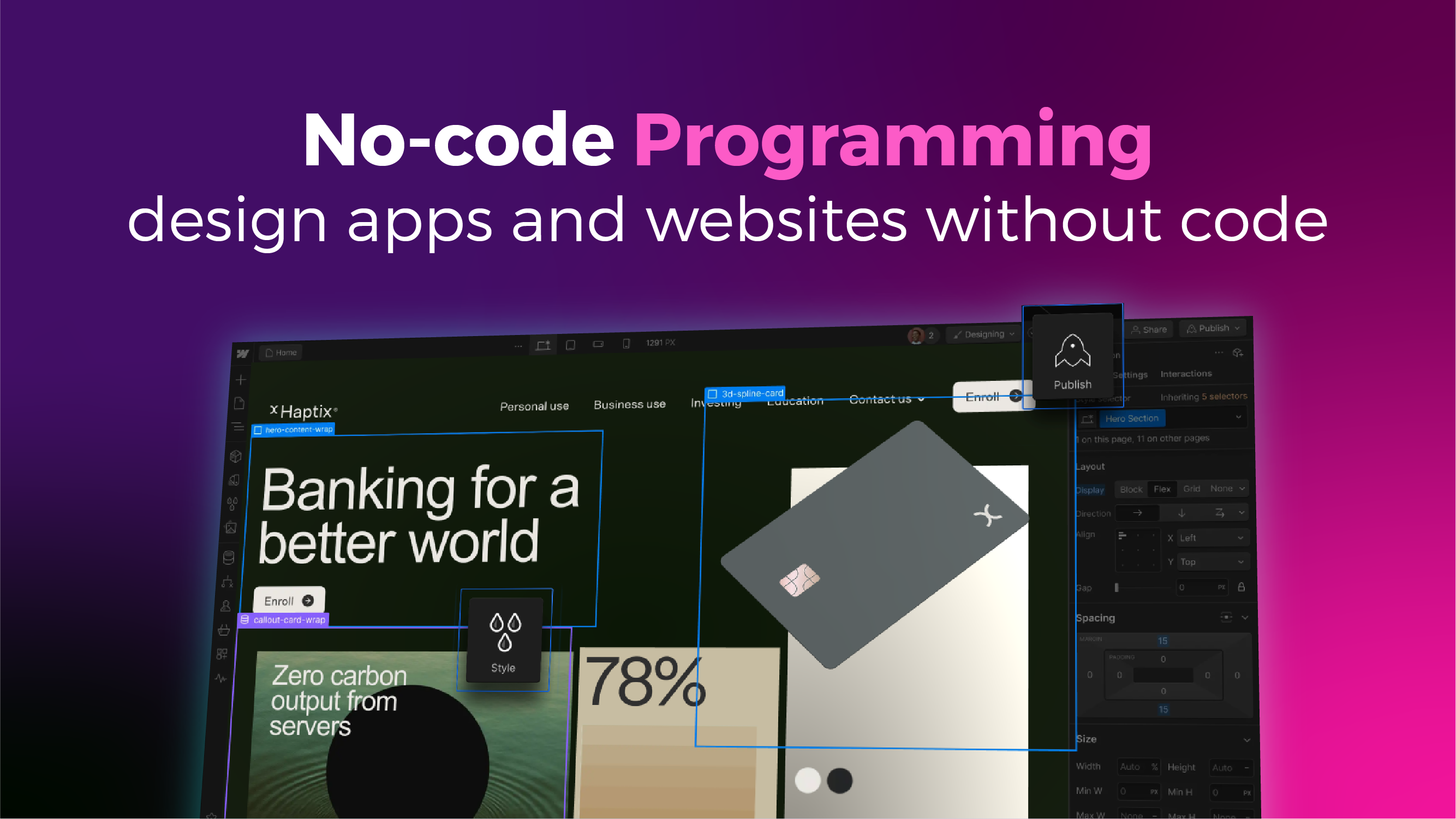
No-code programming: design apps and websites without code
2024-07-26T14:12:20
No-code programming facilitates agile development of digital solutions without the need to learn pro...
Tailor-made and state-of-the-art digital products: the CencoSud case study
2024-07-12T19:25:37
At CodersLab, our primary focus is on understanding and addressing the immediate software and digita...

Transforming Cloud Costs with FinOps: The Key to Enterprise Efficiency
2024-07-11T20:27:07
Streamlining Operations Across the Entire Enterprise Network In today’s business landscape, ma...

IT Staffing: The Perfect Complement for Retail Businesses in Latin America
2024-07-10T19:39:31
Flexibility, Tech Talent, and Efficiency through Active Sourcing Introduction The retail landscape i...

Software Quality in Banking: A QA Approach
2024-06-13T01:03:07
In the fast-paced financial world, where each transaction and data point hold immense significance, ...
The future is already here: Artificial Intelligence Trends 2024
2024-06-13T01:02:27
This 2024 starts with full force as far as new digital solutions are concerned and brings great news...
Growth, wellness and efficiency: the healthcare industry and the support of technological innovation
2024-06-13T01:01:39
Technology contributes in many ways, not only to achieve objectives, meet goals and improve producti...

At CodersLab we are your strategic ally in the year of Operational Efficiency.
2024-06-13T01:00:45
The concept of Operational Efficiency will be the protagonist of this year for companies, since in a...

4 IT Staffing trends that will triumph in 2024 thanks to AI support
2024-06-13T00:59:45
Recruitment agencies or IT Staffing will be the protagonists in the market this season, as they will...
Rust development services: Unleashing the power of Coderslab
2024-06-12T20:36:04
In the ever-evolving world of software development, choosing the right programming language can make...